
In foundries, furnace door coolant hoses operate under severe conditions: high thermal radiation, metal spatter, and mechanical flexing. Their service life is often far shorter than design expectations. Frequent hose replacement not only increases spare parts costs but can also cause unplanned furnace shutdowns, disrupting production. This article shares practical tips to significantly extend the life of furnace door coolant hoses in high-temperature foundry environments.
1. Start with Proper Selection
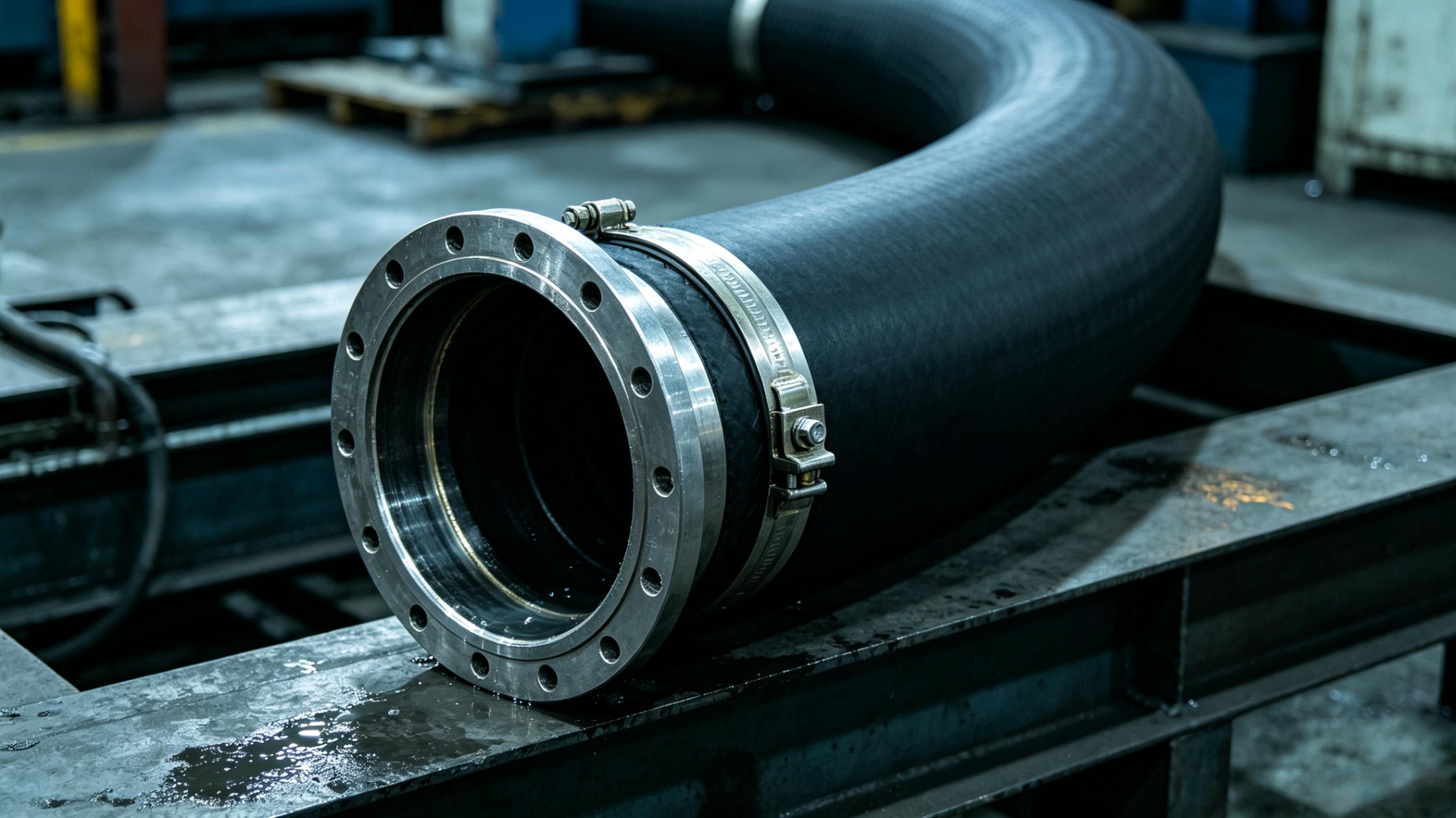
Correct selection is the foundation for extended life. In foundry environments, you must choose hoses with a cover that resists metal spatter, a tube that withstands coolant, and overall high-temperature resistance. Recommended types: stainless steel wire braided or armored hoses, double-layer corrugated metal hoses, or composite hoses with ceramic fiber/silicone covers. Avoid ordinary rubber hoses – they rarely survive one furnace campaign.
2. Optimize Installation to Reduce Stress Concentration
Many premature hose failures are caused by mechanical fatigue from poor installation, not burning.
Control bend radius: Ensure the actual bend radius is at least 1.5 times the minimum bend radius (MBR). Use large-radius elbows or guide plates to prevent sharp kinks near door hinges.
Allow for thermal expansion: Furnace doors and piping expand when hot. Leave sufficient slack (typically 5-10% of total length) to avoid tension.
Use cable carriers or trolleys: For frequently opened/closing doors, place hoses inside cable carriers or along trolley rails to control the bending path and prevent friction/pinching.
Add heat shields: Install stainless steel or ceramic fiber shields between the hose and the furnace door to block radiant heat and spatter. Leave a small gap for airflow.
3. Standardize Operating Procedures to Prevent Human-Induced Damage
Flow before closing: Always ensure coolant circulation before closing the furnace door. A dry hose heats up extremely fast, causing rapid inner layer aging or sticking.
Control coolant temperature and flow: Excessive temperature difference creates high thermal stress; excessive flow causes water hammer. Keep inlet temperature ≥20°C, and flow within ±10% of design value.
Avoid thermal shock: After shutdown, continue low flow cooling for at least 30 minutes until the door surface drops below 100°C before stopping coolant. This prevents cracking due to rapid cooling.
4. Establish Periodic Maintenance and Monitoring
Daily visual inspection: Before each furnace start, quickly check the hose for scorching, bulges, exposed wire, or leaks.
Rotate the hose weekly: For fixed hoses, rotate them 90-120° axially each month to change the hot spot and spatter impact point, distributing wear evenly. If possible, reverse the ends.
Regular cleaning: Remove mill scale, oil, and spatter residue from the hose surface. Accumulated debris insulates and causes local overheating. Use a brass or soft brush to avoid damaging metal braids.
Infrared temperature monitoring: Use a thermal imager or spot thermometer monthly to map surface temperature. Any localized hot spot >50°C above surrounding area requires immediate investigation.
Track service time and cycles: Even if the exterior looks good, thermal aging accumulates. Consider mandatory replacement every 6-12 months or after a set number of furnace cycles (e.g., 500 cycles).
5. Protective Upgrades and Redundancy Strategies
Install replaceable fire sleeves: Slip a high-temperature fire sleeve (silica-coated fiberglass or basalt fiber) over the hose. The sleeve is low-cost and can be replaced independently, greatly extending inner hose life.
Water-cooled jackets: For extreme conditions, add a circulating water-cooled jacket around the hose. More complex but very effective.
Parallel redundant hoses: For critical furnace doors, install two parallel hoses with switching valves. If one fails, switch to the backup without stopping the furnace, then repair during scheduled downtime.
Quick-change couplings: Use high-temperature quick couplings to reduce hose replacement time from hours to minutes, minimizing production impact.
6. Conclusion
Extending the service life of foundry furnace door coolant hoses requires a multi-faceted approach: correct selection, smart installation, disciplined operation, regular maintenance, and protective upgrades. Focus on reducing mechanical stress, blocking heat and spatter, standardizing start/stop procedures, and implementing proactive replacement schedules. Field experience shows these techniques can increase hose life from 1-2 months to 6-12 months or longer, significantly reducing foundry operating costs and safety risks.
