
The hydraulic system is often called the "circulatory system" of industrial equipment, with hoses serving as the "blood vessels" that transmit power. Choosing the wrong hose can lead to reduced system efficiency, equipment downtime, or even leaks and safety accidents. From low-pressure return lines to ultra-high-pressure actuators, which hose should be used for low, medium, and high pressure systems? This guide provides a complete hydraulic hose selection reference.
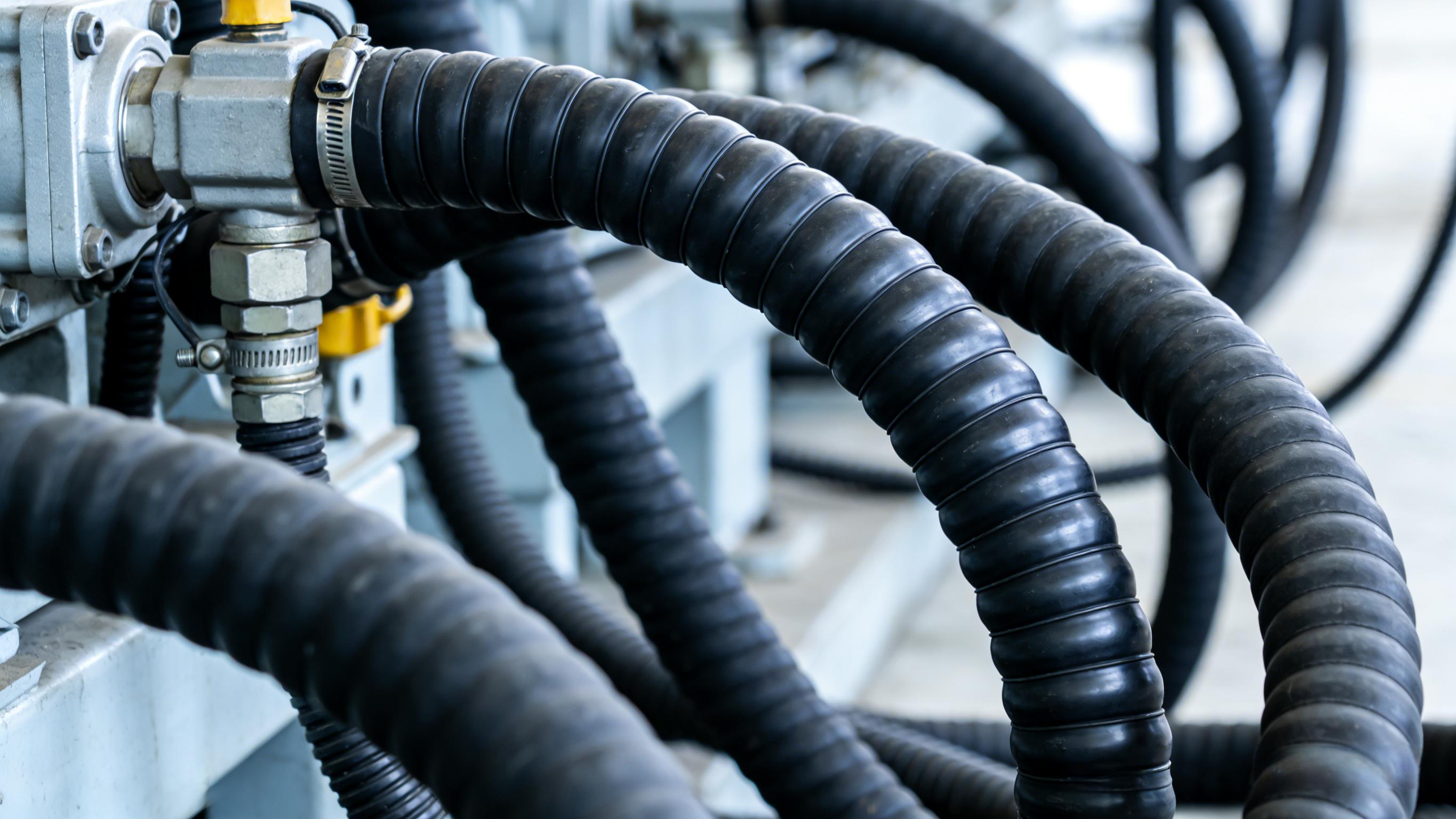
I. Pressure Classifications and Corresponding Hose Types
Based on industry standards, hydraulic system working pressures are classified as follows:
Low Pressure Systems (<10MPa / <1450psi): Primarily used for return lines, suction lines, lubrication systems, and pneumatic controls.
For low-pressure applications, fiber braid or single-wire braid hoses are recommended. SAE 100R3 features two-layer fiber braid construction, suitable for low-pressure return lines. SAE 100R6 uses single-layer fiber braid, ideal for cost-effective return lines. SAE 100R4 incorporates a built-in spiral wire specifically for suction lines, effectively resisting vacuum collapse. SAE 100R1AT (single-wire braid) can also cover low to medium pressure ranges.
Medium Pressure Systems (10-21MPa / 1450-3000psi): Widely used in construction machinery, agricultural equipment, and general industrial hydraulic systems.
SAE 100R2AT is the absolute workhorse—a two-wire braid construction and the most common hydraulic hose type. Its working pressure ranges from approximately 10-25MPa (depending on size), with size-dependent ratings from 1,500-6,000psi. SAE 100R1AT (single-wire braid) suits lower-medium applications. SAE 100R7 is a thermoplastic medium-pressure hose offering excellent flexibility. SAE 100R5 features single-wire braid plus textile layer, suitable for transportation equipment.
High Pressure Systems (21-42MPa / 3000-6000psi): Suitable for main hydraulic circuits of excavators, loaders, and high-power transmission systems.
SAE 100R2AT covers high-pressure ranges in larger sizes. For higher demands, multi-layer spiral wire hoses are recommended: SAE 100R12 (4-spiral wire, 2,500-4,000psi) for high-impulse mining and construction; SAE 100R13 (6-spiral wire, 5,000psi) for extreme pressure; SAE 100R15 (6-spiral wire, up to 6,000psi)—the top choice for offshore and ultra-heavy applications; SAE 100R8 (thermoplastic dual-fiber, 2,000-6,000psi)—a lightweight alternative to 100R2; SAE 100R16 (compact 2-wire braid) for tight spaces.
Ultra-High Pressure Systems (>42MPa / >6000psi): For special heavy-duty applications such as ultra-large hydraulic equipment and hydrostatic transmissions. Choose SAE 100R13/R15 multi-layer spiral wire hoses or rigid piping.
II. Rigid Pipe vs. Flexible Hose
Hydraulic lines include both rigid pipes and flexible hoses. Seamless steel pipes are preferred for medium-high pressure systems—they offer low cost and excellent performance. Welded steel pipes can be used for low-pressure systems. Flexible hoses should only be used where there is relative motion between components or where flexible connections are required.
III. Selection Pitfall Avoidance—Five Common Fatal Mistakes
Mistake 1: Confusing Burst Pressure with Working Pressure. Many beginners mistake the burst pressure marked on hoses as the working pressure. According to SAE J517, burst pressure must be 4 times the working pressure. Working pressure is the design benchmark—never use burst pressure as the safe working pressure.
Mistake 2: Ignoring Shock Pressure and Pressure Peaks. Pressure fluctuations, water hammer effects, and hydraulic shocks during system operation often far exceed steady-state working pressure. Selection must consider the dynamic pressure curve, not just static pressure values.
Mistake 3: Blindly Pursuing Higher Pressure Ratings. Many engineers assume "higher pressure = safer" and choose hoses rated two or more levels above requirements. This significantly increases costs—and worse, high-pressure hoses have larger bend radii and are heavier, making installation difficult and increasing energy consumption.
Mistake 4: Ignoring Temperature Effects—"Temperature Derating". Temperature and pressure are inseparable—as temperature rises, the hose's pressure rating decreases. A hose rated at 500psi at 21°C may only handle 350psi at 93°C.
Mistake 5: Ignoring Bend Radius and Coupling Matching. Bending below the minimum bend radius severely damages the reinforcement layer. Couplings are the weakest link in any assembly—the assembly's maximum working pressure is determined by the lowest-rated component (the bucket principle).
IV. Core Selection Process
Use the STAMPED seven-step method for systematic selection: Size (ID, OD, length) → Temperature (media and ambient) → Application (environment and conditions) → Media (fluid type) → Pressure (working and shock) → Ends (connection type) → Delivery (packaging, certification, lead time).
Hydraulic hose selection is far more than simple "matching numbers"—it's a systematic engineering process balancing pressure rating, temperature range, media compatibility, bend radius, and coupling matching. Avoiding the five pitfalls and following a scientific selection process ensures safe, efficient, and long-lasting hydraulic system operation.
