
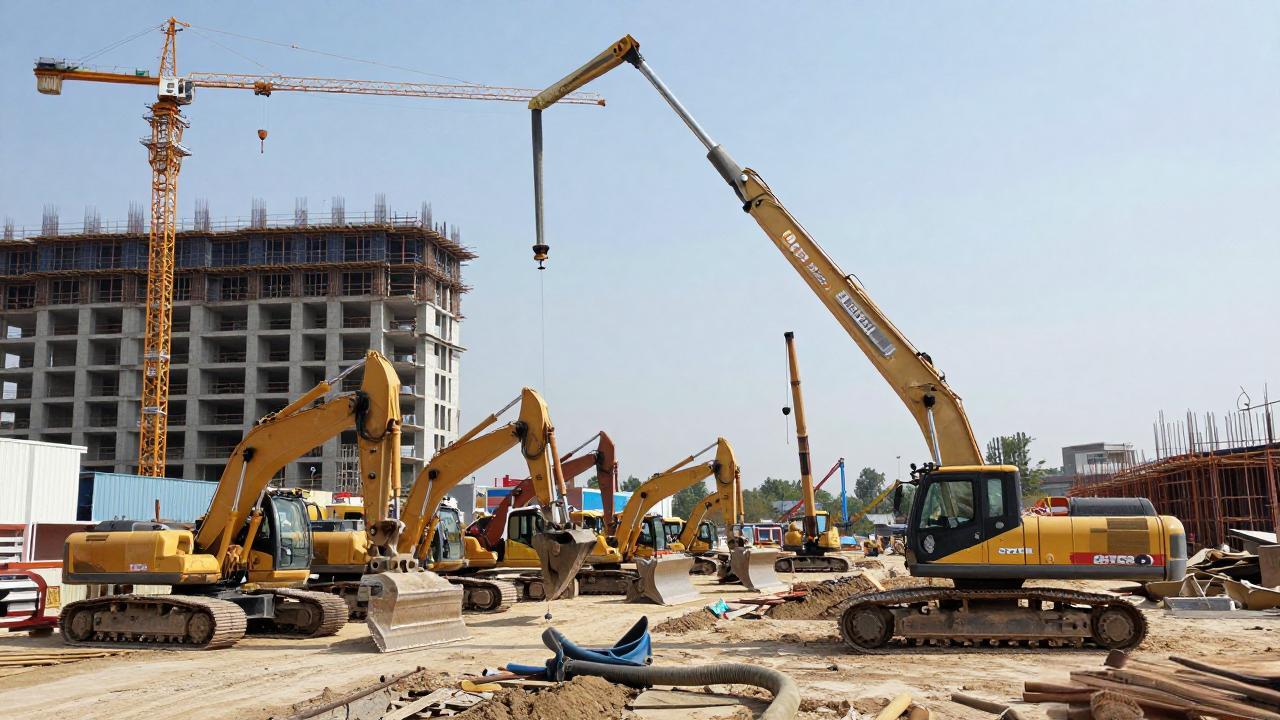
In concrete placement operations for high-rise buildings, bridges, tunnels, and dams, the concrete delivery hose at the end of the pump truck boom is the "last mile" connecting the pump line to the placement point. However, many construction teams face a common pain point: this hose is replaced far too frequently—sometimes after just dozens of truckloads of concrete, the inner wall is already severely worn, forcing downtime for replacement. Frequent replacement not only reduces project efficiency and drives up material costs but also poses safety risks from sudden hose bursts. The root cause lies in three "inherent defects" of traditional rubber hoses under concrete conveying conditions.
I. Three Root Causes of Frequent Replacement of Traditional Hoses
Root Cause 1: The "Abrasive" Nature of Concrete. Concrete is a mixture of cementitious materials, coarse and fine aggregates (sand, stone), water, and chemical admixtures. The coarse aggregates (crushed stone) have sharp edges and extremely high hardness, scouring the hose inner wall at high speed under pumping pressure—equivalent to continuous "sandblasting". The abrasion resistance of ordinary rubber is far insufficient to withstand this high-intensity abrasive wear; the inner wall rapidly thins, eventually leading to leakage or even hose bursts.
Root Cause 2: The "Alkaline" Corrosion of Concrete. The hydration products of cement in concrete are strongly alkaline (pH values can reach 12-13). Ordinary rubber undergoes chemical degradation after prolonged contact with alkaline substances—molecular chain scission, hardening and embrittlement, and loss of elasticity. This chemical corrosion, combined with physical abrasion, further shortens hose life.
Root Cause 3: High-Frequency Swinging and High-Pressure Shocks. The pump truck boom continuously swings during operation, causing the end hose to bend repeatedly. Simultaneously, the pressure pulses generated by the pumping system (typically around 140 bar) create continuous impact on the hose reinforcement layer. The reinforcement layer of ordinary hoses accelerates failure under this dual fatigue.
The叠加 of these three factors makes traditional concrete delivery hoses one of the most frequently replaced wearing parts on pump trucks and other construction machinery.
II. The Solution: UPE Ultra-Wear-Resistant Hoses
UPE (Ultra-High Molecular Weight Polyethylene) is an engineering plastic with a molecular weight of several million. Its wear resistance is several times that of ordinary carbon steel, far exceeding nylon and polyurethane. Concrete delivery hoses made with UPE as the core material fundamentally solve the three pain points of traditional hoses at the material level.
Superior Wear Resistance, Multiplied Service Life. In往复 wear tests of 2,000 cycles, UPE material shows zero mass loss. Concrete delivery hoses made with UPE typically have a service life 3 to 5 times longer than ordinary rubber hoses, or even more. This means a hose that previously required monthly replacement can now last over a full quarter of continuous use.
Alkali Resistance, Eliminating Chemical Erosion. UPE has extremely high chemical inertness and saturation, effectively resisting the侵蚀 and penetration of alkaline substances in concrete. Even with long-term输送 of high-grade concrete, the inner wall does not degrade due to chemical corrosion.
Smooth Inner Wall, Efficient Pumping. UPE has an extremely low coefficient of friction and an exceptionally smooth inner surface. This not only significantly reduces flow resistance during concrete delivery, improving pumping efficiency and reducing energy consumption, but also greatly reduces material adhesion to the pipe wall, effectively lowering the risk of pipe blockage.
Excellent Impact Toughness. Even when delivering concrete containing large-particle aggregates under high-pressure, high-velocity conditions, UPE material effectively absorbs impact energy, preventing inner liner cracking or peeling.
III. Product Structure and Technical Specifications
Taking the UPE ultra-wear-resistant concrete delivery hose compliant with GB/T 27571 as an example, it adopts a three-layer composite structure:
Inner Tube: A synthetic compound of UPE with black NR (natural rubber) and SBR (styrene-butadiene rubber). UPE provides ultra-high wear resistance and an alkali-resistant barrier, while the rubber component gives the hose necessary flexibility.
Reinforcement Layer: 2 to 4 layers of ultra-flexible, high-strength brass-plated steel cord tightly wound. The brass-plating process enhances adhesion between the steel wire and rubber, providing strong pressure capacity and excellent impulse fatigue resistance.
Outer Cover: Black NR/SBR synthetic rubber, with an optional UPE wear-resistant outer layer for comprehensive "inside-out" protection.
Key Performance Parameters (LT1306 model as reference):
Working Pressure: 8.5MPa (approx. 1,250psi)
Minimum Burst Pressure: 25.5MPa (approx. 3,750psi), 3 times the working pressure
Temperature Range: -30°C to +82°C (-22°F to +180°F)
Minimum Bend Radius: 450mm to 1,050mm (depending on bore size)
Bore Sizes: 2 inches to 6 inches (51mm to 152mm)
IV. Conclusion
The fundamental reason for the frequent replacement of concrete pump hoses in construction projects is that traditional rubber materials cannot simultaneously withstand the triple attack of concrete's abrasive wear, alkaline corrosion, and high-pressure pulses. UPE ultra-wear-resistant concrete delivery hoses, with ultra-high molecular weight polyethylene as the core material, leverage four key advantages—superior wear resistance, alkali resistance, low friction coefficient, and excellent impact toughness—to extend service life to 3-5 times that of ordinary rubber hoses. For engineering teams pursuing construction efficiency and cost control, choosing UPE ultra-wear-resistant hoses means fundamentally solving the industry's chronic problem of "frequent replacement".
