
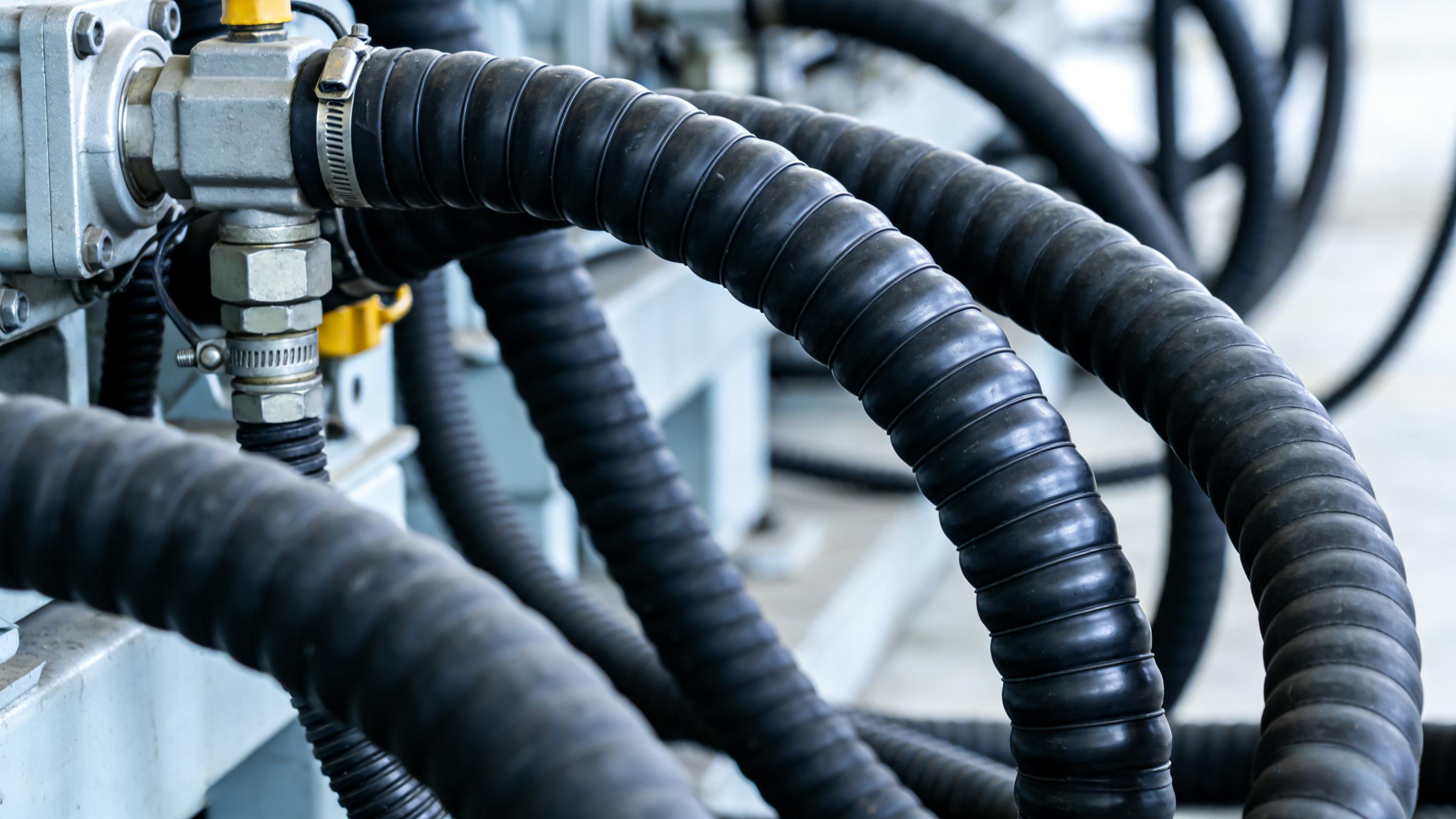
In construction machinery, mining equipment, ships, injection molding machines and hydraulic power units, high-pressure hose assemblies are the blood vessels of the hydraulic system. If working pressure, fittings and length are not matched together, leaks, burst hoses, vibration wear and downtime can occur. This guide explains the key points.
1. Matching Working Pressure
Confirm the maximum system working pressure, not the average. Hydraulic systems have pressure peaks and pulses caused by valve shifting, relief and sudden load changes. The hose rated working pressure should be equal to or higher than the maximum system pressure, with a safety margin. A common burst pressure is four times the working pressure, but selection also depends on impulse life, temperature derating and fluid compatibility. High temperature reduces pressure capacity, so choose high-temperature inner and outer compounds or a higher pressure class. If the system runs at 21 MPa, choose an assembly rated at least 25 MPa and verify SAE, EN, ISO or GB standards. For frequent pulses, spiral-wound hose is often better than single wire braid.
2. Matching Fittings
Fittings determine sealing and connection reliability. Common threads include JIC 37° cone, SAE ORFS, NPT, BSPP, BSPT, metric and flange. Check thread standard, size and sealing type; never mix inch and metric by mistake. Sealing methods include O-ring face seal, metal cone and flat seal. Choose carbon steel, stainless steel or zinc-plated fittings based on environment. Crimped assemblies must match hose construction, crimp die and crimp diameter. Reusable fittings are convenient for field repair but usually have lower pressure ratings. The fitting bore should match the hose inner diameter to avoid pressure loss and heat. Tighten to the specified torque; over-tightening can damage threads or seals.
3. Matching Length
Length is not just the distance between two ports. Measure along the actual routing path and consider movement, vibration, thermal expansion and bend radius. If too short, the hose is stretched and fittings carry tension. If too long, it may rub, twist, kink or be crushed. The hose must not be twisted after installation, and the bend radius must not be smaller than the manufacturer's minimum. For moving parts, leave enough slack and add spring guards, abrasion sleeves or guides. Protect against hot surfaces and sharp edges. A prototype fit check before batch crimping is recommended.
4. Selection Process
Confirm pressure, flow, temperature, fluid and environment. Select inner diameter by flow and keep velocity in a reasonable range. Select hose construction and standard by pressure. Select fittings by port type. Determine length by routing. Then crimp, clean, pressure test and mark. The assembly should show working pressure, date, batch and certificate. Cleanliness matters; cap ports after assembly to keep contaminants out.
5. Common Mistakes
Choosing hose only by inner diameter and ignoring pressure class. Checking thread outside diameter but not thread form or seal face. Leaving no length allowance. Using a bend radius below the minimum. Using wrong crimp settings. Mixing hose and fittings from different systems without verification. Avoiding these mistakes greatly reduces leakage and burst risk.
Conclusion
The core of high-pressure hose assembly selection is system matching. Working pressure defines the safety boundary, fittings define sealing and connection, and length defines service life and routing. Provide your equipment conditions, pressure, flow, port type and installation space to a qualified manufacturer for a complete assembly solution.
