
Sandblasting is a core process in industrial surface treatment, including ship derusting, steel structure anti-corrosion, mold cleaning and concrete scabbling. In sandblasting systems, hoses convey abrasives and high-pressure media, and proper selection directly affects work efficiency, consumable life and operational safety. Ultra-high pressure resin hoses are gradually replacing traditional rubber hoses in the sandblasting industry due to their lightweight design, abrasion resistance and pressure capacity. This article explains key selection points based on sandblasting conditions.
1. Core Requirements of Sandblasting Conditions
Sandblasting is divided into dry blasting and wet blasting. Dry blasting uses compressed air to convey abrasives at working pressures typically between 0.5 and 0.8 MPa. Wet blasting mixes water and abrasives for high-speed spraying at working pressures up to 250 to 800 bar, with some ultra-high pressure applications higher. In both modes, the hose inner wall must withstand continuous scouring by high-speed abrasive particles, and concentrated wear occurs at elbows and fittings due to particle impact and rebound. Therefore, sandblasting hose selection focuses on abrasion resistance, impact resistance and anti-blocking performance, not just pressure capacity.
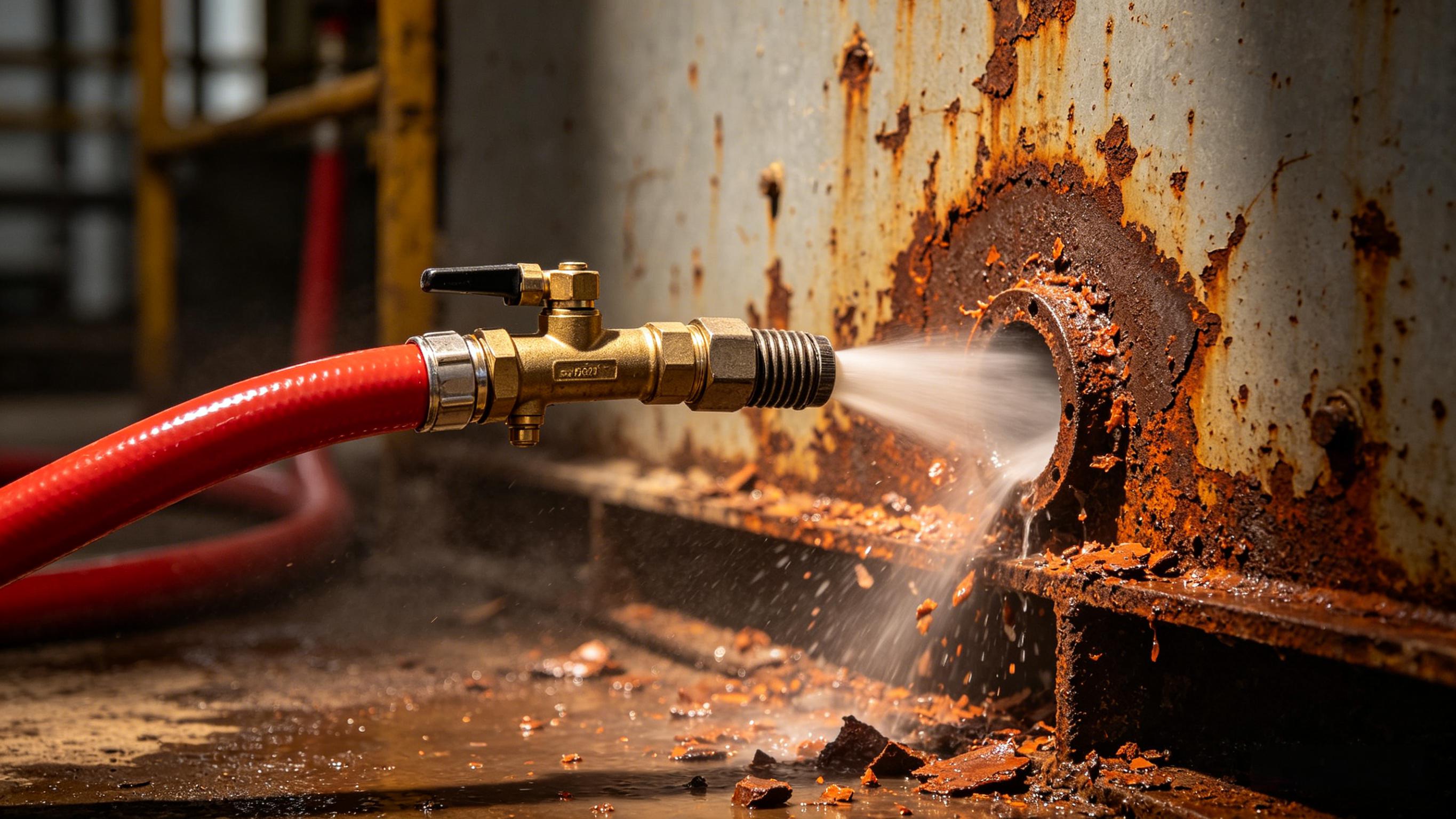
2. Structural Advantages of Ultra-High Pressure Resin Hoses
Ultra-high pressure resin hoses typically use a three-layer composite structure. The inner tube is made of thermoplastic engineering resin such as nylon (PA) or polyoxymethylene, offering a low friction coefficient and strong wear resistance that withstands continuous scouring by abrasive particles in high-speed water flow. The reinforcement layer consists of 4 to 8 layers of high-strength steel wire spiraled in alternating directions, with precise angle and tension control to distribute internal pressure evenly across layers. The outer cover uses super abrasion-resistant polyurethane, with wear resistance several times that of ordinary rubber, along with aging, ozone and weather resistance.
Taking Letone LT799 as an example, its working pressure ranges from 69 MPa to 400 MPa, with burst pressure at 2.5 to 4 times the working pressure. The temperature range is -30°C to +80°C, and the minimum bend radius is approximately 15% smaller than comparable rubber products. This structure gives resin hoses ultra-high pressure capacity while maintaining lightweight design and flexibility, making them suitable for sandblasting operations that require frequent gun movement. Resin hoses weigh about half as much as rubber hoses of the same specification, significantly reducing operator fatigue.
3. Key Selection Factors
First, pressure matching. The hose rated working pressure should exceed the system maximum working pressure with a safety margin. It is recommended to select a pressure rating of 1.5 times the actual working pressure. For example, if the sandblasting machine operates at 800 bar, choose an ultra-high pressure hose rated at 1200 bar or higher. Also consider pressure peaks and pulse frequency to avoid shortened life from impact loads.
Second, inner diameter selection. Sandblasting particle sizes typically range from 0.2 to 2.0 mm. An inner diameter of no less than 10 mm is recommended to avoid blockage and localized excessive wear. A too-small inner diameter leads to high velocity, increased pressure loss and heat; a too-large inner diameter increases weight and handling difficulty.
Third, fitting matching. Verify thread standard, seal type and bore. Common types include JIC, SAE ORFS, BSPP, NPT, metric and flange. In sandblasting applications, fittings should use thickened bushings or embedded wear rings to prevent localized wear from abrasive vortex flow. Avoid mixing inch and metric parts. Crimp parameters must match the hose construction and inner diameter.
Fourth, abrasion and temperature resistance. In wet blasting and high-pressure cleaning, the outer cover should resist oil, ozone and scratches. For temperature, resin hoses commonly operate from -30°C to +80°C; special materials are needed for high-temperature applications. Also confirm compatibility with blasting media, water and additives.
4. Installation and Usage Notes
Do not twist, kink or stretch the hose during installation. The bend radius must not be smaller than the manufacturer's minimum. During sandblasting, avoid rubbing against sharp objects and add abrasion-resistant sleeves when necessary. Fittings should be equipped with safety pins and restrictors to prevent accidental disconnection. Before each use, check the hose surface for blisters, cracks, abrasion and exposed wire, and replace immediately if any abnormality is found. After each job, flush the hose interior to remove residual abrasives and debris to prevent corrosion. Store hoses coiled in a dry, ventilated place away from sunlight and heavy pressure.
5. Conclusion
Choosing ultra-high pressure resin hoses for sandblasting requires matching working pressure, abrasion requirements and installation conditions. Dry blasting emphasizes abrasion-resistant inner tubes and impact-resistant structures, while wet blasting and ultra-high pressure sandblasting require a balance of pressure capacity, abrasion resistance and impulse life. Proper selection, standard installation and regular maintenance are key to safe and efficient sandblasting operations.
