
In industrial production, municipal operation, food processing, heating maintenance and other scenarios, fiber-wound high-temperature steam hose is a key supporting component for steam transmission. With advantages of high temperature resistance, strong pressure bearing and good flexibility, it is widely used in various steam transmission scenarios. However, many users often take detours in selection, installation and maintenance due to insufficient understanding, resulting in problems like leakage, burst pipes and rapid aging. This article summarizes high-frequency questions and provides centralized professional answers to help everyone fully master relevant knowledge and avoid usage misunderstandings.
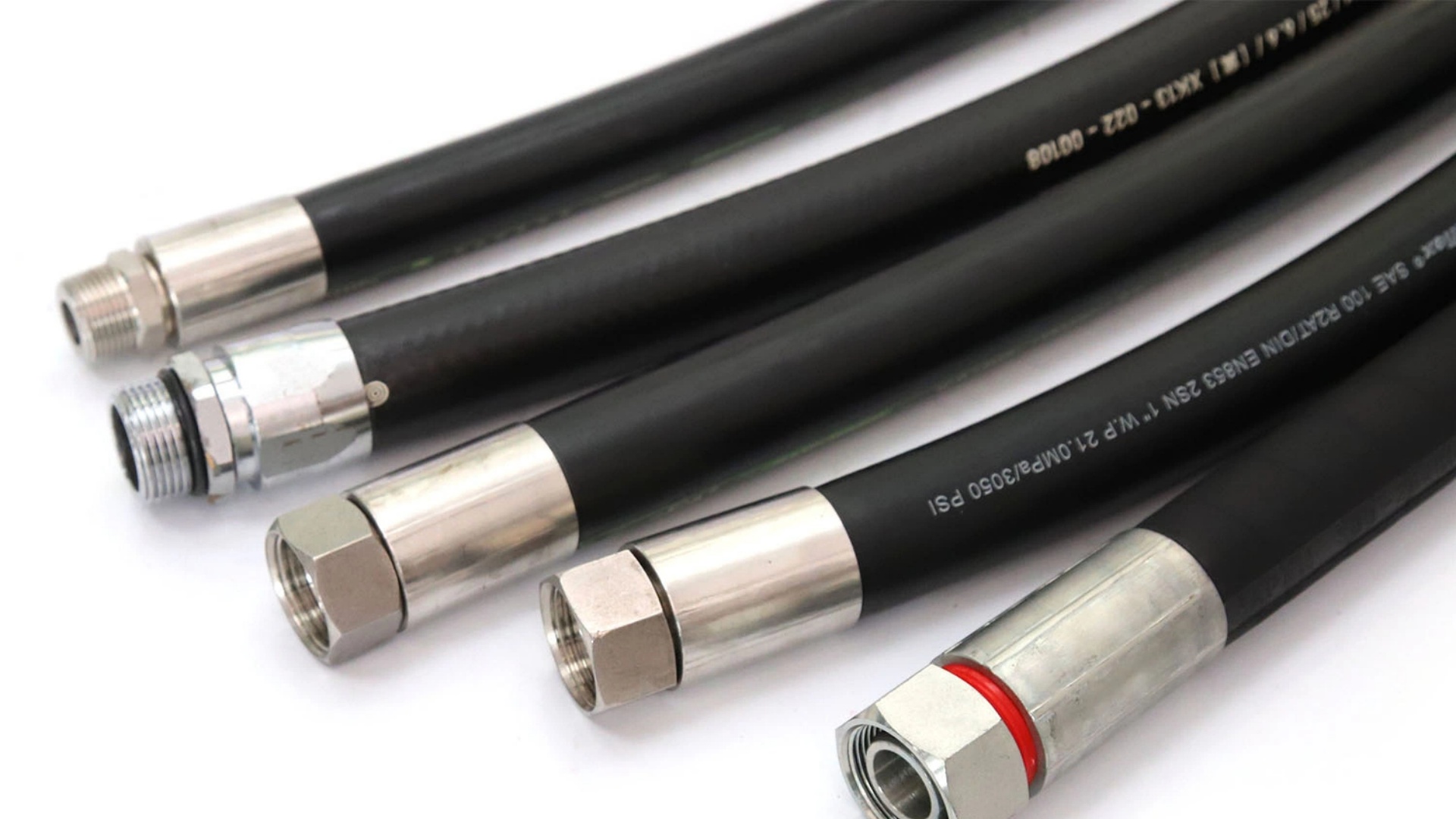
First of all, the core performance of this hose is the key to selection. Many users are confused about its temperature range. The conventional fiber-wound high-temperature steam hose can withstand temperatures from 180℃ to 220℃, and some special models can adapt to higher temperatures, which can stably transport saturated steam and high-temperature hot water to meet most industrial steam needs. Second is the pressure-bearing capacity. It adopts a multi-layer high-strength fiber winding structure, and the winding angle is scientifically designed. The working pressure can reach 0.6MPa to 1.5MPa. It is resistant to impact and extrusion, and can adapt to complex working environments. Third, it has good weather resistance. The outer layer is made of special synthetic rubber, which can resist mild corrosion and wear. Even for short-term outdoor use, it is not easy to age and crack.
For installation and use, common problems are mostly caused by improper operation. During installation, it is forbidden to overstretch or twist the hose, and expansion allowance should be reserved to avoid extrusion of the hose body caused by thermal expansion of steam. When connecting joints, matching seals should be used, and the tightening force should be moderate. Loose connection leads to leakage, while overtightening will damage the hose mouth. During use, keep the hose away from sharp objects to prevent scratches on the outer layer. It is strictly prohibited to use it beyond its pressure and temperature limits, otherwise the fiber layer will age rapidly, and the service life will be shortened. In addition, when used in mobile scenarios, avoid friction between the hose and hard objects, standardize wiring, and do not let heavy objects press it.
As for common faults, most can be quickly checked. If leakage occurs, first check whether the joint is loose and whether the seal is aging, and then tighten or replace it in time. If the hose body bulges, it is mostly caused by overpressure or damage to the fiber layer, which is a safety hazard. It is necessary to stop using it immediately and replace it. If the transmission pressure drops, it may be caused by blockage in the hose or excessive bending. The pipeline should be cleaned and the wiring should be adjusted. Many people wonder about its service life. With normal use and standardized maintenance, its service life can reach 2 to 3 years. If it is used at high temperature and under corrosion for a long time, the service life will be greatly shortened.
Daily maintenance is also very important. Regularly check the wear of the outer layer and the sealing of joints. Avoid exposure to sunlight and heavy pressure during storage. Clean, dry and store the hose properly when not in use, which can maximize the service cycle of the hose. In short, mastering these common questions and solutions enables us to use the hose scientifically, ensure safe and stable steam transmission, reduce hidden dangers, and provide reliable support for various operations.
