Born for Reliability: Analyzing the Value of Filament-Wound Compressed Air Hose in Critical Systems
2025-10-08 15:37:34
Compressed air is the essential "blood" of industrial production, powering countless pneumatic tools, equipment, and automation systems. The performance of compressed air hoses, the "blood vessels" that transport this critical medium, is directly related to the overall system's operating efficiency, safety, and cost. Among numerous products, filament-wound compressed air hoses that comply with the GB/T 1186 standard, with their superior design and reliable performance, have become the preferred choice for demanding applications in industries like construction and mining. More than just a hose, they are engineering masterpieces built for industrial reliability.
I. Performance in Harsh Environments: An In-Depth Analysis of Structure and Materials
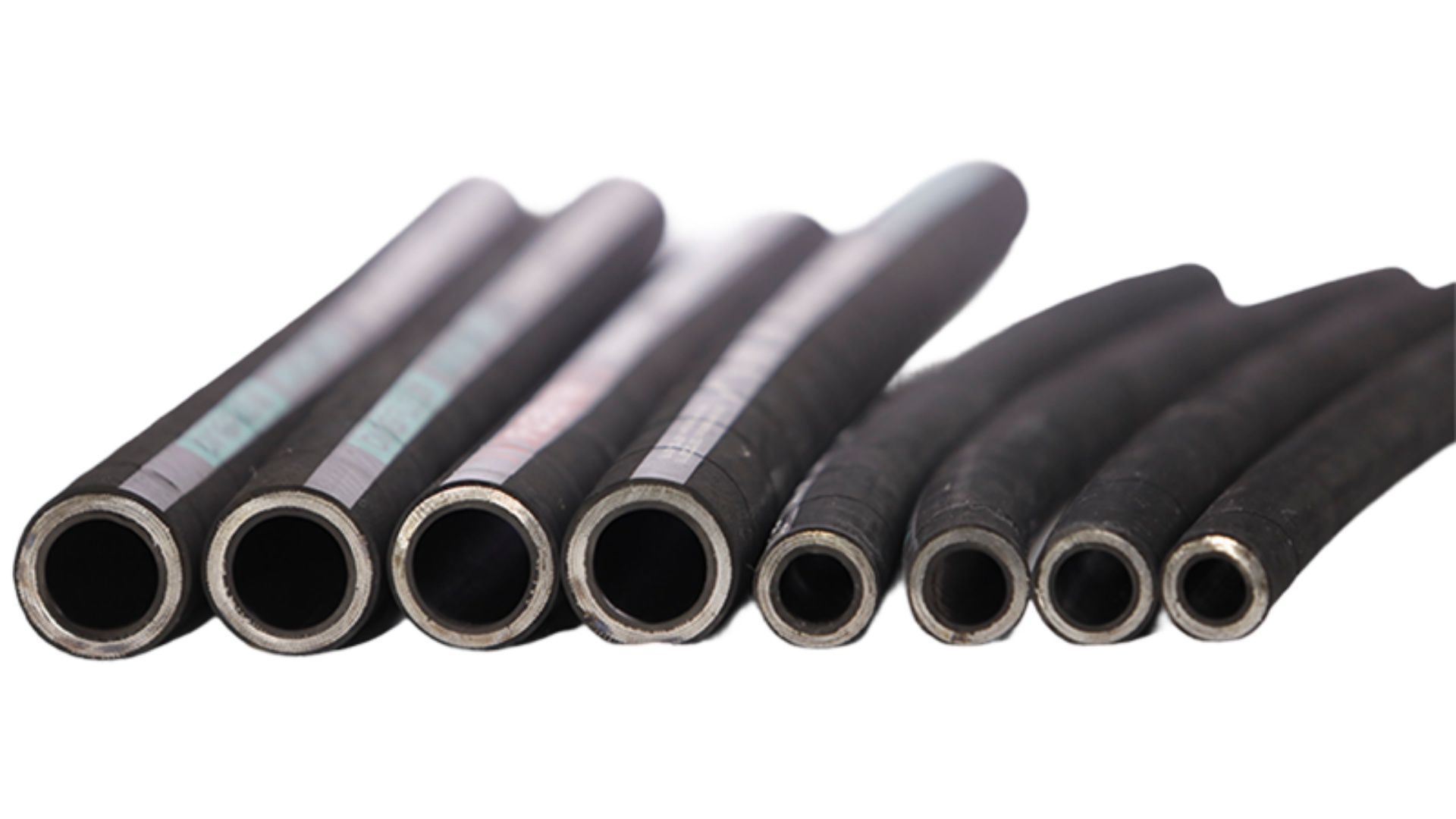
The superior performance of filament-wound compressed air hoses stems from their sophisticated "sandwich" composite structure, where each layer plays a crucial role.
Inner Tube: The Guardian of High-Temperature Resistance and Smooth Delivery
The inner layer is constructed of black, high-temperature-resistant synthetic rubber. This is more than just a simple lining; it directly withstands the high-speed flow of compressed air and any moisture and trace oil it may contain. Its excellent high-temperature resistance (up to 150°C) ensures it will not soften, degrade, or crack in high-temperature environments, effectively preventing the risk of lining debris contaminating the air path and damaging downstream equipment. Furthermore, the smooth interior design minimizes pressure loss, ensuring efficient airflow.
Reinforcement Layer: The Pressure-Bearing and Flexible Engineering Core
This layer is the "skeleton" and "muscle" of the filament-wound hose. Through a composite reinforcement technology of high-tensile synthetic fiber winding and highly flexible spiral steel wire winding, this structure creates an unparalleled balance of strength and flexibility. The high-tensile fiber provides an extremely high burst pressure, ensuring the hose can withstand a constant operating pressure of 10 bar with ample safety margin. The spiral steel wire not only provides additional pressure resistance but also imparts exceptional flexibility and kink resistance. Even in complex routings and during frequent dragging, the hose remains unobstructed and resists crushing or kinking, significantly enhancing ease of use and longevity.
Outer Layer: A Solid Armor Against External Aggressions
The outer layer is also made of black, high-temperature-resistant synthetic rubber. It withstands the elements—the friction of construction sites, the impact of mining debris, oil corrosion, and unexpected high-temperature exposure. This strong armor gives the hose excellent resistance to abrasion, weathering, and light oil contamination, protecting the internal reinforcement from damage, thereby ensuring the long-term structural integrity of the entire hose.
II. Beyond-Conventional Application Value: Why is it Essential for Critical Systems?
The value of fiber-wound compressed air hose is fully demonstrated in critical systems where safety, efficiency, and continuity are paramount.
1. Ensuring Stable Operation in Extreme Temperatures
Its wide temperature range (-30°C to 150°C) enables it to withstand most extreme industrial environments. It resists hardening and brittleness in cold northern winters and maintains stable performance in scorching summers or near high-temperature equipment, eliminating the risk of bulging and bursting common hoses at high temperatures. This reliability is crucial for continuous-production manufacturing and mining operations far from refueling points.
2. Improved Safety and Reduced Downtime Risk
A working pressure of 10 bar (150 PSI) is a common pressure range for many heavy-duty pneumatic tools and equipment. The high pressure resistance and excellent pulse resistance offered by the filament-wound construction mean it remains robust even under pressure fluctuations and shocks, significantly reducing the likelihood of hose bursts causing production interruptions or even safety incidents. This is a non-negotiable requirement in the safety-critical mining and construction industries.
3. Durability and Lower Lifecycle Cost
While the initial investment for filament-wound hose may be slightly higher than that of standard braided hose, its exceptionally long service life and extremely low failure rate result in a superior "lifecycle cost." Reduced replacement frequency, reduced risk of equipment damage, and avoided production downtime and losses make it a more cost-effective investment in the long run.
4. Flexibility and Improved Work Efficiency
The highly flexible design simplifies hose routing, allowing workers to quickly deliver compressed air to the required locations without worrying about hose stiffness or kinks. This can significantly improve work efficiency and operator experience on construction sites and underground mines, where space is limited and workstations require frequent movement.
Conclusion
When selecting compressed air hose, it's crucial to think of it as more than just a "one-size-fits-all" accessory. GB/T 1186 Filament-Wound Compressed Air Hose, with its specialized materials science, rigorous structural design, and wide adaptability, sets a new standard for industrial-grade compressed air hose. It doesn't just deliver air; it delivers a promise of safety, reliability, and efficiency. For any industry focused on system stability, operational safety, and long-term return on investment, choosing a product built for reliability is undoubtedly a wise decision to ensure the smooth operation of critical systems.


Leave A Comment