
In petroleum drilling operations, the Blowout Preventer (BOP) is revered as the "last line of defense" for well control. When a kick or blowout incident occurs, the BOP must respond instantaneously, using hydraulic power to rapidly close the rams and seal the wellbore. Connecting the hydraulic power unit to the BOP actuator is the seemingly inconspicuous yet critically important BOP control line.
The performance of this control line directly dictates the BOP's response speed and reliability. Among various standards, the SAE 100R7 wire braided high-pressure thermoplastic hose stands out for its exceptional pressure stability, a direct result of its unique material and structural composition, making it an ideal choice for BOP control systems. This article analyzes how the technical characteristics of the SAE 100R7 hose ensure the BOP operates with "split-second precision and absolute reliability" when it matters most.
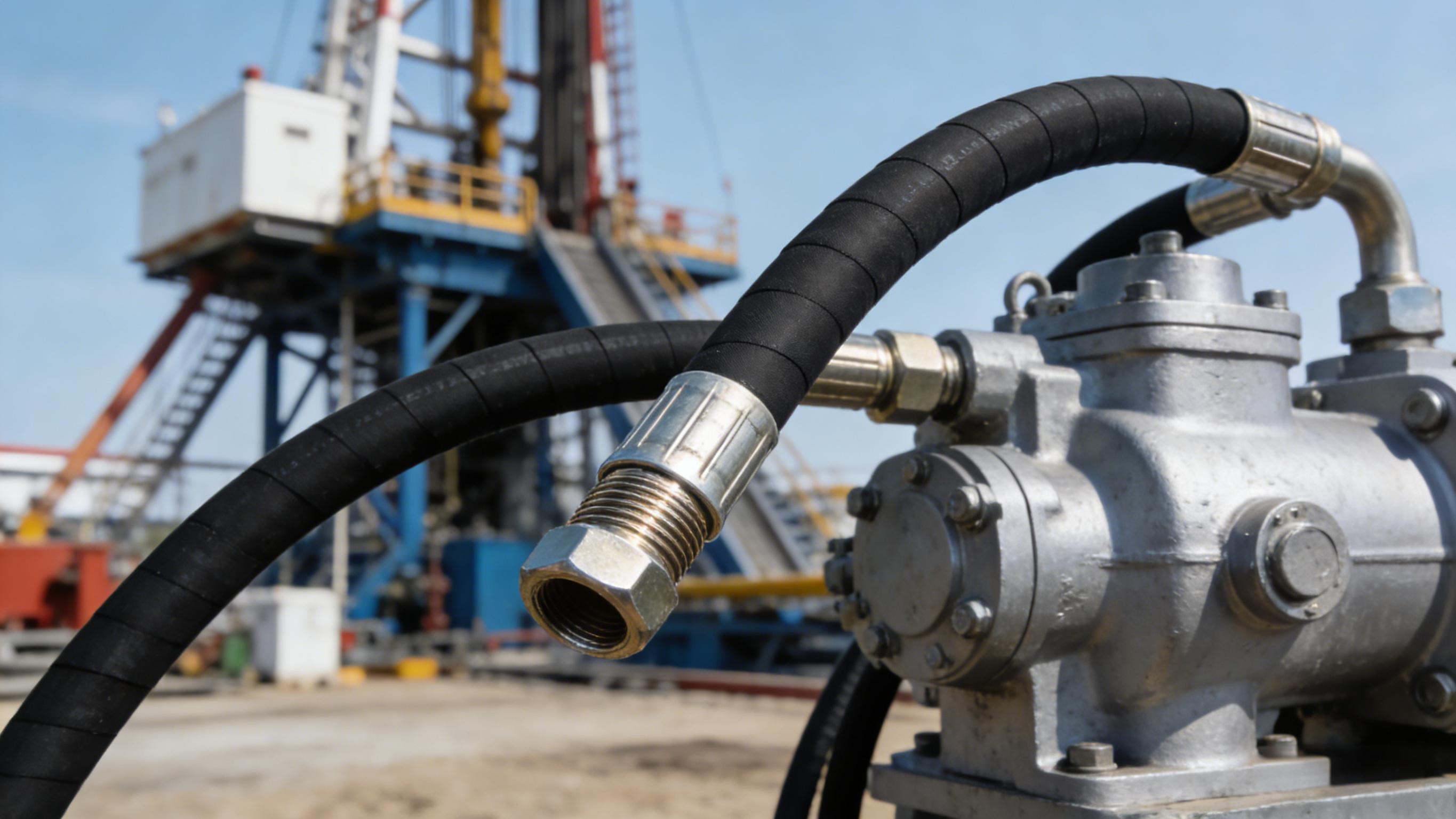
BOP control systems impose extremely stringent requirements on the control line, primarily in three areas:
Instantaneous Pressure Response: Upon the command to close the BOP, the pressure wave must travel from the control unit to the actuator with minimal delay. Any lag in pressure transmission can lead to untimely well closure, potentially causing a major disaster.
Pressure Holding Capability: In standby mode, the control line must maintain system pressure over long periods, preventing pressure decay that could cause actuator misoperation or sluggish response. This pressure-holding capability is directly linked to the BOP's constant readiness.
Harsh Environment Adaptability: Drilling sites are fraught with oil mist, mud, sunlight, vibration, and other adverse factors. The control line must maintain stable performance over its service life in these harsh conditions, resisting aging and leakage.
The SAE 100R7 standard hose, with its three-layer construction of a nylon inner tube, wire braid reinforcement, and polyurethane cover, ensures pressure transmission stability from multiple dimensions.
1. Nylon Inner Tube: Low Permeability Ensures Pressure Fidelity
A core requirement of BOP control systems is pressure maintenance. Traditional rubber hoses, due to their relatively loose molecular structure, exhibit (micropenetration) under high pressure, where pressure slowly leaks through the tube wall, causing system pressure decay. This is a critical (potential hazard) for BOP control systems that must remain on standby for extended periods.
Extremely Low Permeability: The nylon (polyamide) inner tube of the SAE 100R7 hose has a highly dense molecular structure, providing a far superior barrier to hydraulic fluids and gases compared to ordinary rubber. This means that even during prolonged pressure-holding periods, pressure loss through the tube wall is minimal, ensuring the BOP is always in a state of readiness.
Fluid Compatibility: BOP control systems typically use petroleum-based hydraulic oils or water-based control fluids. The nylon inner tube exhibits excellent resistance to both media, preventing swelling or softening from long-term contact, thus avoiding pressure fluctuations caused by changes in the inner diameter.
2. Wire Braid Layer: Low Expansion Ensures Pressure Response Speed
When a pressure wave is transmitted from the control unit, the volumetric expansion of the hose itself absorbs some energy, slowing down the pressure transmission speed. This phenomenon, known as "volumetric expansion," is a key factor affecting system response time.
High Modulus of Elasticity: The one or two layers of steel wire braid reinforcement in the SAE 100R7 hose possess a very high modulus of elasticity. Compared to fiber or textile reinforcement, the wire braid layer maximally (suppresses) the radial expansion of the hose under high pressure. This means the energy of the pressure wave is almost entirely used to propel the fluid forward, rather than being consumed in bulging the hose.
Rapid Pressure Build-up: At the moment the BOP closure command is issued, the SAE 100R7 hose enables near-instantaneous pressure build-up, transmitting the pressure wave to the actuator at maximum speed, ensuring the rams complete their closing action in the shortest possible time. This is invaluable in scenarios demanding extreme response speed, such as deepwater drilling or high-pressure gas wells.
3. Polyurethane Cover: Environmental Protection Ensures Long-Term Stability
Even the best pressure performance will gradually degrade due to environmental erosion if the cover protection is inadequate. The polyurethane cover of the SAE 100R7 hose provides long-term (assurance) for pressure stability.
Abrasion Resistance: Drilling sites are dense with lines and hoses, making friction inevitable. Polyurethane's superior abrasion resistance prevents cover damage that could lead to wire corrosion or inner tube exposure, thus averting pressure leaks.
Weather Resistance: Polyurethane exhibits excellent resistance to UV radiation, ozone, oil, and seawater (for offshore drilling). Even under prolonged sun exposure or in salty marine environments on platforms, the cover resists aging and cracking, ensuring the hose's pressure stability throughout its entire lifecycle.
In a BOP control system, the pressure stability of the control line is the cornerstone of well control safety. The SAE 100R7 wire braided high-pressure thermoplastic hose, with its ultra-low permeability nylon inner tube, low volumetric expansion wire braid reinforcement, and environmentally resistant polyurethane cover, establishes a comprehensive system of technical assurance.
It not only meets the dual demands of the BOP control system for instantaneous response and long-term pressure holding but also, through its (exceptional durability), reduces maintenance costs and failure risks in drilling operations. For drilling operations adhering to the highest safety standards, choosing the SAE 100R7 hose for BOP control lines is the best practice of the "safety first" philosophy.

Leave A Comment