
In the field of construction machinery, the hydraulic system is hailed as the equipment's "blood circulation system," and hydraulic hoses are the critical "blood vessels." Faced with a dazzling array of hose products on the market, engineers and procurement professionals often encounter a choice: should they select hoses according to the American SAE standard or the European EN standard?
When a single hose simultaneously meets both the SAE 100 RAT and EN 853 ST international standards, it possesses a unique competitive advantage. This article delves into the technical implications of dual-standard hoses and explains why choosing them is a wise and forward-looking decision in modern construction machinery hydraulic systems.
First, we need to understand what these two standards entail.
SAE 100 RAT is a hydraulic hose standard developed by the Society of Automotive Engineers (SAE), part of the SAE J517 standard system. The 100RAT type refers to "one or two wire braid" hydraulic hoses suitable for medium-pressure applications.
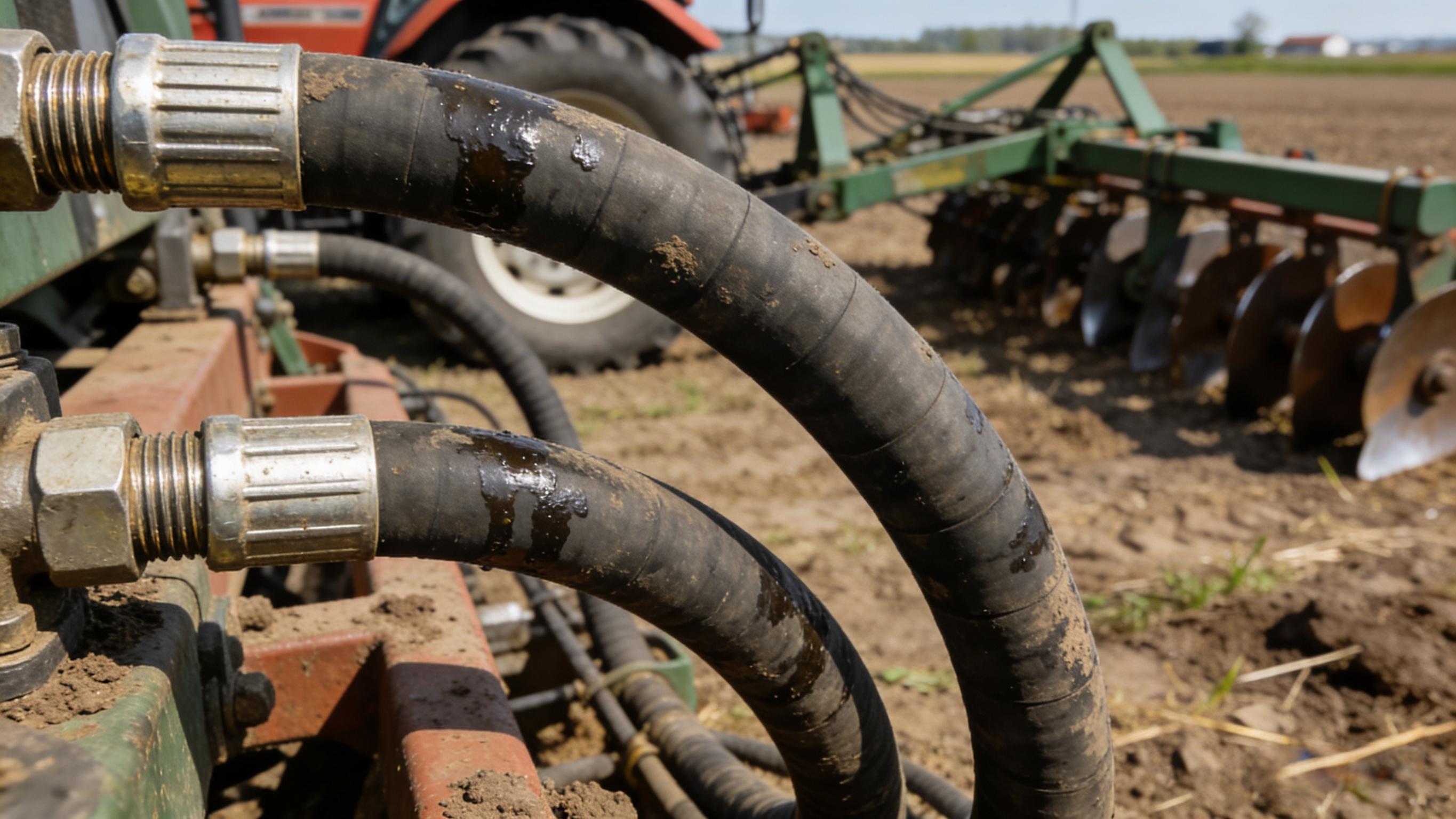
EN 853 ST is a hydraulic hose standard developed by the European Committee for Standardization (CEN). The ST type similarly refers to "one or two wire braid" hydraulic hoses, with 1ST indicating one braid layer and 2ST indicating two braid layers.
Notably, these two standards have high consistency in technical parameters: equivalent pressure ratings, identical burst pressure requirements, and the same impulse performance test standards. This means that a hose certified to both standards gains recognition in both American and European markets without needing different specifications for different regions.
For construction machinery manufacturers, this translates to simplified supply chains and reduced inventory costs . An excavator exported globally, if uniformly equipped with dual-standard hoses,does not need to separately procure American-standard or European-standard hoses for different export destinations, greatly enhancing procurement efficiency and supply chain flexibility.
Dual certification is not merely a passport; it signifies that the product has undergone double rigorous testing .
A qualified SAE 100 RAT/EN 853 ST dual-standard hose must simultaneously meet all performance requirements of both standards, including:
Pressure Testing: Working pressure, proof pressure, and burst pressure must comply with the specified values of both SAE and EN standards. For two-wire braid hoses, the working pressure typically falls within a predetermined range, while burst pressure must reach four times the working pressure.
Impulse Performance Testing: The hose must withstand millions of pressure impulse cycles without leakage, bulging, or wire layer fatigue fracture. Dual certification means the hose has passed the impulse test cycle counts and pressure curve requirements specified by both SAE and EN standards.
Low-Temperature Bending Test: At minus forty degrees Celsius, the hose must bend to a specified radius without cracking, demonstrating its suitability for cold regions.
Cover Adhesion Test: The bond strength between the cover rubber and reinforcement layer must meet standard requirements, preventing separation during use.
A hose passing dual certification effectively possesses double quality endorsement . For equipment like construction machinery that demands extremely high reliability, this double assurance holds significant value.
Both SAE 100 RAT and EN 853 ST standards impose strict requirements on reinforcement layer performance. The core technical highlight of dual-standard hoses lies in their use of high-strength super-flexible steel wire as the reinforcing material.
High strength means the wire can withstand greater tensile loads, ensuring the hose does not burst under high pressure. This is particularly important for construction machinery like excavators and loaders that frequently withstand pressure shocks.
Super flexibility means the wire maintains good bending properties while ensuring strength. This allows the hose to flexibly route within space-constrained machine bodies, even with relatively small bend radii, without causing excessive stress concentration in the wire layer.
This characteristic of "balancing strength and flexibility" enables dual-standard hoses to excel in the complex operating conditions of construction machinery. Whether during frequent bending at the excavator boom base or under high-pressure shocks near the loader bucket cylinder, the hose maintains stable performance.
The structural design of dual-standard hoses reflects a deep understanding of the harsh operating conditions of construction machinery.
Inner Tube: Black Oil-Resistant Synthetic Rubber
The inner layer directly contacts the hydraulic fluid and must possess excellent media resistance. Dual-standard hoses use specially formulated oil-resistant synthetic rubber for the inner tube, exhibiting good resistance to petroleum-based hydraulic oils, water-based hydraulic oils, and biodegradable hydraulic oils. It will not swell, soften, or peel due to prolonged contact, ensuring hydraulic system cleanliness and stable flow.
Reinforcement Layer: One or Two Layers of High-Strength Super-Flexible Wire Braid
As the hose's "skeleton," the reinforcement layer bears the primary pressure load. The braiding angle, density, and tension of the steel wire are precisely calculated, enabling the hose to maintain shape stability under high pressure while absorbing system pressure shocks.
Cover: Black Oil-Resistant, Weather-Resistant, Abrasion-Resistant Synthetic Rubber
Construction machinery often operates in harsh environments, and the hose cover must withstand multiple challenges including sunlight, rain, oil contamination, and abrasion from rocks and debris. Dual-standard hoses use an abrasion-resistant and weather-resistant cover formulation, maintaining elasticity and integrity even during frequent contact with metal components or exposure to UV radiation, preventing damage to the internal reinforcement layer.
Construction machinery often operates under extreme climate conditions: harsh northern winters, scorching southern summers, and high-temperature dryness in desert regions. The working temperature range of dual-standard hoses covers a broad spectrum from minus forty degrees Celsius to plus one hundred degrees Celsius, adapting to operating environments in the vast majority of global regions.
In low-temperature environments, the hose maintains flexibility without becoming brittle. In high-temperature environments, the hose maintains mechanical strength without softening or deforming. This all-weather adaptability enables equipment manufacturers to avoid customizing hoses for different climate zones, further simplifying supply chain management.
SAE 100 RAT/EN 853 ST dual-standard hoses are widely used in the hydraulic systems of various construction machinery:
Excavators: Hydraulic lines for boom cylinders, arm cylinders, bucket cylinders; inlet and outlet hoses for swing motors; hose connections for travel motors.
Loaders: Hydraulic lines for bucket cylinders and lift cylinders; control lines for steering systems.
Bulldozers: Hydraulic hoses for blade lift cylinders and ripper cylinders.
Cranes: Hydraulic lines for outrigger cylinders, luffing cylinders, and telescopic boom cylinders.
Mining Trucks: Hydraulic hoses for hoist systems, steering systems, and braking systems.
In these applications, dual-standard hoses, with their reliable performance, broad applicability, and globally recognized certification , provide solid assurance for equipment stability.
In today's increasingly globalized construction machinery industry, equipment export and cross-border movement have become the norm. Choosing a hose that simultaneously meets both SAE 100 RAT and EN 853 ST standards means selecting globally accepted quality assurance, doubly verified performance reliability, and simplified and efficient supply chain management.
For construction machinery manufacturers, dual-standard hoses are not merely a product choice but a strategic decision. They enable equipment to earn customer trust with unified standards and quality, whether sold in the Americas, Europe, or other regions.
For equipment users, dual-standard hoses mean fewer failures, longer service life, and lower maintenance costs. At demanding construction sites, every reliable hydraulic transmission is a powerful guarantee of project progress.
SAE 100 RAT/EN 853 ST dual-standard wire braid hydraulic hoses, with standards as their foundation, technology at their core, and applications as their guide, are becoming the preferred choice for more and more construction machinery hydraulic systems. Choosing dual-standard means choosing a quality commitment facing the future.

Leave A Comment