
In the realm of modern hydraulic transmission, hoses serve as flexible connectors whose performance directly impacts the reliability and efficiency of the entire machinery. As hydraulic systems trend towards higher pressure, lighter weight, and longer service life, traditional rubber hoses are showing limitations under certain operating conditions. Enter the SAE 100R7 certified wire braided high-pressure thermoplastic hose. With its unique material combination and structural design, it is becoming the preferred choice for an increasing number of high-end hydraulic equipment applications.
This article delves into the core technical advantages of SAE 100R7 certified hoses, specifically how the combination of a nylon inner tube and a polyurethane cover delivers revolutionary performance enhancements to hydraulic systems.
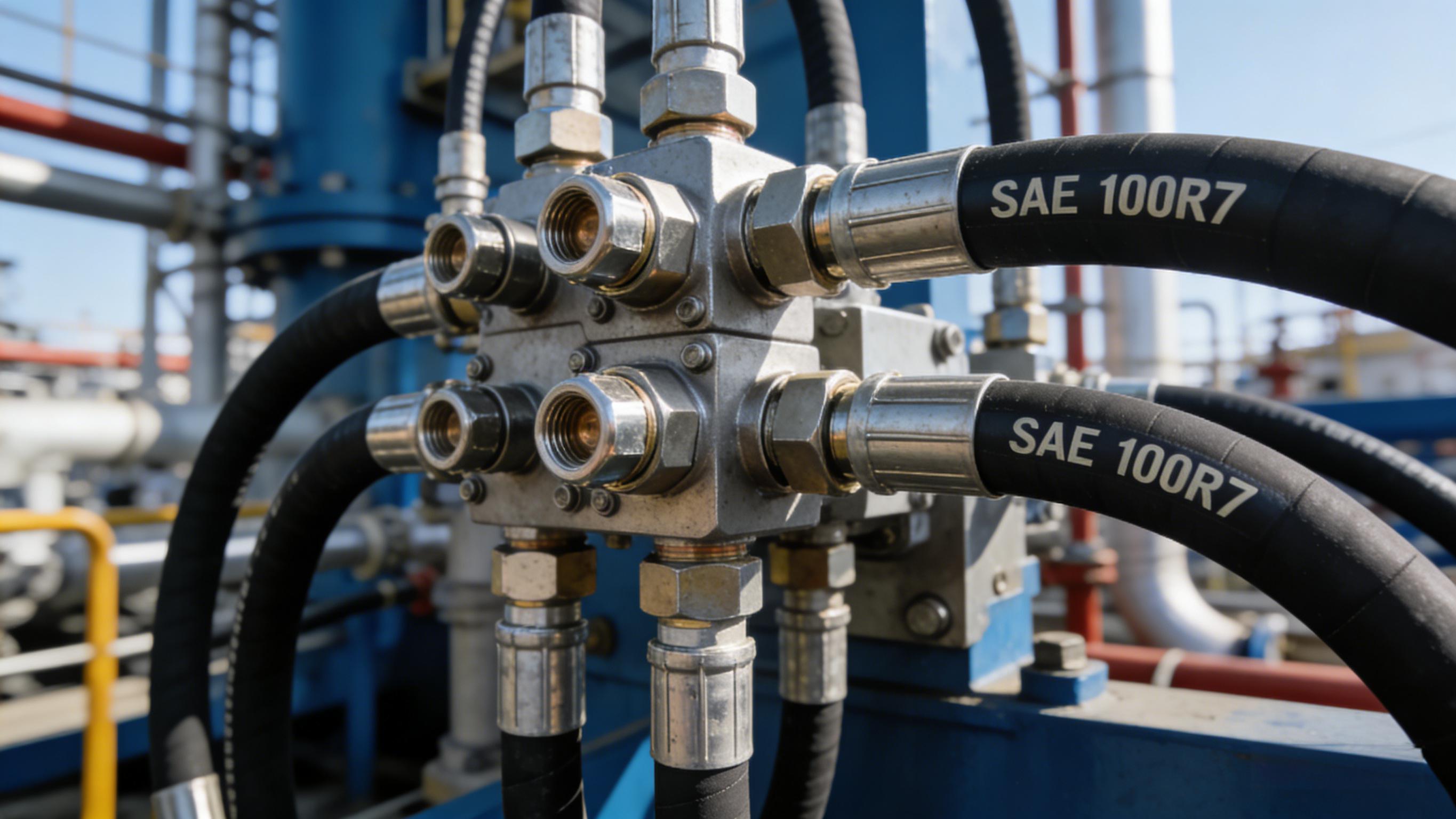
SAE 100R7 is a hydraulic hose standard developed by the Society of Automotive Engineers (SAE), specifically addressing thermoplastic hydraulic hoses. Unlike standards for traditional rubber hoses (such as 100R1, 100R2), the 100R7 standard specifies requirements for hoses featuring a thermoplastic inner tube (typically nylon) and a synthetic fiber or wire braid reinforcement layer.
SAE 100R7 hoses are designed for medium-pressure applications (typically ranging from 3.45 MPa to 20.7 MPa, depending on size) and are suitable for various fluids, including petroleum-based and water-based hydraulic oils. The defining characteristic is the nylon inner tube, which provides a series of technical advantages unmatched by rubber hoses.
The most prominent feature of an SAE 100R7 hose is its nylon (polyamide) inner tube.
Excellent Chemical Resistance: Nylon exhibits exceptional resistance to petroleum-based hydraulic oils, lubricating oils, fuels, and water-based hydraulic fluids. Compared to ordinary rubber, nylon is less prone to swelling, softening, or degradation, ensuring the hose maintains stable internal dimensions and sealing performance after prolonged fluid contact. This makes it exceptionally suitable for demanding applications like lubrication lines and BOP (Blowout Preventer) control lines, where fluid purity and system response speed are critical.
Extremely Low Fluid Permeability: The dense molecular structure of nylon provides a far superior barrier to gases and liquids compared to standard rubber. This means SAE 100R7 hoses effectively minimize微量渗透 (micropenetration) of hydraulic fluid through the tube wall, reducing not only fluid loss but also volatile emissions that can harm the environment, aligning with increasingly stringent ecological requirements.
Smooth Inner Surface, Reduced Pressure Loss: The nylon inner tube has an exceptionally smooth surface with a low friction coefficient. This results in lower flow resistance as hydraulic fluid travels through the hose, reducing pressure drops and enabling quicker system response. Additionally, the smooth surface resists dirt accumulation, helping maintain system cleanliness.
While the SAE 100R7 standard permits fiber reinforcement, hoses with a wire braid reinforcement layer offer superior pressure capacity and impact resistance.
One or Two Wire Braid Layers: Depending on the pressure rating, the reinforcement can be designed as one or two layers of high-tensile steel wire braid. This construction provides excellent burst strength and impulse resistance, confidently handling the frequent pressure fluctuations common in hydraulic systems.
Dimensional Stability: The wire braid effectively limits hose expansion and contraction under high pressure, ensuring length stability. This is particularly important in precision hydraulic systems where accurate fluid volume control is necessary.
Maintained Flexibility: The wire braid structure, while providing high strength, retains good flexibility, allowing the hose to navigate complex routing paths and facilitating installation on equipment like hydraulic lifts, agricultural machinery, and construction equipment.
The cover of an SAE 100R7 hose utilizes polyurethane (PU) , another significant differentiator from traditional rubber hoses.
Superior Abrasion Resistance: Polyurethane is a renowned wear-resistant material, with abrasion resistance several times or even dozens of times higher than ordinary rubber. In applications like agricultural and construction machinery, where operating environments are harsh and hoses frequently rub against rocks, debris, and metal components, the PU cover effectively protects the internal reinforcement, dramatically extending hose service life.
Excellent Weather Resistance: Polyurethane offers outstanding resistance to UV radiation, ozone, oxidation, and hydrolysis. Even under prolonged outdoor exposure or in humid conditions, the cover resists cracking and aging, ensuring the hose's all-weather applicability.
Lightweight Advantage: Compared to equivalent rubber hoses, thermoplastic hoses are generally lighter, contributing to overall machine weight reduction and potentially lowering energy consumption.
The SAE 100R7 standard specifies an operating temperature range of -40°C to +100°C. The combination of the nylon inner tube and polyurethane cover ensures the hose maintains excellent flexibility in extremely cold environments without becoming brittle, while also retaining stable mechanical properties at high temperatures without softening or deforming. This characteristic allows it to perform reliably in climates ranging from harsh northern winters to tropical conditions.
Leveraging the advantages above, SAE 100R7 wire braided high-pressure thermoplastic hoses are widely used across various sectors:
Hydraulic Lifts: Require hoses that are lightweight, flexible, resistant to bending fatigue, and maintain high hydraulic fluid purity. The low permeability and smooth bore of the nylon inner tube are ideal.
Agricultural Machinery (Tractors, Harvesters): Operate in dusty, muddy environments with frequent bending and outdoor exposure. The PU cover's abrasion and weather resistance are critical here.
Construction Machinery (Excavators, Loaders): Face high pressure, high impact, and high wear, demanding comprehensive hose performance. The wire braid reinforcement provides the necessary strength.
BOP Control Lines: Demand extreme response speed and reliability. The low permeability and dimensional stability of the nylon tube ensure precise control.
The SAE 100R7 certified wire braided high-pressure thermoplastic hose, with its chemically resistant, low-permeability nylon inner tube, high-strength wire braid reinforcement, and exceptionally abrasion-resistant polyurethane cover, presents a technically superior solution compared to traditional rubber hoses. Its outstanding performance in lightweight design, longevity, environmental friendliness, and adaptability to various operating conditions makes it an indispensable component in modern hydraulic systems, particularly in mobile hydraulic equipment.
Choosing an SAE 100R7 hose is not just selecting a connector; it's choosing higher efficiency, longer service life, and greater reliability for your hydraulic system.

Leave A Comment