
In modern logistics warehousing, construction sites, and commercial complexes, hydraulic lifts have become indispensable vertical transportation equipment due to their smooth operation, strong load capacity, and small footprint. Whether scissor lifts, cargo lifts, or vehicle lifts, their core power transmission relies on hydraulic systems. Within these systems, the hoses connecting various components, though seemingly inconspicuous, significantly impact overall machine performance.
SAE 100R7 wire braided high-pressure thermoplastic hoses, with their unique material and structural design, provide a lightweight, high-performance hydraulic transmission solution for hydraulic lifts. This article analyzes how SAE 100R7 hoses help hydraulic lifts achieve the goals of being lighter, stronger, and more durable.
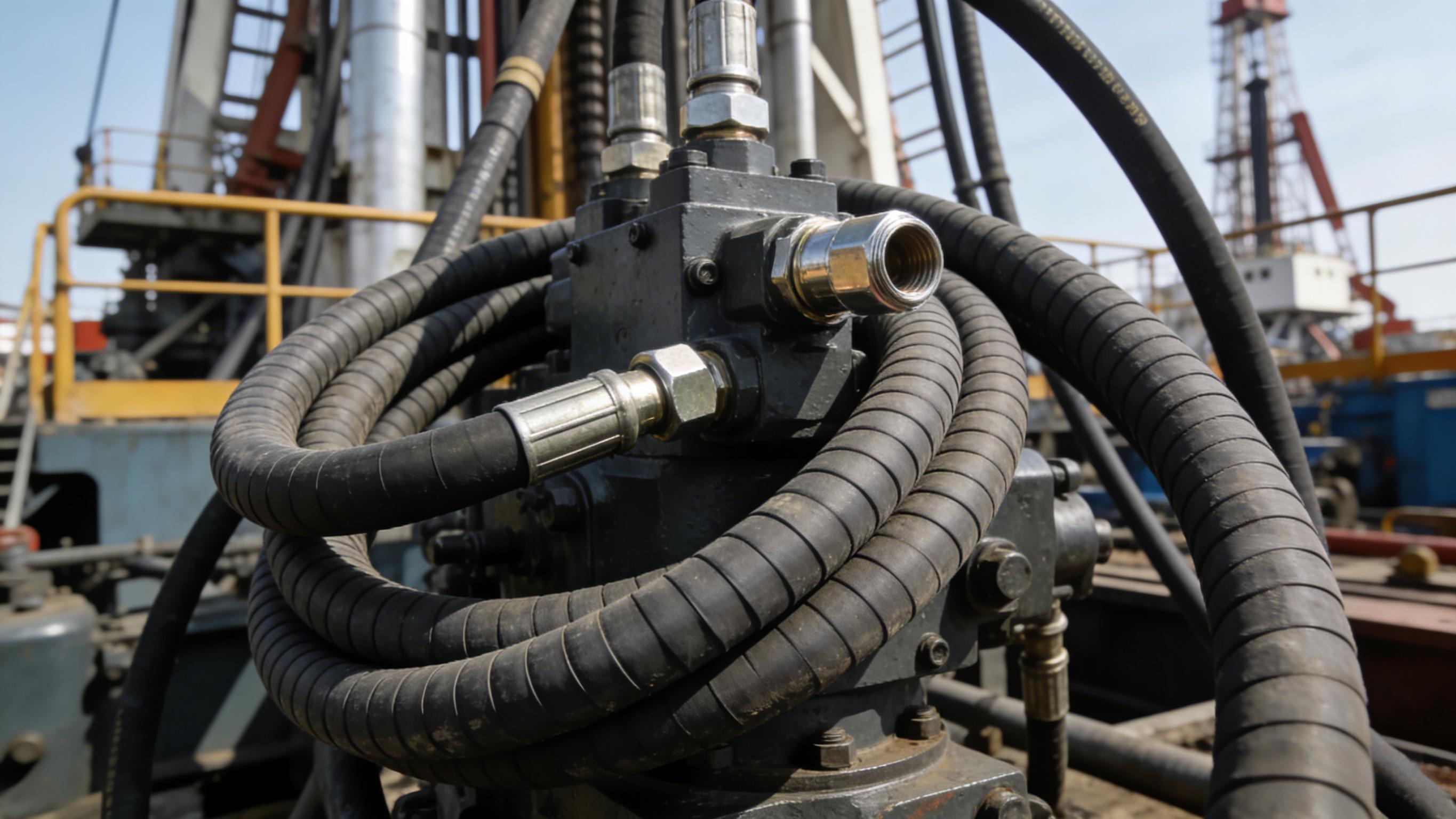
Special Requirements of Hydraulic Lifts for Hoses
The operating characteristics of hydraulic lifts impose requirements on hoses that differ from general industrial equipment.
First is frequent bending. During lift operation, hoses bend and straighten repeatedly as the work platform moves up and down. This demands excellent flexibility and bending fatigue resistance from the hose.
Second is compact space. Lift designs often pursue compactness, leaving limited space for hose routing. Hoses must be flexibly arranged in tight spaces, withstanding smaller bend radii without damage.
Third is lightweight requirements. For mobile lifts, overall machine weight directly affects transport convenience and energy consumption. Lightweight hydraulic components become a design priority.
Fourth is weather resistance. Many lifts operate outdoors, exposed to sun and rain. Hoses must withstand UV radiation, ozone, and temperature variations.
SAE 100R7 thermoplastic hoses precisely meet these demands.
Nylon Inner Tube: Smooth Transmission, Lasting Reliability
The inner tube of SAE 100R7 hoses uses nylon material, a choice that brings multiple benefits to hydraulic lifts.
The nylon inner tube has an extremely smooth surface with a friction coefficient far lower than traditional rubber. This means hydraulic fluid flows through the hose with less resistance, lower pressure loss, and quicker system response. For lifts requiring frequent start-stop operation, this quick response characteristic is particularly important.
Nylon material exhibits excellent resistance to both petroleum-based and water-based hydraulic fluids,without swelling or softening from prolonged media contact. This ensures long-term stability of the hose inner diameter, avoiding flow fluctuations and pressure instability caused by diameter changes.
Additionally, nylon's dense molecular structure provides extremely low permeability to hydraulic fluid, effectively reducing oil vapor volatilization. This lowers fluid loss and reduces environmental pollution, aligning with modern equipment's environmental requirements.
Wire Braid Reinforcement: Strength with Flexibility
The reinforcement layer of SAE 100R7 hoses uses one or two layers of high-tensile steel wire braid, providing sufficient pressure capacity while maintaining good flexibility.
For hydraulic lifts, safe working pressure is a fundamental design parameter. The wire braid layer gives the hose excellent burst strength and impulse resistance, confidently handling pressure shocks generated during lift startup, stopping, and load changes. Even under prolonged high-frequency use, it maintains stable performance.
At the same time, the wire braid structure is optimized to achieve good flexibility while ensuring strength. This allows the hose to easily adapt to various bends in the lift's routing path. Even with relatively small bend radii, the wire layer avoids excessive stress, effectively extending hose service life.
Compared to traditional rubber hoses, the wire braid reinforcement design is more compact. At equivalent pressure ratings, SAE 100R7 hoses have thinner walls and lighter weight.
Polyurethane Cover: Lightweight, Abrasion-Resistant Shield
The cover of SAE 100R7 hoses uses polyurethane material, a key factor in achieving lightweight goals.
Polyurethane has lower density than traditional rubber, significantly reducing overall hose weight. For hydraulic lifts, especially mobile scissor lifts, every kilogram of weight reduction means higher transport efficiency and lower energy consumption. The cumulative effect of reducing weight across multiple hoses is considerable.
Polyurethane's abrasion resistance far exceeds ordinary rubber, reaching several times or even dozens of times higher. During lift operation, hoses may contact and rub against supports, chains, or other components. The polyurethane cover effectively resists wear, preventing wire layer exposure and corrosion.
Polyurethane also exhibits excellent weather resistance, with outstanding resistance to UV radiation, ozone, oxidation, and hydrolysis. Lifts installed outdoors are exposed year-round to sun and rain. The polyurethane cover maintains elasticity and integrity long-term, avoiding cracking and aging, ensuring reliable hose performance throughout its lifecycle.
Comprehensive Benefits of Lightweight Design
Applying SAE 100R7 thermoplastic hoses to hydraulic lifts brings multiple benefits from lightweight design.
First is overall machine weight reduction. As components of the hydraulic system, hose weight reduction directly contributes to lower machine dead weight. For mobile lifts requiring frequent site transfers, lighter means more flexible transport vehicle options and lower fuel consumption.
Second is energy savings. The smooth inner tube wall reduces flow resistance. The hydraulic pump needs to overcome less resistance, lowering system energy consumption. Over long-term operation, the energy-saving effect is considerable.
Third is installation convenience. Lighter weight and better flexibility make hoses easier to handle during installation, allowing more flexible routing and reducing installation time and labor intensity.
Fourth is extended service life. The wear-resistant, weather-resistant cover and fatigue-resistant reinforcement work together, enabling the hose to operate stably long-term under the demanding conditions of lifts, reducing replacement frequency and maintenance costs.
Typical Application Scenarios
SAE 100R7 thermoplastic hoses find wide application in various types of hydraulic lifts.
In scissor lifts, hoses connect the hydraulic pump station to lift cylinders, bending repeatedly as the platform rises and lowers. The flexibility and fatigue resistance of SAE 100R7 are fully utilized here.
In mobile aerial work platforms, hoses must withstand various outdoor environmental challenges. The weather resistance of the polyurethane cover becomes a key advantage.
In cargo lifts and vehicle lifts, hoses remain on standby for long periods. The low permeability of the nylon inner tube ensures stable system pressure maintenance, ready to respond to lift commands at any time.
Conclusion
Hydraulic lifts are important equipment in modern logistics and construction projects. Every detail of their performance deserves careful optimization. SAE 100R7 wire braided high-pressure thermoplastic hoses, with their low-resistance, low-permeability nylon inner tube, high-strength flexible wire braid reinforcement, and lightweight, abrasion-resistant polyurethane cover, provide a complete lightweight solution for lift hydraulic systems.
Choosing SAE 100R7 hoses means selecting lighter, faster response, longer service life, and lower maintenance costs for your hydraulic lifts. In today's pursuit of efficiency, energy savings, and environmental protection, this choice is undoubtedly wise and forward-looking.

Leave A Comment