
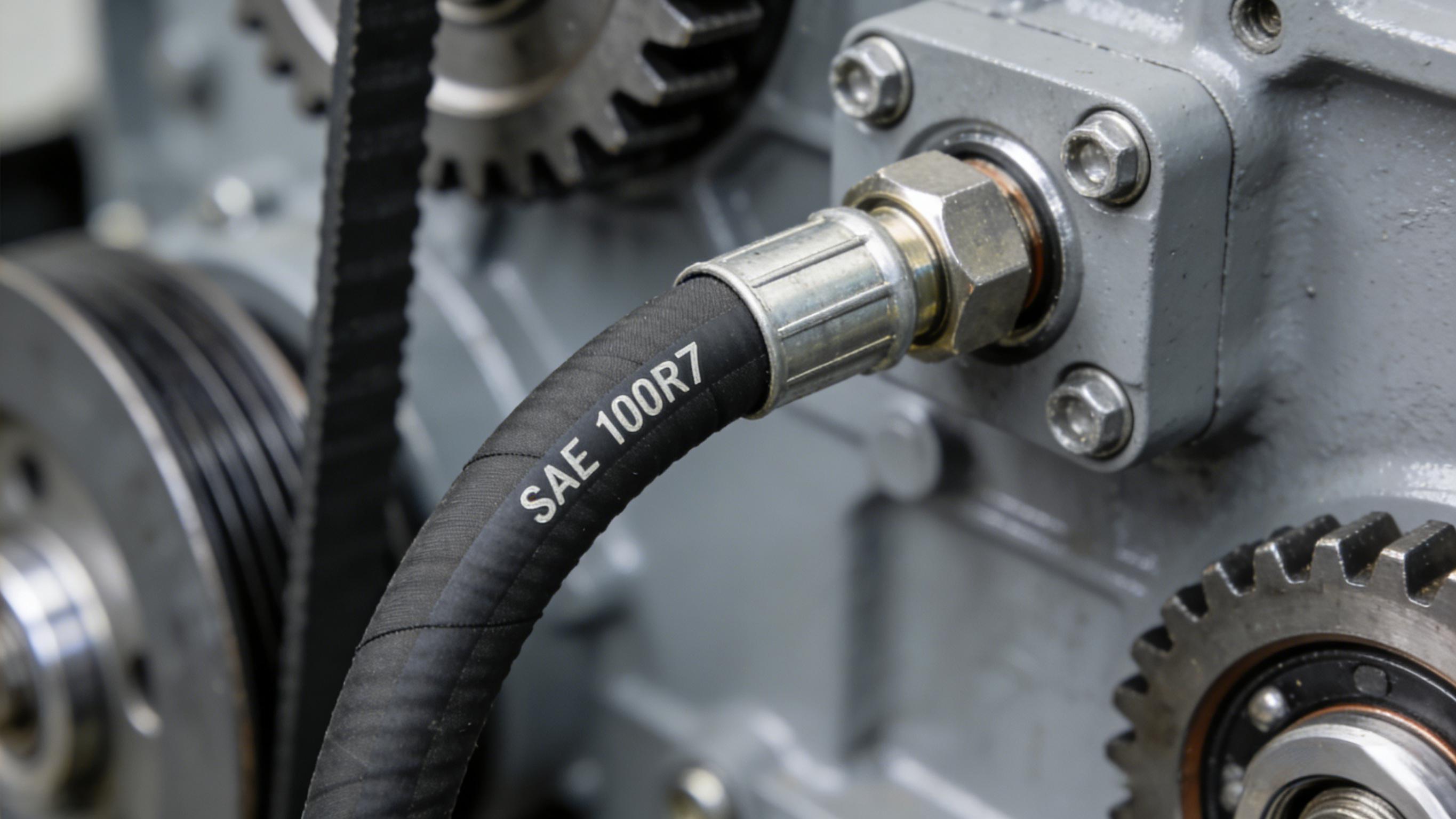
On modern construction sites, hydraulically driven machinery is ubiquitous. The boom lift of an excavator, the bucket tilt of a loader, and the outrigger extension of a crane all rely on hydraulic systems. Serving as the "flexible joints" of these systems, SAE 100R7 wire braided high-pressure thermoplastic hoses are widely used in construction machinery due to their lightweight nature, high-pressure resistance, and excellent abrasion and weather resistance.
However, even the highest quality hoses, if improperly installed, can lead to premature failure, leaks, or even bursts, impacting project timelines and introducing safety hazards. This article provides a detailed guide on the installation guidelines and precautions for SAE 100R7 hoses in construction site hydraulic line layout, helping you maximize product performance and extend service life.
Pre-Installation Preparation
Thorough preparation before starting the hydraulic line layout is the foundation for quality installation.
The first step is specification verification. Confirm that the hose's inner diameter and pressure rating match the hydraulic system's design requirements. SAE 100R7 hoses come in various sizes, each with specific working and burst pressures. Never use a hose with a pressure rating lower than the system's operating pressure. Also measure the actual routing path length and add appropriate slack. Hoses change length under pressure, and moving equipment components require some freedom of movement. Insufficient slack puts the hose under tension, accelerating fatigue.
The second step is visual inspection. Carefully inspect the hose surface for cuts, dents, bulges, or other defects before installation. Check the hose end fittings for damage, thread integrity, and sealing surface condition. Verify that the hose layline is clear and includes SAE 100R7 identification, specifications, and manufacturing date.
Routing Path Design: Avoiding the Five Killers
The complex construction site environment makes routing path design critical for hose life. Special attention should be paid to avoiding five key factors.
The first is excessive bending. SAE 100R7 hoses have a minimum bend radius requirement, typically six to eight times the hose inner diameter, but consult the product manual for specific values. Bending too sharply overstresses or compresses the wire braid, leading to early fatigue failure. The correct practice is to use elbows or fittings to change direction, avoiding forcing the hose itself into a tight bend. If bending is necessary, ensure the radius meets the minimum requirement.
The second is twisting stress. If the hose is twisted during installation, it will try to untwist under pressure, potentially loosening fittings or damaging the wire layer. Keep the hose naturally straight during installation, marking a centerline to ensure no twist. Hold the hose end steady while tightening fittings to prevent rotation.
The third is abrasion and wear. Construction machinery vibrates constantly. Long-term rubbing against supports, frames, or other hard objects can wear through the polyurethane cover, exposing the wire layer to corrosion. The correct practice is to install protective sleeves, springs, or spacers between the hose and any contact points. Use clamps to secure the hose and prevent suspended friction and vibration.
The fourth is high-temperature heat sources. Routing near engine exhausts, hydraulic reservoirs, or other heat sources accelerates hose aging, potentially exceeding its one hundred degrees Celsius upper limit. Route hoses away from heat sources whenever possible. If unavoidable, install heat-resistant sleeves or reflective shields.
The fifth is sharp edges. Construction machinery has numerous sharp edges, bolt heads, and welding spatter that can cut into hoses. Plan routes to avoid sharp areas. If necessary, chamfer sharp edges or add protective guards.
Clamping: Scientific Support to Dampen Vibration
Pressure pulsations and mechanical vibrations in hydraulic systems cause hoses to move. Proper clamping is essential.
Appropriate spacing is critical. For horizontal runs, clamp spacing is generally ten to fifteen times the hose outer diameter. For vertical runs, spacing can be slightly larger. For hoses with an outer diameter of twenty-five millimeters or less, clamp spacing should be controlled between zero point three and zero point five meters. For hoses with an outer diameter between twenty-five and fifty millimeters, spacing should be zero point five to zero point eight meters. For hoses with an outer diameter exceeding fifty millimeters, spacing should be zero point eight to one point two meters.
Proper clamping force matters. Clamps should secure the hose without crushing it. Too tight restricts normal length changes under pressure, inducing stress. Too loose fails to provide adequate support. Use rubber liners between metal clamps and the hose to prevent direct contact and cover wear.
Fitting Connection: Torque and Alignment
The connection point between the hose and fitting is the most common leak source in hydraulic systems and requires extra attention.
Alignment is essential. Ensure the hose fitting aligns squarely with the equipment port. Avoid forcing connections, which can damage threads or unevenly load seals. Misalignment creates side loads, leading to fatigue at the fitting base.
Torque control is necessary. Use a torque wrench to tighten fittings to the specified value. Under-torquing causes leaks. Over-torquing can damage threads or the fitting itself.
Seal checking is important. After connection, pressure test the system and inspect all fittings for leaks.
Post-Installation Inspection and Trial Run
After completing the line layout, conduct a system inspection and trial run to ensure installation quality.
Start with a visual re-check, inspecting hoses again for kinks, potential rubbing points, or excessively tight bends. Then perform low-pressure operation, starting the system and running at low pressure, observing hoses for abnormal jumping or whipping. Next, gradually increase pressure slowly to working pressure, checking all fitting seals and observing hose length changes under pressure to ensure they are within normal limits. Finally, conduct a leak check using leak detection fluid or visual inspection on all connections.
Common Installation Errors and Consequences
In actual construction, some common installation errors lead to serious consequences. Insufficient bend radius causes wire fatigue fracture and even hose burst. Twisted installation leads to loose fittings and leaks. No clamping causes abrasion wear and cover damage. Routing near heat sources without protection accelerates aging and shortens life. Misaligned fittings cause thread damage and seal failure.
Conclusion
SAE 100R7 wire braided high-pressure thermoplastic hoses, with their excellent performance characteristics, are an ideal choice for construction machinery hydraulic systems. However, proper installation practices are the prerequisite for realizing that performance and ensuring longevity. From routing path planning to clamping, from fitting connection to trial run inspection, every detail impacts the reliability and safety of your hydraulic system.
We hope these installation guidelines help you scientifically and properly lay out hydraulic lines on your construction site, allowing your SAE 100R7 hoses to perform reliably and contribute to the success of your projects.

Leave A Comment