.Selection Guide: Key Parameters of Petroleum Fuel Suction and Discharge Pipes Compliant with ISO 18
2025-11-06 16:21:22
In the fields of petrochemicals, warehousing and logistics, transportation, and even emergency rescue, the safe and efficient transportation of liquid fuels is crucial. A seemingly ordinary hose is actually a key component ensuring operational safety and preventing environmental pollution and property damage. The ISO 1823 standard, as an internationally recognized specification for petroleum fuel transportation pipes, provides authoritative guidance for the manufacture and selection of such products. This article will delve into the core parameters of petroleum fuel suction and discharge pipes conforming to the ISO 1823 standard, helping you make accurate and safe choices in a complex market.
I. Core Application Scope: Clearly Defined Usage Scenarios are the Primary Prerequisite
The product parameters clearly state that it is "suitable for transporting petroleum-based products such as gasoline, petroleum, ethanol, and diesel in oil tanks." This defines its core mission:
- Wide Media Compatibility: It is not only suitable for traditional gasoline, diesel, and crude oil, but can also safely transport blended fuels containing ethanol (such as E10). This is particularly important for applications where modern biofuels are increasingly prevalent.
- Core Application Scenarios: Primarily designed for loading and unloading of tank trucks, transferring oil between fixed storage tanks, and replenishing underground oil depots at gas stations—operations involving both "suction" and "discharge." This means the hose must withstand both positive pressure (discharge) and negative pressure (suction) simultaneously.
- Purchase Tips: When purchasing, ensure the medium you are transporting is on the hose's compatibility list. Never use it to transport strong acids, strong alkalis, or strong solvents, as this may cause hose corrosion and failure.
II. Multi-Layer Composite Structure: The Cornerstone of Superior Performance
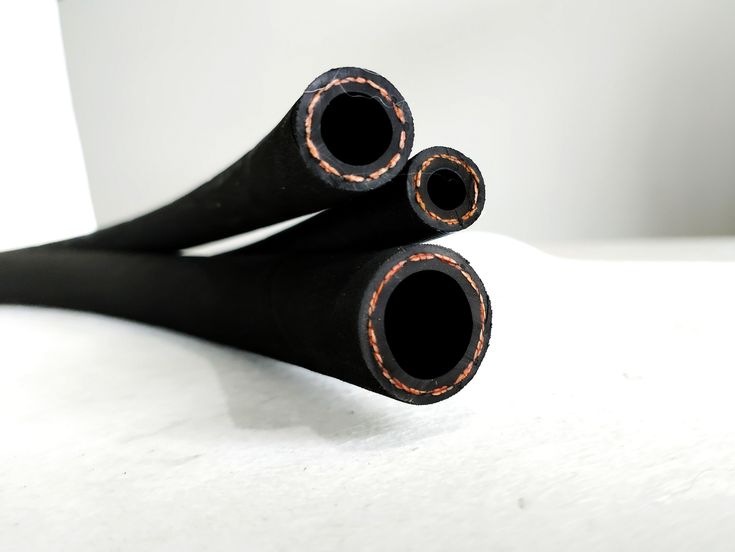
Hose conforming to ISO 1823 standards is not made of a single material; its superior performance stems from a sophisticated "sandwich" structural design:
1. Inner Rubber Layer: Black Conductive NBR Synthetic Rubber
- Core Oil Resistance: Nitrile rubber is renowned for its excellent resistance to petroleum-based oils, effectively resisting the swelling, softening, and degradation of fuels, ensuring long-term stability of the hose's inner wall.
-
- Conduction is Key: Here, "conduction" refers to antistatic functionality. When fuel flows at high speeds, a large amount of static charge is generated. If this charge accumulates and discharges, it can easily trigger an explosion. Black conductive carbon black is mixed into the NBR, making the inner layer conductive and allowing it to quickly conduct static charge to the ground through the two end connectors, fundamentally eliminating the hazards of static electricity.
2. Reinforcing Layer: High-tensile synthetic fiber and highly flexible spiral steel wire
- Pressure Resistance and Flattening Resistance: This layer is the "skeleton" of the hose. The high-tensile synthetic fiber winding layer is primarily responsible for withstanding internal working pressure, preventing the hose from over-expanding or bursting under pressure. The highly flexible spiral steel wire winding is embedded within, its main function being to resist the hose being flattened by atmospheric pressure under vacuum conditions, maintaining unobstructed flow, and simultaneously giving the hose good resistance to negative pressure and crushing.
- Balance of Flexibility: The spiral winding method provides support while ensuring the hose has sufficient flexibility, facilitating coiling, movement, and docking in complex working environments.
3. Outer Rubber Layer: Black NBR and PVC blend rubber
- All-Weather Protection Shield: The outer layer is the hose's first line of defense against external damage. The blend of NBR and PVC combines the oil resistance of NBR with the abrasion resistance, weather resistance, ozone resistance, and aging resistance of PVC. It resists the effects of sun and rain, ground friction, and harsh weather, effectively preventing damage to the internal reinforcement layer caused by external cracking, thus extending the hose's service life.
III. Key Performance Parameters: Quantifying Safety Boundaries
1. Operating Pressure: Constant pressure 20 Bar (300 psi)
This parameter defines the maximum continuous static pressure the hose can safely withstand during normal operation. The 20 Bar high-pressure rating ensures a high safety margin for the hose under heavy pump pressure or hydraulic shock, effectively avoiding the risk of hose bursting. When purchasing, ensure that your system's maximum operating pressure is below this value.
2. Temperature Range: -30°C ~ 82°C (-22°F ~ 180°F)
This wide temperature range covers most extreme operating environments:
- Low Temperature Resistance: The -30°C low-temperature performance ensures that the hose will not lose elasticity or crack due to hardening or brittleness in extremely cold regions, and can still be bent and used normally.
-
- High Temperature Resistance: The upper limit of 82°C takes into account the temperature that fuel may reach after being exposed to the sun in summer, as well as the heat that may be generated during pumping, ensuring that the rubber will not soften excessively or lose strength at high temperatures.
IV. Summary: How to Make an Wise Choice
When purchasing petroleum fuel suction and discharge hoses, one should not only focus on price and appearance, but should consider it as a safety-related system engineering project:
- Adhere to Standards: Prioritize products that clearly indicate compliance with ISO 1823 (or corresponding national standards such as GB/T, BS EN), as this is the basic guarantee of quality.
-
- Structural Benchmarking: Inquire with the supplier about the materials of the inner and outer rubber layers to confirm their antistatic and weather-resistant and wear-resistant properties. Inquire whether the reinforcing layer is a composite structure of fiber and steel wire.
-
- Parameter Verification:Check whether the working pressure and temperature range meet your actual operating requirements, ensuring sufficient margin for error.
-
- Visual and Tactile Inspection: A high-quality hose should have a smooth, flat appearance, free of bubbles and impurities, with a rounded shape. When bent, it should feel flexible rather than subject to harsh resistance.
Conclusion: A petroleum fuel suction/discharge hose conforming to ISO 1823 standards is the culmination of precise materials science and rigorous industrial design. From the antistatic inner layer to the indestructible reinforcing skeleton and the tough, wear-resistant outer armor, every detail is designed to build a solid safety barrier for high-risk fuel transportation operations. A deep understanding of the meaning behind its key parameters is essential to achieving the leap from "usable" to "easy-to-use, safe, and durable," safeguarding your operations.


Leave A Comment