
Mine backfilling and tailings conveying are two core processes in mining operations. The former transports backfill materials (such as cement mortar, paste, or cemented tailings) into underground goafs to support rock strata, while the latter delivers mill tailings slurry to tailings ponds or for reprocessing. In both processes, high-pressure wear-resistant hoses undertake critical conveying tasks. Because backfill slurry and tailings slurry both contain large amounts of solid particles with high abrasiveness and certain corrosiveness, hose selection and maintenance directly affect the safety and economics of the conveying system. This article provides a systematic discussion from three aspects: working condition analysis, selection points, and maintenance strategies.
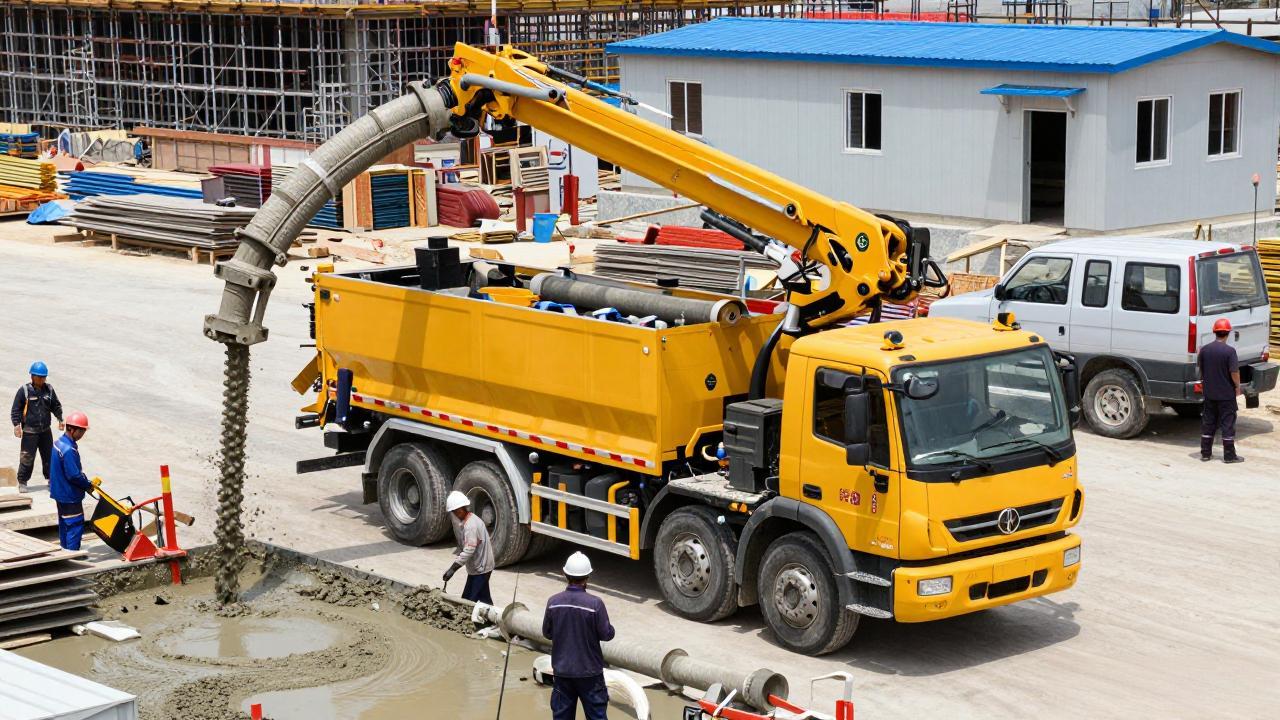
The working pressure of mine backfill systems typically ranges from 2MPa to 10MPa, depending on the filling gradient (the ratio of conveying distance to height difference) and the rheological properties of the backfill slurry. Backfill slurry is generally a mixture of cement, fly ash, tailings, and water, with solid concentrations ranging from 60% to 75%, and particle sizes up to several millimeters. Such media cause severe abrasive wear and erosion on the inner wall of the hose, while the alkaline environment from cement components poses certain chemical corrosion to the rubber material.
Tailings conveying conditions are similarly harsh. Tailings slurry typically has solid contents between 30% and 50%, with high particle hardness (e.g., quartz particles), and the pH value may be acidic or alkaline, threatening both the inner and outer layers of the hose. Conveying distances often stretch to several kilometers with significant elevation changes, resulting in large static heads and frequent pressure shocks from start-up and shutdown. Under these conditions, ordinary rubber hoses often have service lives of only weeks to months—frequent replacement not only increases spare parts costs but also severely disrupts normal mine production.
For the above operating conditions, high-pressure wear-resistant hoses for mine backfilling and tailings conveying must possess the following core performance attributes:
1. Excellent wear resistance. The abrasion resistance of the inner rubber layer is the primary determinant of hose service life. Tested according to GB/T 9867 or ISO 4649, qualified products should have wear loss no greater than 120mm³ (or stricter requirements based on specific conditions). High-wear-resistance inner layers typically use natural rubber and styrene-butadiene rubber blend systems with specialized wear-resistant reinforcing fillers, forming a dense crosslinked network in the rubber matrix to effectively resist cutting and plowing actions of solid particles.
2. Sufficient pressure capacity. The reinforcement layer should be selected based on system working pressure. For medium-to-low pressure scenarios below 4MPa, two-layer steel wire braided construction suffices; for medium-to-high pressure scenarios between 4MPa and 10MPa, four-layer steel wire spiral construction should be used, with maximum working pressure reaching above 15MPa. The reinforcement layer not only provides pressure capacity but also protects the inner layer and restricts hose expansion, preventing accelerated wear from excessive deformation.
3. Good corrosion resistance. The inner layer must resist acid/alkali media attack—especially in acidic tailings slurry (pH 3–5) or alkaline backfill slurry (pH 10–12) environments. Rubber formulations should be adjusted accordingly, such as adding specialty synthetic rubber components resistant to chemical media or adopting corrosion-resistant inner liner structures.
4. Excellent fatigue and impact resistance. Mining conveying systems experience frequent start-stop operations and pressure release shocks after pipeline blockages, requiring hoses with sufficient pulse life and pull-out strength. Pulse tested according to GB/T 5568, qualified products should achieve a pulse life of no less than 200,000 cycles.
In actual selection, the following principles should be followed:
Determine reinforcement layers by working pressure. Working pressure ≤4MPa: use two-layer steel wire braided; 4MPa < working pressure ≤10MPa: use four-layer steel wire spiral; working pressure >10MPa: use six-layer steel wire spiral or higher pressure-rated products, ensuring rated pressure is no less than 1.5 times the system's maximum dynamic pressure.
Determine inner layer hardness and wear resistance grade by solid particle characteristics. For high-hardness particles (e.g., quartz-rich tailings) or sharp-edged particles (e.g., crushed surrounding rock backfill), choose inner layer compounds with higher hardness (Shore A hardness 75–85) and higher wear resistance. For paste backfill containing fine particles, slightly lower hardness (70–80) may be selected to balance flexibility and wear resistance.
Determine hose length and fitting type by conveying distance and pipeline layout. For long-distance conveying, each hose section should not exceed 6 to 12 meters for easy installation and replacement. Flange connections or heavy-duty clamp connections are preferred for reliable sealing and axial load capacity. For frequent disassembly scenarios, quick-release couplings can reduce maintenance time.
Determine outer cover protection by environmental conditions. Underground mining environments are humid, confined, and pose rockfall risks. The outer cover should offer ozone resistance, weather resistance, and scratch resistance; external protective sleeves or metal armor may be added where necessary.
Maintenance management during hose use is equally important. The following strategies can effectively extend service life:
1. Regular inspection and documentation. Conduct visual inspections each shift for cracks, bulges, scratches, or fitting looseness on the hose outer surface. Record wall thickness changes and appearance conditions weekly for key hoses, establishing traceable usage archives.
2. Monitor pressure fluctuations and abnormal vibrations. Sudden pressure spikes or severe vibrations often precede pipeline blockages or pump system faults. Timely investigation is needed to avoid pressure shocks damaging the reinforcement layer.
3. Control medium temperature. Slurry temperature should not exceed the hose's rated range (generally -30°C to +80°C). Excessive temperatures accelerate rubber aging and reduce wear resistance.
4. Plan replacement cycles rationally. Develop preventive replacement plans based on historical data and wear trends. For hoses conveying highly abrasive tailings, measure wall thickness every 3–6 months. When inner layer wear reaches 50% of original thickness, schedule replacement to prevent burst accidents from exposed reinforcement.
5. Properly store spare hoses. Unused hoses should be stored in cool, dry, dark warehouses, avoiding contact with oils, solvents, or heat sources. Hoses stored over two years should undergo pressure re-testing before use.
In summary, selecting and maintaining high-pressure wear-resistant hoses for mine backfilling and tailings conveying is a comprehensive technical task. The selection phase requires precise matching of pressure rating, wear resistance, and inner diameter; the maintenance phase requires establishing a full-lifecycle management system. Only by integrating selection and maintenance can the full value of hoses be realized, ensuring safe and stable mine conveying operations.
