
In oil and gas drilling operations, blowouts are among the most catastrophic accidents. When wellbore pressure falls below formation pressure, formation fluids surge into the wellbore, causing kicks or well surges that can escalate into devastating blowouts and fires. As the core equipment of well control systems, the remote control stability of the Blowout Preventer (BOP) directly determines the success or failure of drilling operations. The API 16D BOP well control hose serves as the "lifeline" connecting the control device and the BOP—it delivers hydraulic oil under high pressure to remotely control the opening and closing of the BOP, making it an indispensable component on oil drilling platforms.
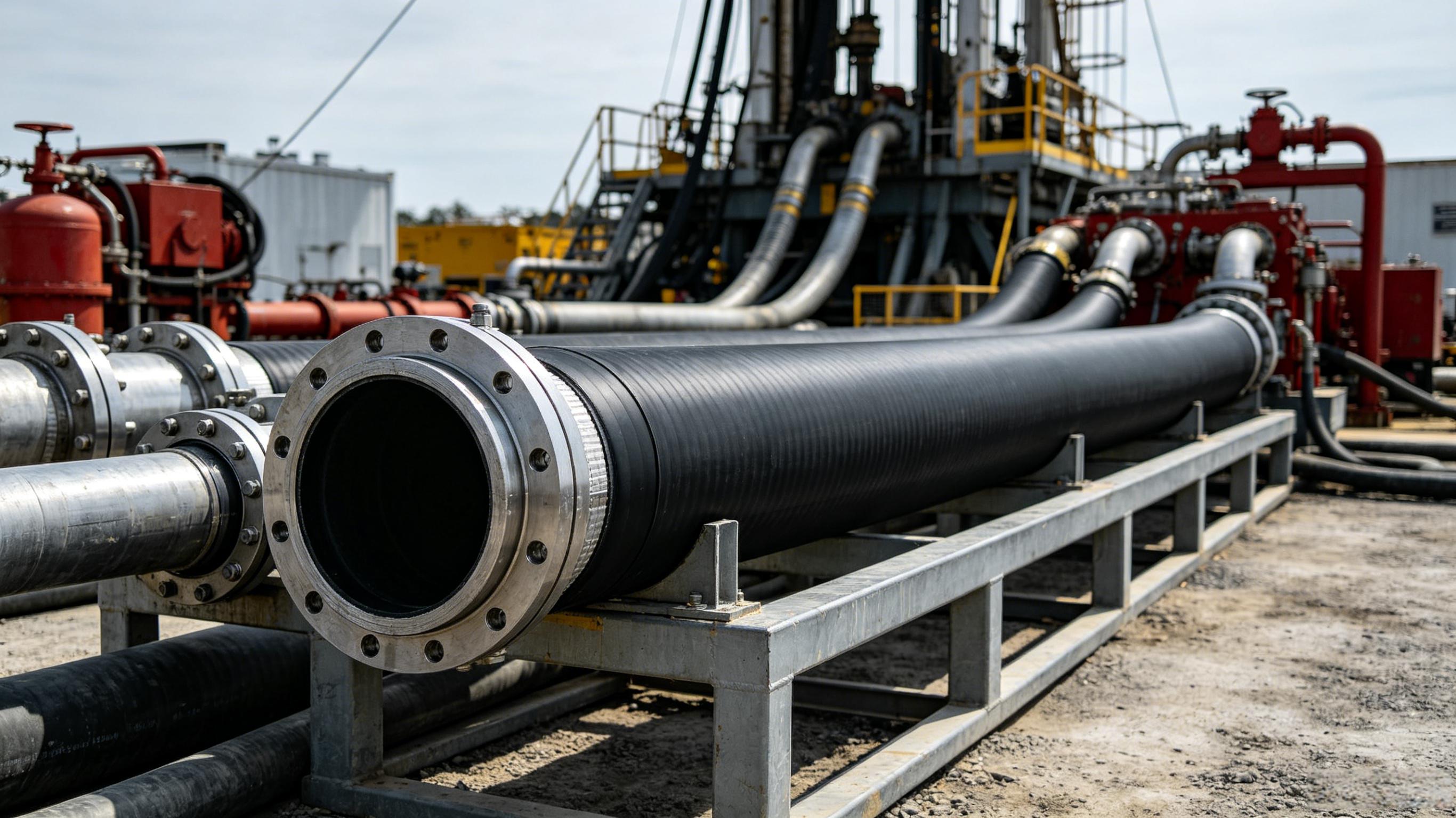
I. API Spec. 16D: The Design Foundation of Well Control Systems
API Spec. 16D, officially titled "Specification for Control Systems for Drilling Well Control Equipment and Control Systems for Diverter Equipment," was published by the American Petroleum Institute (API), with the latest Third Edition released in 2018 and Addendum 1 in 2023. This specification establishes design standards for systems used to control BOPs and associated valves that control well pressure during drilling operations. Although diverters are not considered well control devices, their controls are often incorporated as part of the BOP control system.
Well control systems typically employ stored energy in the form of pressurized hydraulic fluid (power fluid) to operate (open and close) BOP stack components. Failure of these controls to perform as designed can result in a major well control event. Therefore, conformance to API 16D is critical to ensuring that BOPs and related equipment will operate in an emergency.
II. Multi-Layer Composite Structure of BOP Well Control Hoses
A qualified API 16D BOP well control hose features a precision-engineered multi-layer composite structure.
Inner Tube – NBR (Nitrile Butadiene Rubber) : The inner layer uses NBR, offering excellent oil and media resistance to stably transmit hydraulic oil and other control media in the well control system, effectively resisting media erosion and preventing leakage risks caused by inner layer aging or damage. The tube features a full-bore (full flow) design, ensuring smooth media transmission and reduced pressure loss.
Reinforcement Layer – 4 Spiral Wound High-Strength Super-Flexible Steel Wire: Four layers of spiraled high-strength super-flexible steel wire provide exceptional tensile and burst resistance. Some products feature 2 to 8 layers of steel wire spiral reinforcement. This structure can withstand long-term repeated impacts under 5000psi high-pressure conditions, effectively preventing hose rupture or bulging failures.
Outer Layer – High-Temperature and Fire-Resistant Synthetic Rubber: The outer cover uses high-temperature and fire-resistant synthetic rubber, resisting mechanical damage and environmental erosion such as friction, impact, and UV exposure at drilling sites.
Protection Layer – Stainless Steel Armor: The outermost layer features stainless steel armor, further enhancing crush and puncture resistance while extending hose service life. Some models also include an additional fire-resistant insulation layer beneath the armor.
III. Key Performance Parameters
API 16D BOP well control hoses are subject to extremely stringent performance specifications. Working Pressure (W.P.) is 5000psi (approx. 35MPa), Proof Pressure (P.P.) is 7500psi (approx. 52MPa), and Minimum Burst Pressure (Min.B.P.) is 15000psi (approx. 103MPa). The operating temperature range spans from -45°C to +100°C (some models reach -40°C to +121°C).
The most critical metric is fire resistance. API 16D requires the hose to withstand a flame temperature of 1300°F (approx. 704°C) for 5 minutes at working pressure without leakage. Premium products can far exceed API standards in fire resistance duration. Connections are typically provided in swaged fittings, integral vulcanization, flanges, and coupling connections.
IV. Application Scenarios
BOP well control hoses are widely used in onshore drilling, offshore drilling, shale gas drilling, and various other scenarios. In onshore deep drilling, hoses must withstand long-term high-pressure loads along with ground friction and impact risks. In offshore drilling, high humidity and salt spray environments impose stringent corrosion resistance requirements. In shale gas drilling and deepwater drilling, hoses must perform reliably under both normal and fire emergency conditions. Additionally, BOP hoses are compatible with annular BOPs, ram BOPs, and various other well control equipment.
V. Safety Mission: The Last Line of Defense in Drilling Operations
The safety mission of BOP well control hoses is to maintain power transmission even under the extreme conditions of a blowout fire, ensuring that the BOP can close the wellhead in time. Even in extreme emergencies such as fires at drilling sites, qualified API 16D hoses continue to transmit control media, ensuring normal BOP control functions and buying precious time for the evacuation of drilling personnel and emergency well control response.
Though just a single component on the BOP, the API 16D BOP well control hose plays a role in engineering safety that cannot be overlooked. From standard development to material selection, from multi-layer composite structure design to rigorous fire resistance testing, every step serves the same core mission—protecting lives and equipment in critical moments.
