
In the daily maintenance of construction machinery, injection molding equipment, and mining hydraulic systems, selection errors in high-pressure hose assemblies are a leading cause of equipment downtime, oil leaks, and even safety incidents. With hundreds of hose types and thousands of fittings on the market, many procurement professionals make decisions based solely on price, ignoring operating conditions—resulting in leaks and burst hoses within a short period. This article systematically breaks down the selection essentials and common pitfalls around pressure rating, inner diameter, and fitting types—the three core parameters.
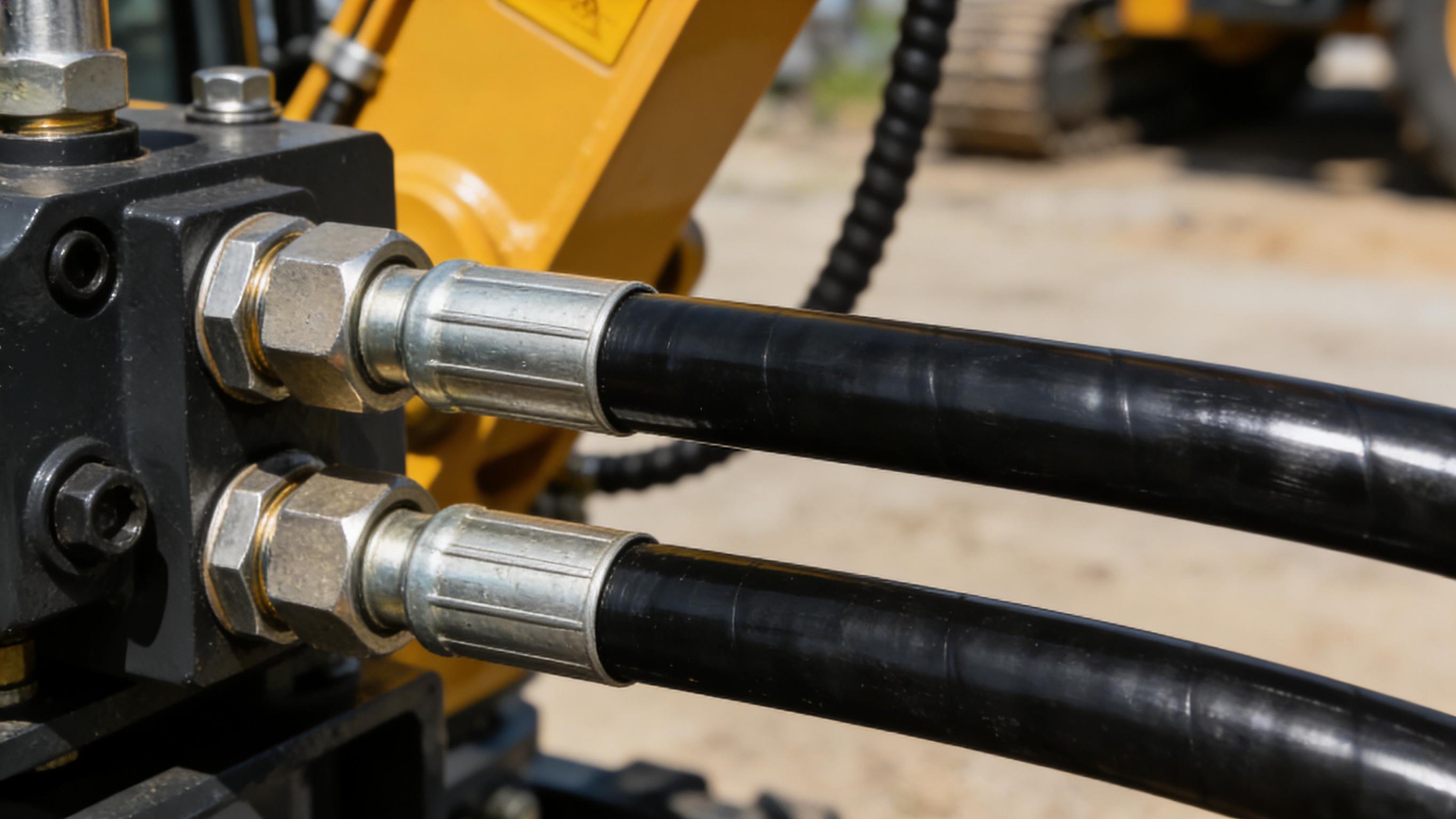
I. Pressure Rating: Safety Margin Is a Requirement, Not an Option
Pressure is the primary consideration in selection. Hydraulic system pressure is dynamic, encompassing working pressure, impulse pressure, and peak pressure. Key concepts to understand:
Working Pressure: The maximum pressure the hose withstands during normal operation. Proof Pressure: The test pressure at factory inspection, typically twice the working pressure. Burst Pressure: The ultimate pressure the hose can endure; industry standards require a minimum burst-to-working pressure ratio of 4:1.
Core Selection Principle: The rated pressure of the high-pressure hose must exceed the system's maximum pressure by at least 20%. Additionally, the system's impulse and peak pressures must remain below the hose assembly's working pressure. If a system with 30MPa peak pressure uses a hose rated at 25MPa—lacking a safety margin—bursting under pressure spikes is almost inevitable.
Temperature Derating Effect: A hose's rated working pressure is defined at a standard temperature (e.g., +93°C). When ambient or media temperatures consistently exceed this standard, the pressure rating must be "derated"—at +121°C, many hoses may only deliver 50% or less of their rated pressure. Always consult the manufacturer's "temperature-pressure derating curve" to determine usable working pressure based on actual maximum temperature; never operate above the derated pressure.
Key Pitfall: Never select a hose based solely on the equipment nameplate rating—you must calculate peak system pressure and the actual demand after temperature derating.
II. Inner Diameter: Too Small Causes Overheating, Too Large Wastes Capacity—Getting It Right Is Critical
Inner diameter (I.D.) directly determines hydraulic system flow and velocity. The fluid power industry measures hoses by I.D., typically expressed as a "dash size" in sixteenths of an inch.
Consequences of undersized I.D.: Flow velocity increases sharply, leading to increased pressure loss, system overheating, rising oil temperature, and even vibration and noise. High temperatures accelerate inner tube aging and shorten hose life.
Consequences of oversized I.D.: Flow velocity is too slow, resulting in sluggish system response, while also increasing cost and installation space requirements.
Selection Method: First determine the required system flow rate, then calculate the I.D. based on recommended flow velocity. If the hose is secured with clamps or routed through bulkheads, the outer diameter must also be considered.
Key Pitfall: Do not infer hose I.D. from fitting outer diameter; do not connect high-flow circuits through undersized adapter fittings. Without proper flow-to-diameter matching, even the best hose will underperform.
III. Fitting Types: Threads That Fit Don't Guarantee Reliable Seals
Fitting selection is the most underestimated link in the chain. The majority of leaks in hydraulic systems occur at connections. Threads that screw together don't guarantee matching sealing geometries; similar outer diameters don't guarantee adequate flow capacity; similar model numbers don't guarantee the same impulse and vibration resistance.
Main Fitting Types and Applications:
Crimped/Coupling Fittings: High pressure (25-40MPa), for wire braided/spiral hoses, strong vibration resistance and sealing, non-reusable. Ideal for mobile hydraulic components and construction machinery.
Welded Fittings: High pressure (20-40MPa), for rigid tubes, excellent sealing and shock resistance, but difficult to disassemble and non-reusable. Suitable for heavy hydraulic equipment and fixed piping.
Ferrule/Compression Fittings: Medium-high pressure (16-31.5MPa), for cold-drawn seamless steel tubes, install without welding and are reusable, but require extremely high tube dimensional accuracy.
Flared Fittings: Medium-low pressure (≤16MPa), for copper and aluminum tubes, simple and low-cost, but poor pressure resistance.
Quick-Connect Couplings: Medium-high pressure (10-31.5MPa), tool-free fast connection/disconnection, ideal for systems requiring frequent maintenance.
Common Selection Pitfalls:
Confusing JIC 37° flare fittings with metric flare fittings.
Confusing BSPP parallel threads with BSPT tapered threads.
Mistaking NPT threads for standard metric threads.
Measuring only outer diameter without confirming thread pitch.
Using low-pressure fittings in high-pressure impulse applications.
Ignoring pressure drops caused by quick-connect couplings and elbows.
Selection Principle: Match fittings to system pressure—low-pressure systems (≤6.3MPa): flared or tapered thread fittings; medium-pressure (6.3-16MPa): ferrule or quick-connect fittings; high-pressure (>16MPa): welded, crimped, or face-seal fittings. Also confirm thread standards (metric, BSP, NPT/SAE) and sealing types (cone seal, O-ring face seal, etc.).
IV. Assembly Customization: Hose + Fittings + Crimping—An Indivisible Trio
A high-pressure hose assembly is not a simple combination of hose and fittings. Crimping quality directly determines assembly integrity—under-crimping causes leaks, over-crimping cuts into the tube body. Mismatched thread specifications, excessive twisting during installation, or routing against sharp metal edges all lead to premature failure. Prioritize suppliers capable of producing complete assemblies, offering custom cutting and fitting options, and equipped with comprehensive testing facilities.
Conclusion
High-pressure hose assembly selection ultimately comes down to the precise matching of pressure rating, inner diameter, and fitting type. Pressure rating defines the safety boundary, inner diameter determines flow efficiency, and fitting type ensures connection reliability—three interdependent links, none dispensable. The core of avoiding pitfalls is simple: don't buy on price alone, don't judge by appearance alone, don't substitute experience for calculation. Only by mapping these three parameters to your specific operating conditions can you select a truly reliable high-pressure hose assembly.
