
By 2026, with AI computing power demand surging, liquid cooling has become a standard feature in data centers. However, as the "capillaries" connecting cold plates, CDUs, and server nodes, liquid cooling hoses are often underestimated in the selection process. A single liquid cooling system may contain dozens or even hundreds of hoses, each representing a potential failure point. Selection errors can range from reduced cooling efficiency to catastrophic coolant leaks that short-circuit and destroy GPUs. This article outlines the five most common misconceptions in data center liquid cooling hose selection and provides actionable guidelines to avoid them.
This is one of the most common and critical mistakes. Many engineers mistakenly assume that "any rubber hose can handle water" and directly use industrial-grade rubber hoses in liquid cooling systems. However, when generic rubber comes into contact with coolants like water-glycol, it can cause inner wall swelling, softening, or particle precipitation, clogging cold plate microchannels. More critically, non-specialized materials may leach ionic contaminants, causing the coolant's conductivity to exceed safe limits.
How to Avoid: Always select EPDM hoses with peroxide-cured formulations to prevent sulfate leaching that contaminates the coolant. If the system uses fluorinated fluids (e.g., in immersion cooling), FEP or PFA materials are mandatory, as standard rubber will rapidly swell and fail upon contact with fluorinated fluids.
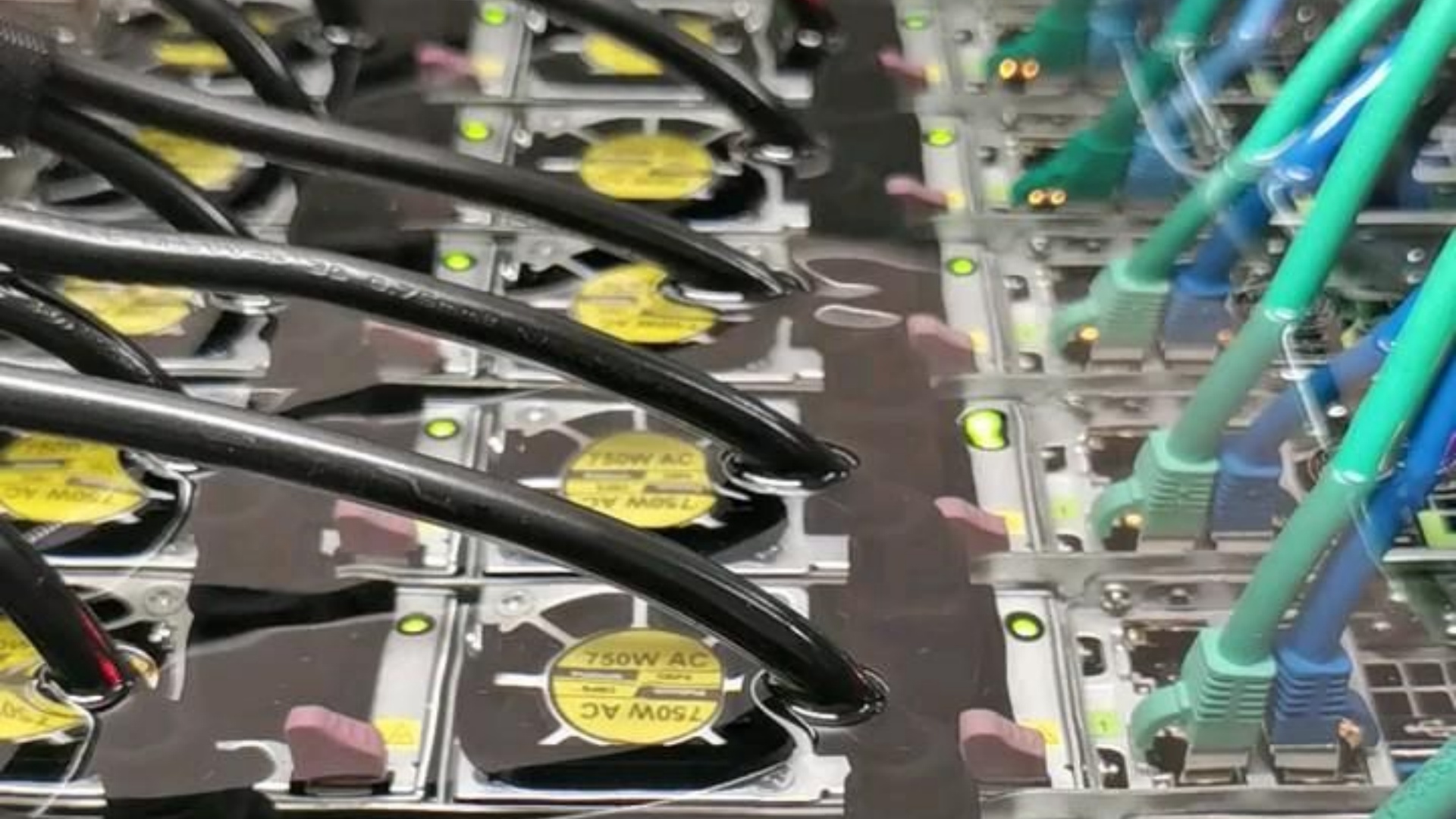
It's easy to perform a pressure test in the lab, but data centers operate 24/7/365. Many engineers focus solely on whether the working pressure meets specifications, overlooking two more subtle but critical metrics: permeation rate and long-term aging.
Coolant molecules can slowly "escape" through the hose wall, completely invisible to the naked eye. Higher permeation rates mean more frequent refills — for hyperscale data centers, the cumulative maintenance cost is significant. Meanwhile, rubber hoses can develop creep and seal failure within 3 to 5 years under high temperature and pressure, while data center lifecycles typically span 10 to 15 years.
How to Avoid: Request permeation rate test data and pulse fatigue test reports from suppliers. For high-density training clusters (≥80kW/rack), upgrade directly to PFA/PTFE-lined hoses.
Space inside server racks is extremely limited, and engineers often prioritize "just making it fit" — bending hoses into sharp angles or even kinking them. This practice has two consequences: first, the hose's reinforcement layer is damaged, significantly reducing pressure capacity; second, the bend creates sustained lateral stress on the fitting, eventually causing loosening and leakage over time.
How to Avoid: Always verify the hose's minimum bend radius specification during selection, and never route hoses below this value during installation. Hoses with better flexibility (smaller bend radii) are better suited for compact rack layouts.
Hoses and fittings are partners, not independent components. Many projects purchase hoses and fittings separately and assemble them on-site, resulting in mismatches and improper crimping that cause slow seepage at the fitting over time. Statistics show that most post-deployment issues in liquid cooling systems are concentrated at the fittings.
How to Avoid: Prioritize factory-preassembled hose assemblies to ensure proper crimping. If on-site assembly is unavoidable, use only specialized fittings and crimping tools matched to the hose, and strictly follow torque specifications.
AI server rooms have high power density and stringent fire safety requirements. Some engineers opt for non-flame-retardant hoses to cut costs. In the event of an electrical fault, the hose itself can become a pathway for fire spread.
How to Avoid: The outer cover of data center liquid cooling hoses must achieve UL94 V-0 flame retardancy — this is a non-negotiable industry requirement. In the vertical burn test, the material must self-extinguish within 10 seconds without producing flaming drips that ignite cotton.
Selecting liquid cooling hoses for data centers is far more than "just connecting a pipe" — it is a critical engineering decision that determines long-term system reliability. For standard AI clusters (≤30kW/rack), EPDM hoses with quick-connect fittings are recommended for optimal cost-performance. For high-density training clusters (≥80kW/rack), PFA/PTFE-lined hoses are advised. For immersion fluorinated fluid systems, PFA clean pipes are mandatory. Choosing the right hose means safeguarding the entire data center's "leak-proof lifeline."
