
In industrial steam delivery systems, steam hoses are critical components connecting boilers, hot-press equipment, and steam end-users. Faced with the wide array of steam hose products on the market, many procurement personnel and engineers are often confused: what exactly is the difference between fabric-wrapped steam hoses and wire-braided steam hoses? Which one suits which working condition? Choosing the wrong hose type leads not only to frequent replacements and downtime losses, but can also cause safety accidents due to hose bursts. This article provides a systematic comparison of these two mainstream steam hose types across three dimensions: structural design, performance parameters, and typical application scenarios.
The most fundamental difference between fabric-wrapped and wire-braided steam hoses lies in the material and structure of the reinforcement layer. The reinforcement layer of a fabric-wrapped steam hose is formed by multiple layers of pure cotton canvas or synthetic fiber canvas wound together. The hose body typically consists of an inner rubber layer, multiple canvas winding layers, and an outer rubber layer, with some models incorporating a spiral steel wire layer to enhance pressure resistance. Both inner and outer rubber layers are made from heat-resistant synthetic rubber, giving the hose a soft, lightweight, and flexible character.
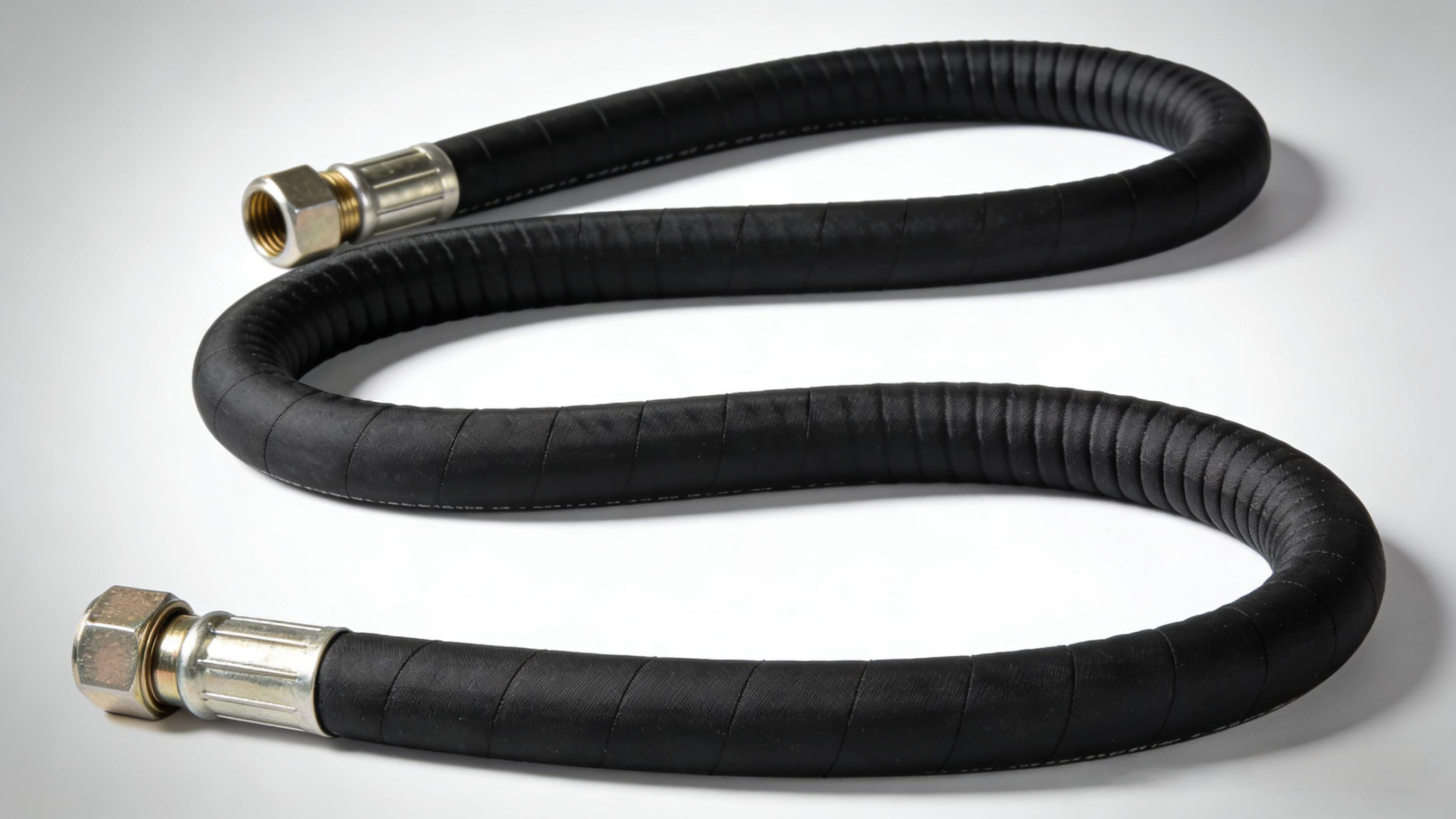
The reinforcement layer of a wire-braided steam hose uses one or more layers of high-strength steel wire braiding. Its structure consists of a steam-aging-resistant inner rubber layer, a middle rubber layer, a steel wire braided reinforcement layer, and an outer rubber layer. The steel wire braiding process employs a balanced angle design of 54°44′, enabling the hose to achieve extremely high burst resistance while maintaining flexibility. Simply put, fabric-wrapped hoses bear pressure through "layered canvas stacking," while braided hoses bear loads through a "steel wire braided mesh" — this is the fundamental reason for the performance divergence between the two.
Different temperature ranges. Fabric-wrapped steam hoses are primarily used for conveying saturated steam or superheated water not exceeding 150°C, with the temperature limit constrained by the canvas layer's heat resistance. Wire-braided steam hoses have a wider temperature range, capable of conveying saturated steam or superheated water from 165°C to 220°C, with a maximum working temperature of 204°C.
Huge pressure capacity gap. This is the most critical performance watershed between the two. Fabric-wrapped steam hoses have a maximum working pressure typically below 0.4MPa (steam conditions), with burst pressure not less than 10 times the working pressure. Wire-braided steam hoses have a working pressure range of 0.3 to 1.6MPa, with some products achieving maximum working pressures exceeding 20MPa — more than 10 times the pressure capacity of fabric-wrapped hoses.
Different bending performance and dynamic adaptability. Due to the cord structure of the reinforcement layer, fabric-wrapped steam hoses have relatively poor flexural resistance and are generally used in static pipelines, not permitting repeated bending. Their minimum bend radius is typically 12 times the hose outer diameter. Wire-braided steam hoses have significantly better bending performance, with a minimum installation radius of only 6 times the outer diameter and excellent fatigue resistance, making them suitable for dynamic working environments such as flat vulcanizing machines and hot presses.
Typical scenarios for fabric-wrapped steam hoses. Due to lower working pressures and suitability for static installation, fabric-wrapped steam hoses are mainly used in industrial or commercial boilers for conveying hot water or saturated steam, suitable for steam cleaners, steam hammers, and other hot-press equipment as flexible piping. They are also widely used in refrigeration equipment cooling water, engine hot and cold water, and food processing. Additionally, armored fabric-wrapped steam hoses, by winding galvanized metal spiral wire on the hose surface, effectively increase hose body strength and are suitable for complex working conditions requiring higher safety standards.
Core scenarios for wire-braided steam hoses. With their superior temperature and pressure resistance, wire-braided steam hoses are widely used in chemical, machinery, electrical, aerospace, and petroleum industries, particularly in dairy plants. In marine power systems, they must withstand high-frequency vibration and temperature shocks; in power plant boiler systems, they can handle 3.0MPa high-pressure steam conditions. In refineries and petrochemical plants, they deliver high-pressure steam to ethylene cracking furnaces, catalyst regenerators, and heat exchangers.
When selecting, engineers should base their judgment on three core parameters: system working pressure, steam temperature, and installation method. For static installation, temperatures not exceeding 150°C, and pressures below 0.4MPa, the more cost-effective fabric-wrapped steam hose can be selected. For conditions involving dynamic bending, high-frequency vibration, temperatures exceeding 165°C, or pressures above 0.6MPa, wire-braided steam hoses must be used. Both fabric-wrapped and wire-braided steam hoses are manufactured according to the HG/T 3036 standard, and selection should confirm that products meet the corresponding type requirements. For installation and maintenance, system working pressure should be below 80% of the hose's rated pressure, with regular hydrostatic testing and ultrasonic inspection.
