
In a compressed air system, a hose may look like a minor accessory, but it directly affects air delivery efficiency, equipment life and workplace safety. Many buyers focus only on diameter and length while ignoring three core indicators: oil resistance, abrasion resistance and pressure resistance. The result is hose swelling, cracking, leakage and even burst failure. This article explains these three indicators from real operating conditions to help you select the right air compressor hose.
1. Oil Resistance: The Basis for Long-Term Stable Operation
Air compressor hoses are constantly exposed to oil mist and condensate in compressed air, as well as external hydraulic oil and lubricants. If the inner tube compound has poor oil resistance, oil molecules penetrate the rubber layer, causing swelling, softening and strength loss, which can lead to inner-layer detachment and blocked air paths. When purchasing, check the inner tube material. Nitrile rubber (NBR) offers good resistance to mineral oil and is a common choice for air compressor hoses. If synthetic oils or special chemical media are present, confirm hose-to-media compatibility. The outer cover should also have some oil resistance to prevent on-site oil contamination from accelerating aging. Do not rely on marketing claims alone; request material specifications and compatibility data, and conduct immersion tests when necessary.
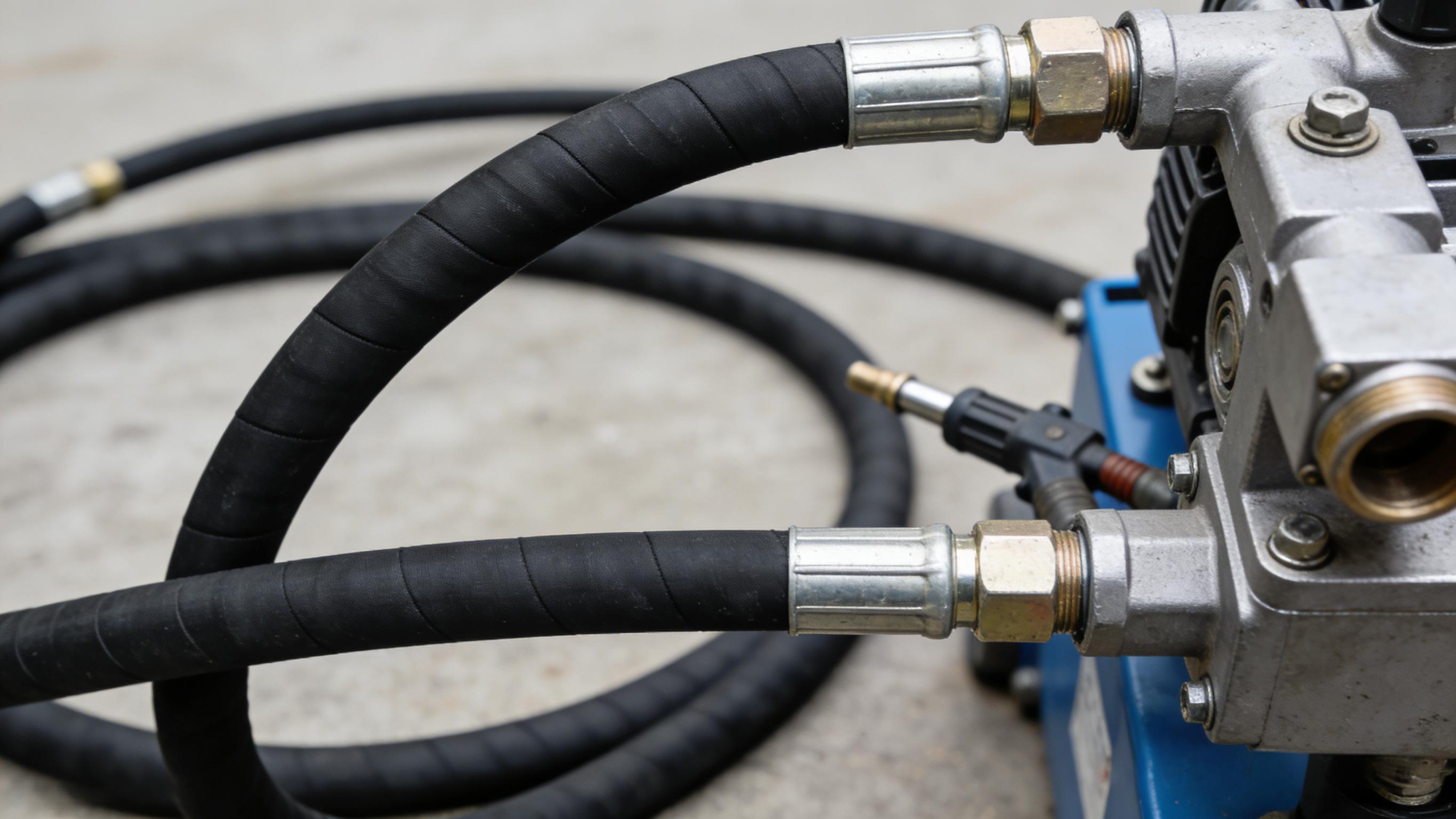
2. Abrasion Resistance: Determining Hose Life Under Movement and Drag
Air compressor hoses are often dragged on the ground and rubbed against equipment edges, making outer cover wear a common failure cause. Cover thickness, compound formulation and reinforcement structure jointly determine abrasion performance. Quality hoses usually use abrasion-resistant synthetic rubber with a smooth, tough surface that resists repeated friction. The reinforcement layer, made of high-strength fiber braiding or spiraling, improves pressure capacity and restricts deformation during bending. For workshops and construction sites with frequent movement, choose models with thicker covers or abrasion sleeves; for fixed installations, requirements can be relaxed appropriately. Note that abrasion resistance and flexibility involve a trade-off, so balance them according to how the hose is used.
3. Pressure Resistance: A Safety Bottom Line That Cannot Be Compromised
Pressure resistance is the most important safety indicator for air compressor hoses. Working pressure, burst pressure and impulse life should be considered together. The rated working pressure should exceed the system's maximum working pressure with a safety margin. Burst pressure is usually several times the working pressure, but it cannot replace working pressure as a selection criterion. For systems with frequent pressure fluctuations and starts/stops, pay attention to impulse fatigue performance. Temperature significantly affects pressure capacity, so high-temperature applications require derating. Fittings are equally critical: crimping process, crimp amount and fitting material all affect overall pressure reliability, and hose bursts often occur near fittings. Prefer factory-assembled, pressure-tested products.
4. Comprehensive Selection Advice
In practice, prioritize by operating conditions: first confirm the media and oil type to determine the oil-resistance grade; then assess movement frequency and friction environment to set abrasion requirements; finally determine pressure specifications and diameter based on system pressure and temperature. Also consider bend radius, weight, temperature range and certification requirements. Do not compare unit price alone—hose failure costs far more in downtime, repairs and safety risks. Establish supplier audits and incoming inspection to ensure batch consistency.
Conclusion
Oil resistance, abrasion resistance and pressure resistance are the three main lines of air compressor hose selection. Any weakness can amplify into failure during long-term operation. Understanding operating conditions, clarifying parameters and verifying materials are the keys to choosing economical and reliable hose products.
