
In hydraulic system selection, high-pressure braided hose and spiral-wound hose are frequently compared. They look similar, yet their price points differ—and choosing poorly means either wasted budget or hidden safety risks. In reality, braided versus spiral is not a simple question of “which is better”; each corresponds to specific pressure ranges and operating characteristics. Only by understanding the structural differences and performance boundaries of the two can you make an accurate selection decision.
Structural Differences Determine the Performance Divide
The reinforcement layer of a wire-braided hose consists of steel wires woven in a crisscross pattern over the inner tube. The braiding machine operates much like a maypole dance, with wires passing over and under one another to form a mesh-like skeleton. The advantage of this structure lies in the play between wires, which gives the hose better flexibility and a smaller minimum bend radius, making routing through tight spaces more manageable. Braided hose typically uses one or two layers of wire braid and is suited to medium- and low-pressure applications. Industry data indicates that the economical operating pressure for braided hose is generally below 32 MPa, commonly found in excavator arm circuits and auxiliary loops of standard construction machinery.
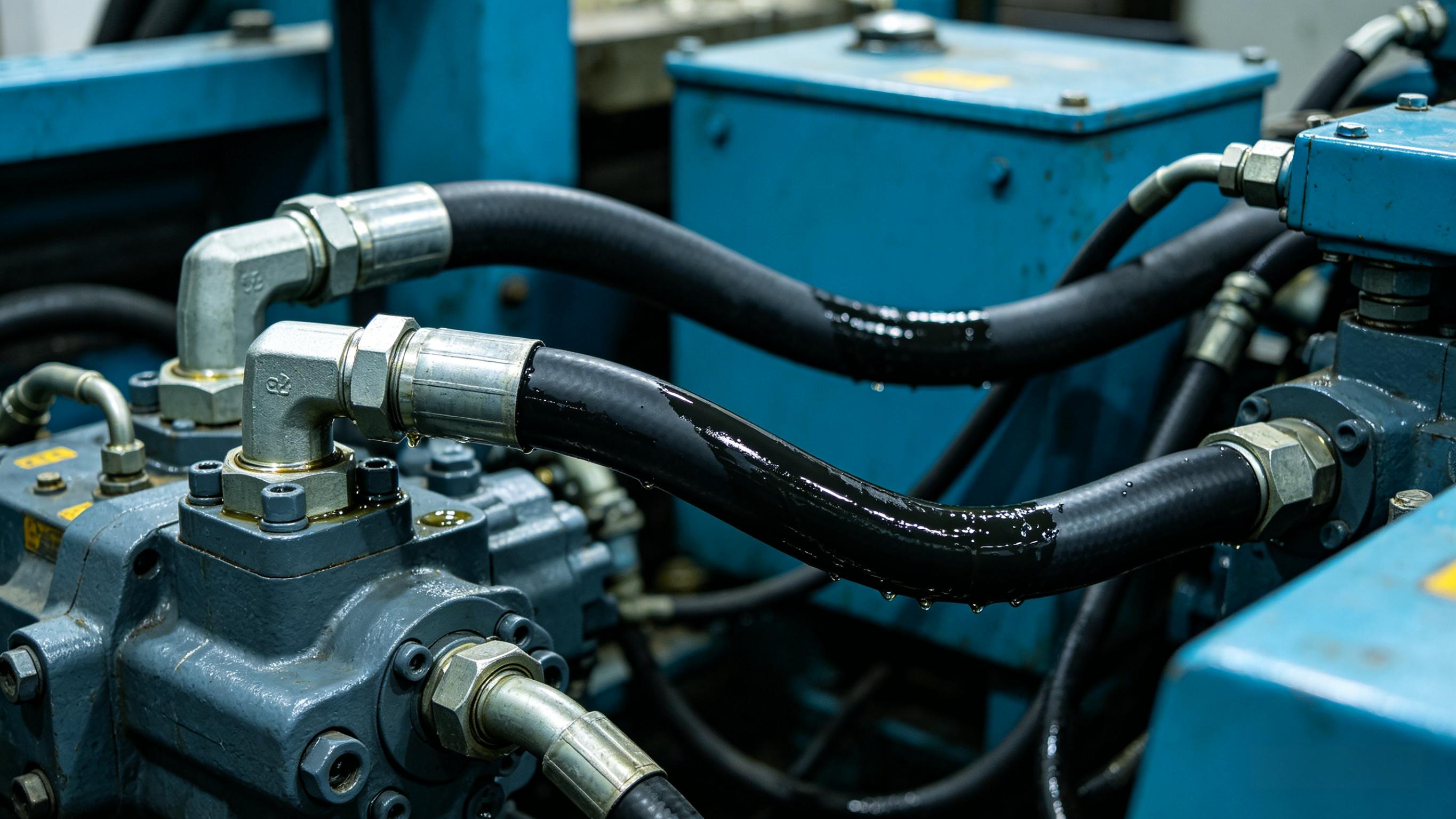
Spiral-wound hose, by contrast, uses helically wrapped steel wires applied in opposing pairs around the tube, usually in four or six layers. The spiral arrangement packs the wires more densely and distributes stress more evenly under pressure, resulting in significantly higher pressure capacity. Spiral hose pressure ratings reach 42 MPa to 70 MPa, with some ultra-high-pressure variants covering the 70 to 120 MPa range. The trade-off is reduced flexibility: the more layers, the stiffer the hose and the larger the bend radius, making installation more demanding in terms of space and fitting alignment.
Pressure and Impulse Life Are the First Criteria
The first step in selection is calculating system working pressure. If the hydraulic system operates continuously in the 20–30 MPa range, braided hose is fully adequate, with lower cost and more flexible routing. Once working pressure exceeds 35 MPa, or where frequent pressure spikes exist, spiral hose becomes the safer choice. Take a 50-ton excavator as an example: main pump outlet pressure is typically around 34 MPa. If braided hose is selected here, its burst pressure must be at least four times the working pressure; spiral hose, with a design safety factor of four to five times, is better suited to the sustained high-load main circuit.
Impulse life is equally critical. Because spiral hose lacks the crossing friction points of a braided structure, wires can slide relative to one another under pressure impulses, extending the fatigue-fracture cycle. Under standard conditions, premium spiral hose achieves impulse life of 800,000 to 1.2 million cycles, equivalent to roughly one to two years of actual service. This advantage is not absolute, however. JCB Excavators in the UK reported cases of spiral hose failing in a “bird-caging” mode under severe flexing, while braided hose—thanks to the interlocking of its crisscross pattern—performed better under the combined demands of flexing and impulse. This shows that selection cannot rely on pressure figures alone; flex frequency and bend radius are equally non-negligible variables.
Temperature and Media Compatibility Matter
Braided and spiral hose differ subtly in temperature tolerance. Braided hose typically handles oil media from -40°C to 100°C, with water-based emulsions recommended below 80°C. Spiral hose extends the upper limit slightly, to 120°C for oil media. If system oil temperature remains above 100°C, or if routing runs near heat sources, spiral hose offers a larger safety margin. For media, both handle mineral hydraulic oil, water-based emulsion, soluble oil, and similar fluids, but special synthetic esters or biodegradable hydraulic oils require confirmation of inner-tube material compatibility.
Weighing Installation Space and Bend Radius
On space-constrained mobile equipment, the flexibility of braided hose often becomes the deciding factor. In small excavator pilot circuits or loader steering loops, routing is tortuous and fitting spacing is short. Spiral hose, even with adequate pressure rating, may be unable to bend to the required radius, forcing a larger diameter or a redesigned routing—adding cost rather than saving it. Conversely, in fixed hydraulic power units or main circuits of mining machinery, where routing is orderly and bend radii are generous, the high pressure capacity and long impulse life of spiral hose come into full play.
Cost and Life-Cycle Assessment
The purchase price of braided hose is generally lower than spiral hose of the same size. For low-pressure applications, specifying spiral hose is over-engineering: procurement cost rises, installation difficulty increases, and fitting matching becomes more demanding. But in high-pressure, high-impulse continuous-duty operations, braided hose may require noticeably shorter replacement intervals, and the downtime losses from frequent changeouts often far exceed the price difference. The logic should be: first confirm whether working pressure and impulse conditions exceed the safe boundary of braided hose; then assess whether bend radius and installation space permit spiral hose; finally, choose the more cost-effective option among those that meet technical requirements.
Practical Recommendations
If system pressure is below 30 MPa, routing is compact, and impulse frequency is moderate, braided hose is the preferred choice. If system pressure exceeds 35 MPa, routing is predominantly straight or large-radius, and sustained pressure fluctuation exists, spiral hose is more suitable. For borderline applications between 30 and 35 MPa, consult the specific model’s rated working pressure and burst pressure data, and maintain a safety factor of no less than four times. Whichever type is chosen, confirm that the product meets the applicable standard—braided hose per SAE 100R1/R2 or GB/T 3683, spiral hose per SAE 100R9 through R13 or GB/T 10544. Standards are the minimum threshold; application matching is the true guarantee of reliability.
