
As power densities in data centers continue to climb, liquid cooling has shifted from a supplementary approach to a mainstream thermal management path. In cold plate liquid cooling loops, hoses connect CDUs, rack manifolds and server nodes. A poor selection can lead to coolant leakage and downtime at best, or short-circuit incidents at worst. Flame retardancy, temperature resistance and pressure resistance are the three core criteria for screening data center cooling hoses.
1. Flame Retardancy: The Fire Safety Threshold for Data Centers
Data centers house dense concentrations of servers and electrical equipment. Any coolant leakage combined with an ignition source can have catastrophic consequences. Therefore, the flame rating of a cooling hose is not optional—it is a market entry requirement. The industry-recognized benchmark is UL94 V-0 certification, which requires the material to self-extinguish within a specified time during vertical burn testing, with no flaming drips igniting cotton below. When purchasing, confirm that the outer cover explicitly states UL94 V-0 compliance, rather than relying on vague “flame retardant” claims. Some premium products also meet ASTM E84 Class 1/Class A requirements for facilities with stricter fire codes. Note that flame performance depends on the outer cover compound; if the cover is damaged during installation or maintenance, local flame resistance may be compromised, making proper handling equally important.
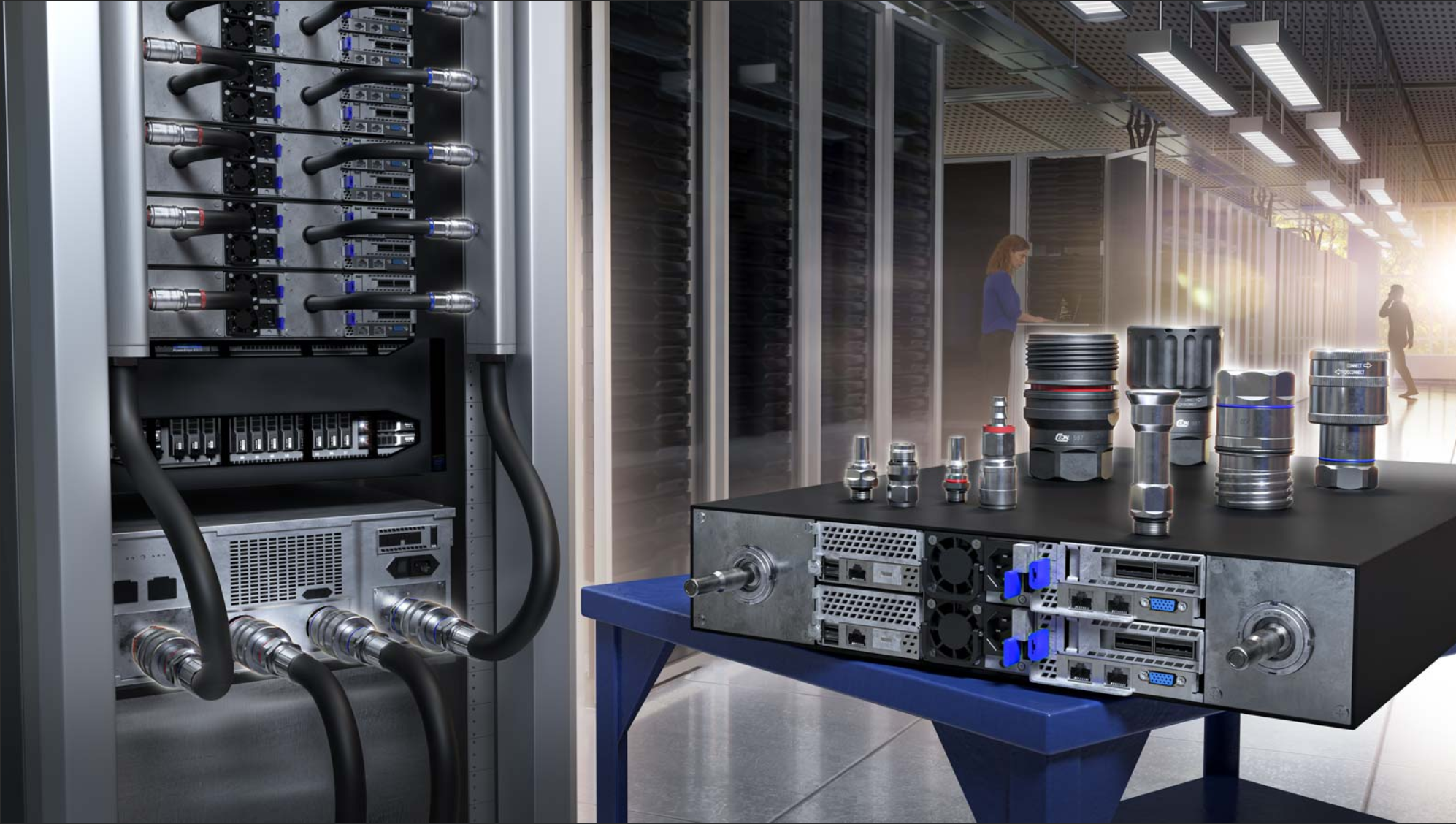
2. Temperature Range: Matching the Thermal Boundaries of the Liquid Cooling Loop
Temperature fluctuations in a data center liquid cooling loop come from multiple sources: the coolant’s own operating temperature, transient thermal shock during server hot-swapping, radiant heat from local hot spots within the rack, and seasonal variations in room temperature. The hose temperature range must cover the combined effect of these conditions. Mainstream EPDM liquid cooling hoses currently offer temperature ranges concentrated between -40°C and +100°C to +120°C. For standard cold plate systems, this range covers the vast majority of scenarios. However, in high-density racks or hot-aisle containment environments, local ambient temperatures may be higher, so verify long-term aging data at elevated temperatures rather than relying solely on the short-term maximum rating. The low-temperature end also deserves attention—hoses must withstand cold without embrittlement or cracking during winter transport or maintenance shutdowns in northern facilities.
3. Pressure Resistance: The Safety Margin Bottom Line
Operating pressures in liquid cooling systems are typically modest, with common hoses rated at maximum working pressures of 10 bar to 16 bar, but selection should not stop at the working pressure number. Burst pressure and safety factor are the real indicators of reliability. Quality liquid cooling hoses typically achieve safety factors of 3:1 to 4:1, meaning burst pressure is three to four times the working pressure. This ensures adequate margin even during water hammer effects or pressure spikes from pump start/stop cycles. Pressure performance is also inseparable from the fitting connection. Cold plate loops use numerous quick-connect fittings; if the hose-to-fitting crimping or clamping process is mismatched, leaks tend to occur at the fitting root rather than the hose body. Prefer products supplied as hose-and-fitting assemblies that have undergone integrated pressure testing.
4. Synergy Among the Three Criteria and Selection Logic
The three criteria do not exist in isolation. Flame-retardant cover compounds may affect flexibility, higher temperature ratings may come with increased cost, and pressure reinforcement design may increase bend radius. Practical selection should follow a priority order: first confirm UL94 V-0 certification as the compliance baseline for data centers; second, determine temperature requirements based on rack power density and coolant type—standard EPDM hose suffices for ordinary AI clusters, while high-density training clusters may require PTFE-lined or higher-temperature-rated specifications; finally, calculate system pressure and safety factor to ensure the hose rating has sufficient margin. Bend radius, ion leaching levels and coolant compatibility should also be evaluated, but the three core criteria are the first filter for screening suppliers.
Conclusion
Selecting a data center cooling hose is essentially about finding the optimal balance between safety compliance and operational reliability. Flame retardancy guards the fire safety bottom line, temperature resistance matches thermal boundaries, and pressure resistance ensures long-term sealing integrity. Understanding the engineering logic behind these three criteria is more valuable than comparing specification sheets alone.
