
Municipal sewer jetting is not simply pressure washing moved underground. The working conditions are variable by nature: pipe diameters change from service laterals to main lines, and a single run may contain silt, grease mats, grit deposits, and root intrusion. The jetting truck operates continuously, and the hose passes through manhole entries, a reel, a guide, and finally the nozzle. For that reason, hose selection should not begin and end with a pressure rating. Pressure headroom, flow matching, jacket abrasion resistance, reel geometry, and fitting reliability all belong in the same decision.
The first step is to establish working pressure and safety margin. The hose’s rated working pressure should sit above the jetter’s actual outlet pressure, with enough margin to absorb water hammer, pulsation, and brief overpressure events. Municipal jetting units commonly operate in the range of roughly 15 to 25 MPa, with some duties running higher, but a burst pressure must never be treated as a working pressure. Confirm the continuous-service rating, burst pressure, and safety factor, and check that the maximum temperature rating covers the water temperature and any cleaning-agent reaction heat on site. Too little headroom and the fitting root and reinforcement layers become the first fatigue points; excessive headroom can add unnecessary weight and stiffness, so selection should follow real equipment output rather than the nameplate maximum alone.
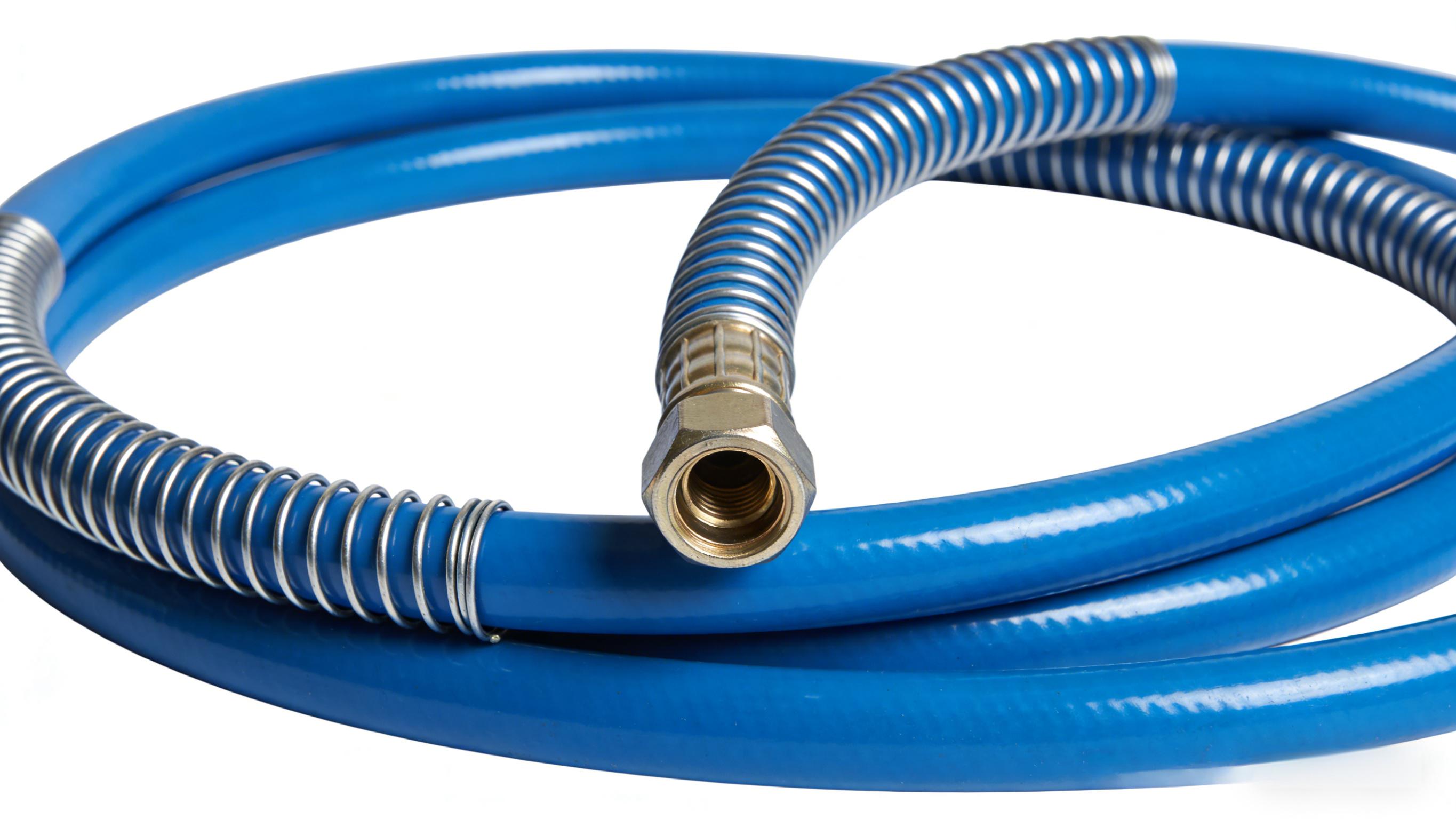
The second step is to balance inside diameter against flow and length. An undersized bore increases pressure loss over long runs, reducing pressure at the nozzle and weakening cleaning performance. An oversized bore adds weight and consumes reel capacity, making handling harder. Sewer jetting often requires runs of tens of meters or more, so pressure loss should be calculated from pump flow, hose length, and nozzle orifice size. For long-distance work, stepping up one bore size or using sectional connections may be appropriate. The nozzle and hose must also be matched: nozzle orifice count and size determine flow distribution, and the hose bore should keep pressure loss within an acceptable range when that flow passes through, not merely allow the fitting to connect.
The third step is to examine jacket and core compatibility with the sewage environment. Municipal wastewater carries grit, grease, and cleaning chemicals. The outer jacket should resist abrasion, oil, hydrolysis, and ozone aging; a polyurethane or high-abrasion composite jacket is generally better suited to manhole friction and ground dragging than a light-duty rubber cover. The core must tolerate cleaning agents and chemical components in the wastewater, and a smooth bore helps limit deposits. The surface should be easy to inspect and clean. Any bulge, cut, exposed reinforcement, or fitting seepage is grounds for immediate removal from service, not a tape wrap and return to work.
The fourth step is to check length, bend radius, and reel or winch geometry together. Hose length should cover the distance between manholes with an operating allowance, but adding length without need raises pressure loss and drag. The minimum bend radius must be compatible with the reel drum, guide rollers, and manhole entry curvature. A transition sleeve at the fitting root helps prevent repeated sharp bending and early failure. When a winch is used, pull speed and force should be controlled so the hose does not rub directly against the pipe wall or sharp manhole edges.
The final step covers fittings, filtration, and maintenance. Thread type, quick-coupling form, and seals must match the jetter, nozzle, and reel. Crimp quality must be reliable enough to prevent pull-off under pressure. Inlet filtration reduces grit entering the hose and nozzle. After work, drain and coil the hose properly, and include periodic pressure testing in the inspection routine. Confirm pressure margin, flow pressure loss, abrasion-resistant jacket, reel bend geometry, and fitting maintenance one by one, and the municipal sewer jetting hose selection is complete.
