
Amid the roar of large construction machinery like excavators and cranes, the hydraulic system acts as the equipment's "cardiovascular system," with hydraulic hoses serving as its critical "arteries." The unexpected failure of a single hose can not only lead to costly downtime but also potentially trigger safety incidents. How can we extend the service life of hydraulic hoses from being "counted in days" to "measured in years"? This article provides a systematic guide—from scientific selection and standardized installation to understanding warranty terms—to help you multiply the lifespan of your hoses.
Incorrect selection is the primary cause of early hose failure. Looking only at size and pressure is far from sufficient; precise multi-dimensional matching is essential.
Pressure Matching: Dynamic vs. Static
Working Pressure: The hose's rated working pressure must be equal to or greater than the system's maximum working pressure.
Pulse Pressure: In the dynamic environment of construction machinery with frequent movements, the system generates pressure surges and pulses. The "≥1 million pulses" mentioned in your provided materials is an indicator of extremely high reliability. When selecting, ensure the hose's pulse life curve meets the requirements of the equipment's highest pulse pressure.
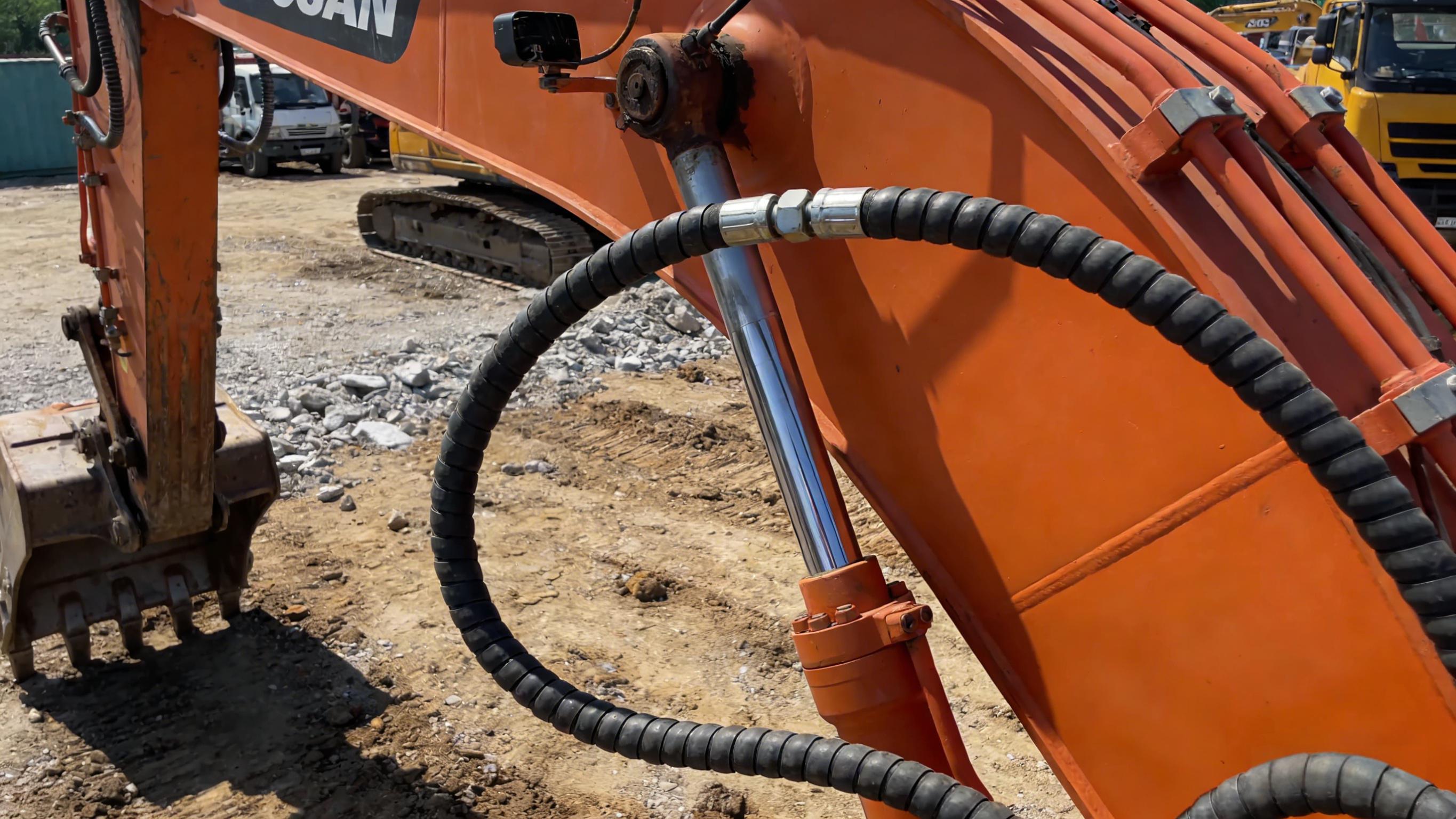
Media & Temperature: The Decisive Role of the Inner Tube
Your provided hose features an inner tube made of Chloroprene/Nitrile (CR/NBR) synthetic rubber, offering combined resistance to petroleum-based hydraulic oil, oxidation, and some weather resistance. Ensure the hydraulic oil type used is compatible with it.
Temperature Range: The specified broad range of -40°C to +121°C ensures reliability during extreme cold starts and continuous high-temperature operation. Selection must be based on the system's maximum temperature and the minimum ambient temperature.
Working Conditions & Environment: The Protective Capability of the Cover
For environments like excavators where contact with rocks, gravel, and mud is common, a "peel-resistant, wear-resistant" cover is crucial for effectively resisting abrasion and mechanical damage.
"Weather-resistant synthetic rubber" means it can resist UV rays, ozone, and rain erosion. The promised "weather resistance for over 5 years" directly addresses the chronic issue of hose cracking and aging on outdoor equipment.
Even the highest-quality hose will see its performance reduced to zero if installed incorrectly. Here are the key installation principles for extending life.
Bend Radius: Adhere to the "Minimum Bend Radius"
The mentioned "low bending" characteristic means this hose can be routed in tighter spaces. However, during installation, you must ensure the actual bend radius is greater than the hose's specified minimum bend radius to avoid stress concentration at the hose stem, which can lead to fatigue failure of the wire reinforcement.
Length & Stress: Allow Slack, Avoid Pulling
The installed length must account for length changes during equipment articulation and cylinder extension/retraction. Sufficient slack must be reserved to prevent the hose from being forcibly stretched or compressed.
Ensure the hose is installed in a natural state, without twisting (observe the stripes on the cover; they should not appear spiral).
Fittings & Seals: The Key to System Integrity
The materials (especially emphasize) "using LITONG Technology's dedicated one-piece hose fittings and HNBR seals." This is one of the core secrets to doubling service life.
One-piece Fittings: Compared to reusable fittings, they offer more reliable sealing, superior pull-out resistance, and allow the hose to fully deliver its high-pulse performance.
HNBR Seals: Possess excellent resistance to oil, high temperatures, and compression set, making them key to ensuring long-term, leak-free sealing at the connection point. Never use mismatched or inferior fittings and seals.
Warranty terms reflect the manufacturer's confidence in their product's quality. The provided "2-year warranty"promise is a high-level guarantee in the industrial hose sector. Understanding its implications helps better protect your rights.
Warranty Scope: Typically covers failures due to material or manufacturing defects under normal use conditions. This implicitly requires the user to have performed correct selection and standardized installation as described above and to retain relevant records (e.g., purchase proof, installation records).
Warranty vs. "Weather Resistance for Over 5 Years": The warranty period is a commercial commitment, while "weather resistance for over 5 years" is a technical expectation based on materials and工艺. Together, they provide dual assurance for the user—from economic cost to service life—significantly reducing the total cost of ownership over the lifecycle.
The Significance of Standards: Compliance with the "ISO18752-DC standard" indicates the product adheres to internationally unified quality and testing specifications for hydraulic hoses. Choosing products with standard certification is a prerequisite for obtaining consistent quality and a reliable warranty.
Doubling the service life of hydraulic hoses doesn't rely on a single secret but on a systematic engineering approach through selection, installation, use, and warranty. Choosing a hose with the described features—low bending, high pulse resistance, weather resistance, paired with dedicated one-piece fittings and HNBR seals—solves the problem at its source. Building on this foundation with meticulous installation practices and a thorough understanding of warranty will allow you to minimize unplanned downtime, ensure continuous and efficient equipment operation in demanding conditions, and truly achieve cost reduction and efficiency gains.

Leave A Comment