
On a fracturing job site, every minute of downtime translates directly into significant financial loss. For contractors, sudden failures like hose bursts, leaking connections, or rapid inner tube wear are often the primary culprits causing operational interruptions. This article delves into a real-world case study, analyzing how an Ultra-Abrasion Resistant Acidizing & Fracturing Hose helped a major oilfield service company overcome challenges and dramatically improve well completion efficiency.
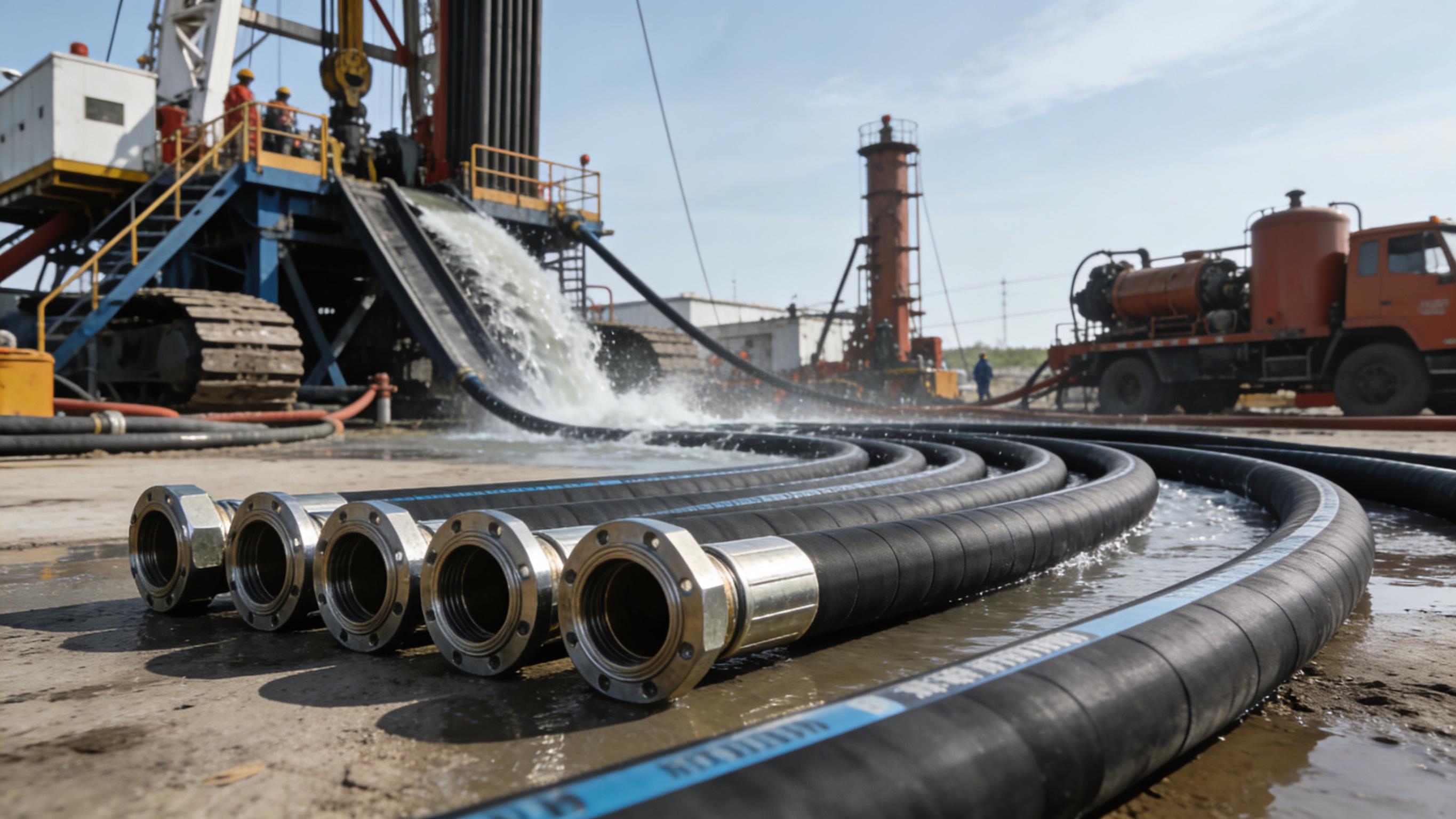
An oilfield service company was conducting a large-scale, multi-stage fracturing operation in a deep shale gas well in the Sichuan Basin. The job required a pump pressure of up to 105 MPa, fluid volumes exceeding 2,000 cubic meters per stage, and proppant (sand) concentrations at industry-leading levels. By the third day of operations, a critical issue emerged on site:
Frequent Failures: Two standard fracturing hoses showed severe inner tube wear after less than 6 hours of use, exposing the steel wire reinforcement and creating a high risk of rupture, necessitating immediate replacement.
Efficiency Bottleneck: Each hose replacement required about 30 minutes of downtime, involving a crane and multiple crew members. This frequent swapping not only delayed the schedule but also increased labor intensity and safety risks for field personnel.
Increased Costs: Beyond the cost of the hoses themselves, hidden expenses such as standby charges for the fracturing fleet and wasted fracturing fluids escalated rapidly due to the stoppages.
The client's core requirement was clear: find a hose capable of withstanding prolonged, high sand concentration, and high-pressure erosion, extending the service life of a single hose from a few hours to at least one full stage (over 12 hours), thereby reducing replacement frequency and ensuring job continuity.
To address these specific conditions, we recommended our Ultra-Abrasion Resistant Acidizing & Fracturing Hose, engineered for demanding fracturing environments. It was installed in the critical high-pressure manifold section between the pump truck and the wellhead for real-time operational tracking.
The core advantages of this hose were fully validated during this case study:
Inner Tube Abrasion Resistance Proven: The hose features a composite inner tube of UPE (Ultra-High Molecular Weight Polyethylene) and synthetic rubber. UPE, with its molecular weight in the millions, provides an extremely low coefficient of friction and exceptional wear resistance. During 12 continuous hours of sand fracturing, high-concentration proppant scoured the inner wall at speeds of several meters per second. Post-job inspection revealed only slight polishing on the inner tube surface, with minimal wear, far from exposing the reinforcement layer.
Flexible Reinforcement Ensures Smooth Operation: The confined site required frequent bending and connection of the hose line. The hose's multi-spiral, high-strength, super-flexible steel wire reinforcement played a vital role here. While ensuring pressure safety (meeting API Spec. 7K FSL0 standards), it provided excellent flexibility, allowing field crews to easily bend and make connections without needing excessive additional fittings, thus reducing local turbulence and impact on the line.
Cover Protection Suits Harsh Environments: The Sichuan region is prone to rain, mud, and strong UV radiation. The hose's abrasion-resistant and weather-resistant synthetic rubber cover maintained its integrity through frequent dragging and mud immersion, showing no signs of cracking, blistering, or weathering, effectively protecting the internal reinforcement layers.
After continuous multi-stage on-site tracking and comparison, the use of this Ultra-Abrasion Resistant Fracturing Hose yielded immediate and significant results:
Significantly Extended Lifespan: The average service life of a single hose under high-pressure, high-sand-frac conditions increased from less than 6 hours to over 24 hours, comfortably covering the needs of 2-3 operational stages. This meant no hose-related shutdowns were required during a standard fracturing stage.
Enhanced Operational Efficiency: Unscheduled downtime due to hose wear was reduced by over 80%. Previously requiring 2-3 changes per day, the hose now needed replacement only every 2-3 days. Overall fracturing efficiency improved by approximately 15%, gaining valuable time for the operator to complete the well and start production earlier.
Reduced Overall Costs: Although the initial purchase cost per hose was slightly higher than standard products, the extended lifespan, reduced replacement frequency, and significant decrease in labor and equipment standby costs led to an approximate 20% reduction in overall operational expenditure per well.
This case study clearly demonstrates that in high-pressure, highly abrasive acidizing and fracturing operations, choosing a specialized hose with an ultra-abrasion resistant inner tube, high-strength flexible reinforcement, and weather-resistant cover is more than just replacing a component; it's an optimization of the entire operational workflow.
It directly addresses the most troublesome pain point of "frequent replacement" on site, unifying the seemingly contradictory goals of "safety" and "efficiency." For oilfield service companies pursuing maximum operational efficiency, the Ultra-Abrasion Resistant Acidizing & Fracturing Hose is undoubtedly a key tool for enhancing competitiveness in well completion.

Leave A Comment