
Underground in a coal mine, the hydraulic systems of supports and shearers are like the circulatory system of the human body, and the mine wire braided rubber hoses are the critical "blood vessels." Once a hose fails, it not only causes equipment downtime, delaying excavation, but can also lead to serious safety accidents due to high-pressure fluid injection or potential fires. Therefore, mastering the daily inspection methods for mining hoses, especially the ability to identify early wear signs of the steel wire braid reinforcement layer, is an essential skill for every underground maintenance worker and equipment operator.
This article focuses on MT/T98 (MT98) standard mining hoses, providing a detailed guide on how to detect potential problems with the wire braid layer before failure occurs, using a "look, feel, listen, and track" approach.
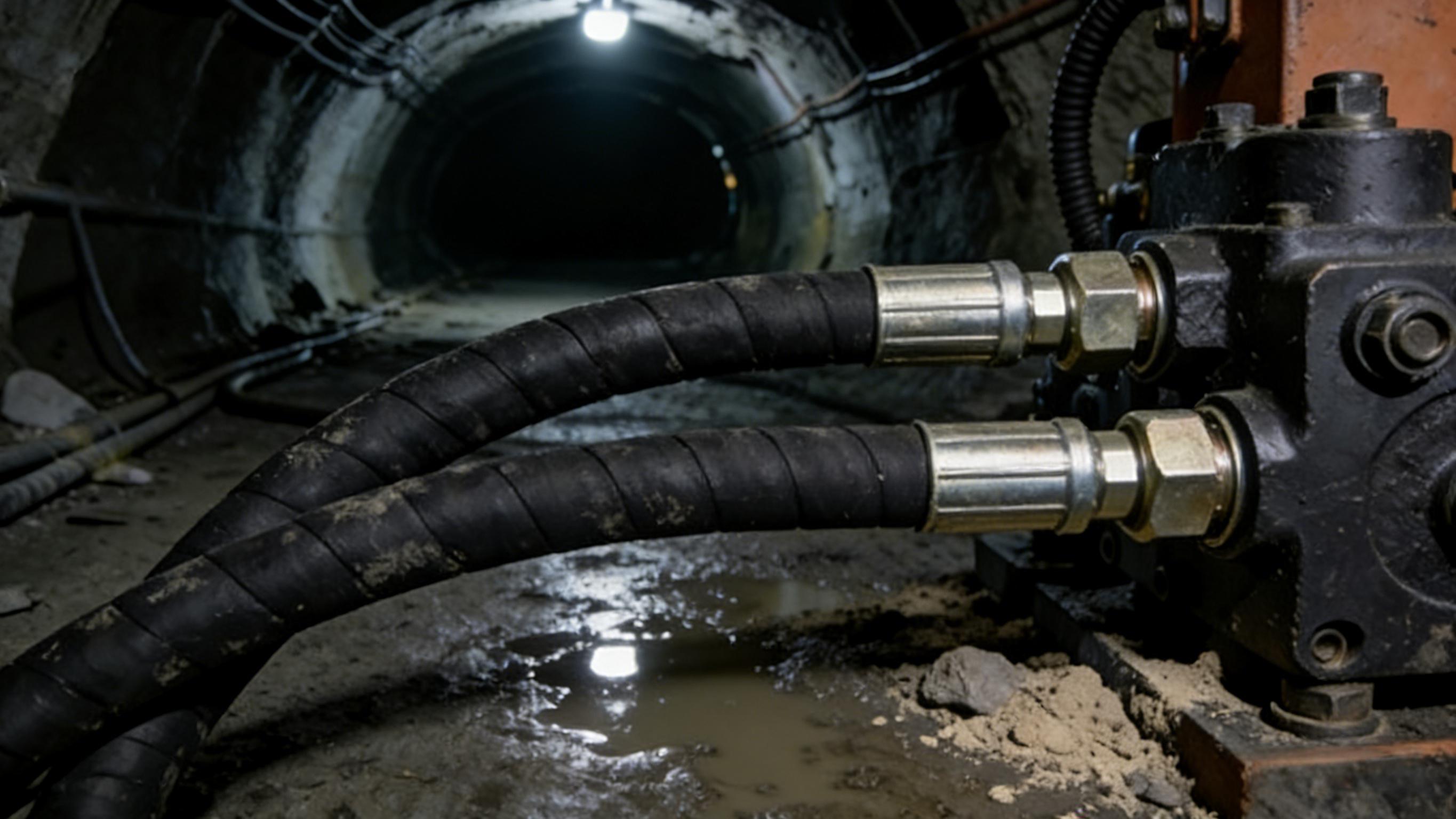
According to the MT98 standard, a mining hose consists of three parts: the inner tube, the wire braid reinforcement, and the cover. Among these, the wire braid layer is the "skeleton" that bears the vast majority of the system pressure. Once the wire layer is damaged, the hose's pressure capacity drops dramatically, making it highly prone to bursting under high pressure.
Damage to the wire braid rarely happens instantaneously; it usually begins with subtle "early wear." If detected and addressed at this stage, the vast majority of hose burst accidents can be avoided.
Step 1: Visual Inspection – Look for "Signals" on the Cover
The wire braid is hidden beneath the cover, but the cover itself sends out "distress signals."
Blistering & Bulges: This is the most classic sign of wire layer damage. When a wire breaks due to fatigue or corrosion, high-pressure fluid can seep between the cover and the wire layer at the break point, forming a localized bulge. If you find a bulge on the hose surface, regardless of size, it means the internal wires are already broken, and the hose must be replaced immediately.
Abnormal Bumps or Depressions: Run your hand over the hose surface. Feel for localized hard spots or depressions. This could indicate irregular deformation or local loosening of the internal wire layer.
Cover Cracking: Inspect the cover for deep cuts, gouges, or cracks, especially longitudinal cracks. Such damage may have penetrated the cover, directly exposing or damaging the internal wires. Ingress of moisture and coal dust will accelerate wire corrosion.
Step 2: Tactile Detection – Feel the Hose's "Pulse"
Bend Comparison Test: After the system is shut down and depressurized, gently bend the hose and compare its flexibility to a new hose of the same specification. If a section feels noticeably stiffer, has a catching feeling when bent, or shows poor spring-back (doesn't return to its original shape), this often indicates fatigue, broken wires, or permanent deformation in that section of the wire braid.
Pressure Palpation: Press your finger into the hose surface, especially over suspect areas. If you feel a lack of underlying support, and the pressed area feels significantly soft, it may mean the internal wire layer has loosened or broken, losing its reinforcing function.
Step 3: Auditory Clues – Listen for Operational "Noises"
Hydraulic System Abnormal Sounds: During equipment operation, if you hear unusual hissing, clicking, or vibrations coming from near a hose, this could be the sound of turbulence created by high-pressure fluid flowing past internal broken wire ends, or the friction of those ends. Correlate this with visual checks for diagnosis.
Step 4: History Tracking – Check the Hose "Record"
Log Installation Location & Time: Consider keeping simple usage records for critical underground hoses. Note the installation date and location (e.g., hydraulic support leg, ram cylinder). If a hose is approaching or exceeding its design life, or is located in an area with the most severe pressure fluctuations, it should be a priority inspection target, even if it looks okay externally. Consider preventive replacement.
Trace Past Damage: Check if the hose has ever been crushed by heavy objects, bent past its limit, or gouged by sharp objects. Such impacts, even if they didn't cause an immediate leak, may have caused "internal injury" to the wire layer, creating a potential site for future early wear.
Immediate Shutdown and Replacement: Once early wear of the wire braid is confirmed or highly suspected using the methods above, stop the equipment immediately and have qualified personnel replace the hose following safety procedures. Never continue using a hose with a detected bulge or obvious damage.
Replace with a Compliant MT98 Hose: The new hose must meet the MT/T98 standard for mining applications, ensuring it possesses necessary underground safety features like flame resistance and anti-static properties. When replacing, check that the new hose has clear markings and the MA (Mining Approval) mark.
Investigate the Root Cause: Analyze why the hose experienced early wear. Was it due to an insufficient bend radius during installation? Friction against other components? Or abnormal pressure shocks in the system? Identifying and eliminating the root cause prevents the new hose from suffering the same fate.
Beyond regular inspections, good daily practices can significantly delay wire braid wear:
Proper Installation: Ensure hoses have enough slack and are not under tension during operation. Never bend them past the specified minimum bend radius.
Prevent Abrasion: Install protective sleeves or guards in areas where hoses might rub against support structures or other hard objects.
Maintain Cleanliness: Regularly clean coal dust and water accumulation from hose surfaces to reduce cover aging and corrosive environments.
Conclusion
The health of mining wire braided rubber hoses directly impacts the safety and efficiency of the longwall working face. Through meticulous daily inspection and developing the skill to identify early signs of wire braid wear, we can eliminate potential failures in their infancy, building a solid defense line for safe coal mine production.

Leave A Comment