
Concrete delivery line blockage is one of the most frustrating problems on any job site. A single clog can stop production for hours, waste expensive ready-mix, and even cause pipe bursts or injuries. Fortunately, most blockages can be resolved quickly with the right actions. Here are 6 field-tested practical techniques to locate and clear a concrete pump line blockage.
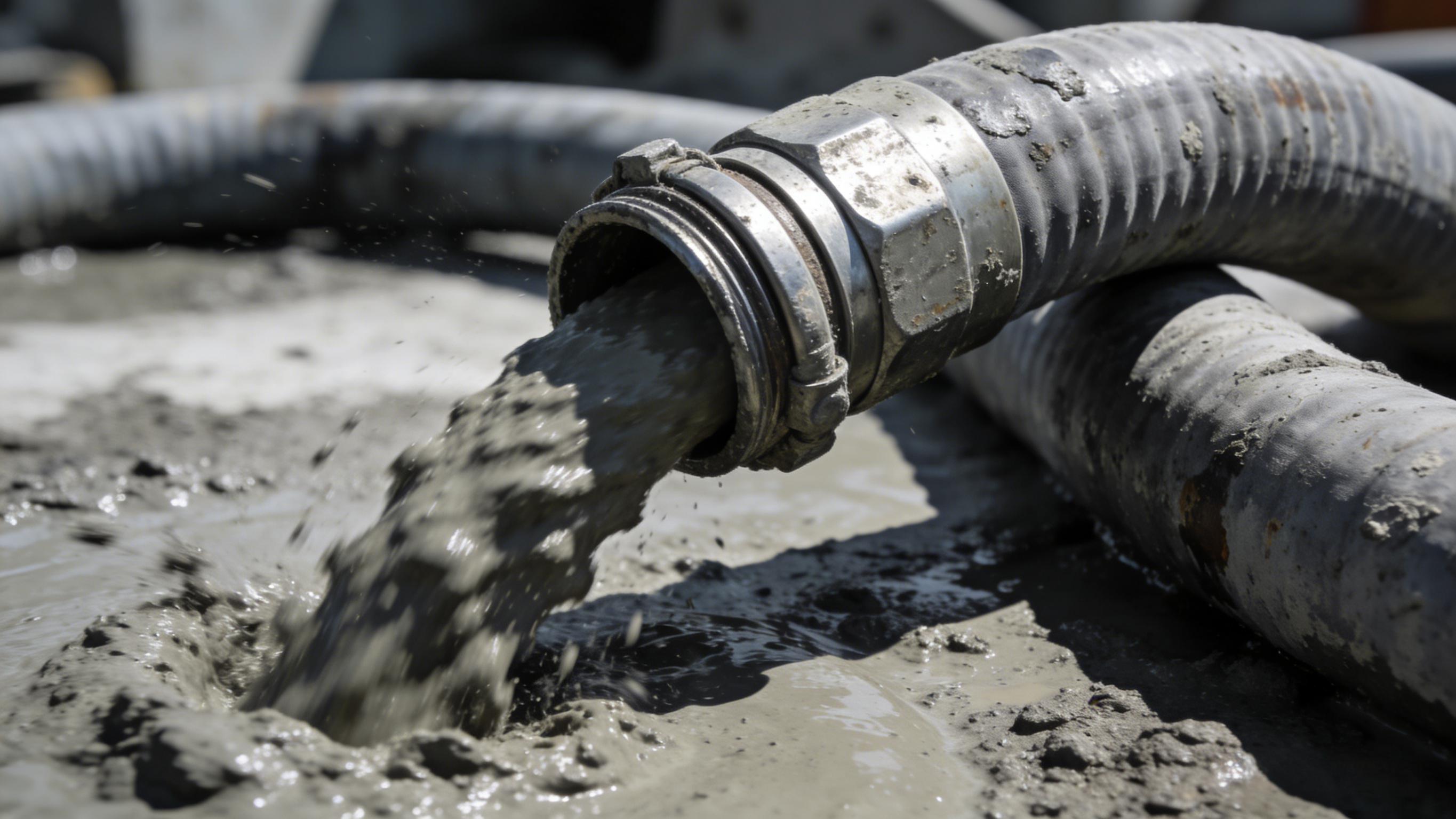
Technique 1: Reverse Pumping (Anti‑pump)
When you see a sudden pressure gauge spike, no concrete coming out of the end hose, or violent hose vibration, do NOT keep pumping forward. Immediately switch to reverse pumping mode. This retracts the concrete back into the hopper. Run reverse for 2–3 strokes, then switch back to forward pumping. About 80% of minor accumulation blockages clear this way. Warning: Keep everyone away from the discharge area during reverse pumping – concrete can shoot out unexpectedly.
Technique 2: Locate Blockage by Tapping
If reverse pumping fails, you need to find the exact blockage point. Use a hammer to tap along the pipeline: a clear, ringing sound indicates normal flow; a dull, solid sound means blockage. Also feel the pipe surface – blockage points often feel warmer (friction heat) or cooler (lost moisture from paste). Common spots: elbows, reducers, and tapered pipes. Focus your inspection there.
Technique 3: Disassemble and Clean (for Near‑End Blockage)
If the blockage is within 10 meters of the pump outlet, dismantle that section. Always reverse pump to relieve pressure first, and wear heavy gloves and safety glasses. After removal, use a rebar rod or a special pipe cleaning tool to punch out the hardened concrete. Important: Before opening couplings, slowly loosen them to release trapped pressure. Check and replace seals before reassembly.
Technique 4: High‑Pressure Water Jet Backflushing
For long-distance or high-rise pumping lines, disassembling is too laborious. Use a pressure washer (≥30 MPa) with a special nozzle. Insert the nozzle from the end hose and direct the water jet backward against the blockage. This is extremely effective for “segregation blockages” – where coarse aggregates accumulate without mortar (stone plugs). The water jet breaks up the stone mass and lubricates the pipe wall. Two people are required: one controls the water gun, the other slowly feeds the hose.
Technique 5: External Vibration to Loosen
When the blockage is in a boom elbow or a middle straight pipe and the concrete hasn’t set yet, apply a high‑frequency external vibrator tightly against the pipe wall. Simultaneously run the pump forward at low speed. The vibration re‑fluidizes the stalled concrete. This works especially well for high‑strength concrete with fast slump loss. Note: Vibrate for no more than 30 seconds; if ineffective, switch to disassembly.
Technique 6: Preventive Suction & Cleaning (Post‑pumping tip)
This is a “master trick”: Near the end of a pour, pump a few cubic meters of grout or clean water, then immediately reverse pump to suck all concrete back into the hopper. Then push sponge balls or a pig with water to clean the line. This fundamentally prevents initial setting blockages. Even if a minor clog has started, try pumping a 1% superplasticizer solution into the line, wait 5 minutes, then reverse pump.
When NOT to Force a Clearance:
Blockage lasted over 2 hours and concrete has started to set – forcing can burst the pipe.
Severely blocked elbow that sounds deformed when tapped – replace the elbow for safety.
High‑pressure system reaches safety redline – stop and relieve pressure immediately.
Master these 6 techniques and combine them with routine wear measurement (thickness check every month). You will avoid over 90% of serious line blockages. On a job site, time is money – learn to clear blockages, but more importantly, learn to prevent them.
