
In large-flow conveyance applications such as mine drainage, hydraulic engineering, port dredging, and emergency rescue, large-diameter suction hoses serve as the “main artery” connecting pumps to water sources. However, many procurement professionals focus solely on price and nominal size, overlooking the intrinsic relationships among diameter matching, working pressure, and reinforcement layers. The result? Either mismatched diameters inadequate suction, or insufficient pressure ratings causing hose collapse or even burst. This article systematically explains the three core selection parameters within the DN200-DN800 range, along with the technical logic and common pitfalls behind each.
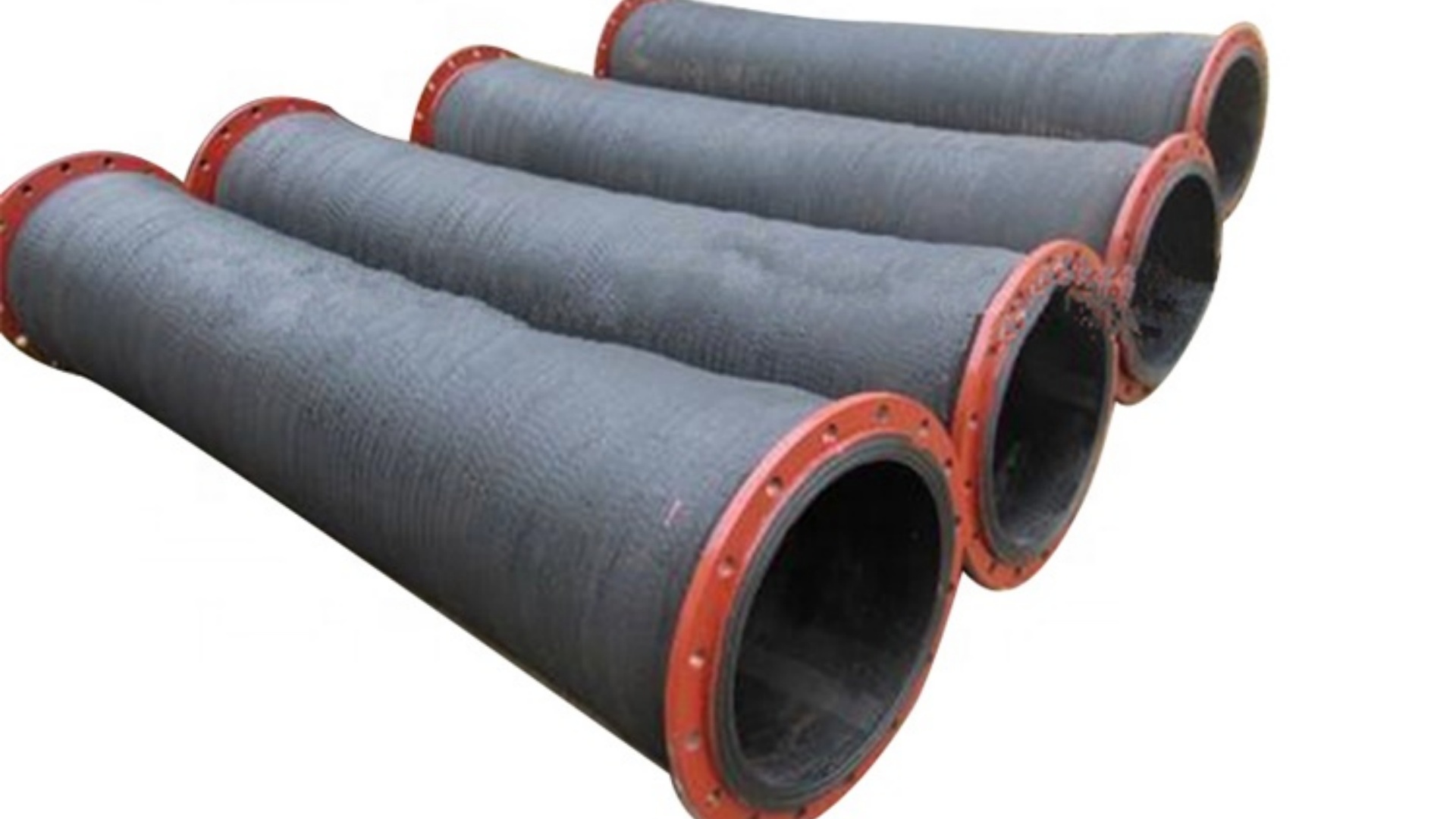
I. Diameter (DN200-DN800): “Close Enough” Won’t Cut It
Nominal diameter (DN) is the first threshold in hose selection. Currently, large-diameter suction hoses on the market typically cover inner diameters from 108mm to over 800mm. Within the DN200-DN800 range, common specifications include DN200, DN250, DN300, DN350, DN400, DN500, DN550, DN600, DN700, and DN800. Some manufacturers can even produce ultra-large diameters up to DN1800.
Pitfall 1: Ignoring pump port matching. The inner diameter of the suction hose should be no less than the pump suction port diameter—as a general rule, the discharge pipe diameter should not be smaller than the pump discharge port. If the hose ID is smaller than the pump connection, it will significantly increase suction resistance, reduce flow rate, and may even cause pump cavitation.
Pitfall 2: Choosing a “close enough” size arbitrarily. Large-diameter hoses exhibit minimal deformation under pressure but have strict dimensional tolerance requirements. Industry standard HG/T 2490-2023 specifies clear dimensions and tolerances for dredging rubber hoses with nominal diameters from 100mm to 1300mm. Selection should be based on hydraulic calculations using actual flow rate and head requirements, not on gut feeling.
Pitfall 3: Ignoring the effect of total pipeline length on diameter. The longer the pipeline, the greater the friction loss. In long-distance conveyance scenarios, appropriately increasing the diameter can effectively reduce resistance losses and improve conveying efficiency.
II. Working Pressure: Both Positive and Negative Pressures Matter
Working pressure is the core indicator determining whether a hose can operate safely. However, many selectors focus only on positive pressure while neglecting negative pressure (vacuum) conditions.
Large-diameter suction hoses can be divided into high-pressure and low-pressure categories based on working pressure, with low-pressure further divided into low-pressure delivery (positive pressure) and low-pressure suction (negative pressure). For suction and discharge hoses commonly used in dredging applications, the working pressure is generally 0.4-0.5 MPa. Some large-diameter water hoses cover working pressures from 0.4 to 4 MPa, while marine suction and discharge hoses can cover a broad range from 0 to 50 MPa.
Key Point 1: Burst pressure to working pressure ratio. According to GB/T 9574-2017, there are clear ratio requirements for verification pressure, minimum burst pressure, and maximum working pressure for various types of hoses. Typically, the minimum burst pressure of large-diameter hoses is at least 3 times the working pressure, and some products 4 times. Always verify that the manufacturer’s burst pressure data meets the required safety margin.
Key Point 2: Special requirements for negative pressure suction. When a hose is used for suction (rather than delivery), the interior is under negative pressure. If the reinforcement layer is inadequately designed, the tube wall will collapse under external atmospheric pressure. Therefore, negative-pressure suction hoses must incorporate designed reinforcement structures.
Key Point 3: Effect of temperature on working pressure. Industry standard HG/T 2490-2023 specifies that dredging hoses are suitable for ambient temperatures from -20°C to +40°C. Elevated temperatures soften rubber materials and reduce pressure-bearing capacity—derating factors should be applied based on actual operating temperatures.
III. Reinforcement Layers: The Key to a Hose’s “True Strength”
The reinforcement layer is the hose’s “backbone,” directly determining its pressure-bearing capacity and negative-pressure resistance. More layers and a more rational structure mean higher pressure resistance and better deformation resistance.
Large-diameter suction hoses primarily feature two types of reinforcement layers:
Low-pressure large-diameter hoses use multi-layer fabric/cord winding reinforcement layers, supplemented by a spiral steel wire helix. Among these, negative-pressure suction hoses adopt a double-layer spiral steel wire helix reinforcement structure to ensure the hose body does not collapse or deform under negative pressure.
High-pressure large-diameter hoses feature multi-layer steel wire braided or spiral-wound reinforcement layers. Common configurations include 2-layer, 4-layer, or 6-layer steel wire spiral-wound reinforcement. For hoses with the same inner diameter, more steel wire layers equate to higher working pressure.
Pitfall 1: Low pressure ≠ low requirements. Many buyers assume low-pressure hoses can be chosen casually. However, low-pressure suction hoses actually have higher demands on the reinforcement layer—they require a spiral steel wire helix to resist negative-pressure collapse, not merely to withstand positive pressure.
Pitfall 2: More layers are not always better. More layers mean thicker walls, heavier hoses, and larger bend radii. The most economical reinforcement layer configuration should be selected while meeting working pressure requirements. Fabric layers typically range from 2 to 25 layers, and should be selected based on actual pressure needs.
Pitfall 3: Pay attention to reinforcement material type. Among reinforcement layers, the performance differences between canvas, cord (840D, 1260D, D3, etc.), and steel wire are enormous. For conveying abrasive media such as sand and slurry, steel wire braided or spiral-wound reinforcement should be prioritized over fabric reinforcement.
IV. Selection Summary: Integrated Decision-Making Across Three Parameters
Diameter (DN200-DN800), working pressure, and reinforcement layers are not independent of each other—they are interconnected: larger diameters demand higher reinforcement strength under the same pressure; higher working pressures require more reinforcement layers; and negative-pressure conditions call for specialized spiral steel wire helix structures. Selection should be based on actual operating conditions—flow rate, head, media characteristics, and ambient temperature—to determine the values of all three parameters holistically, rather than focusing on any single indicator in isolation. Master the selection logic of these three core parameters, and you’ll avoid most of the pitfalls when procuring large-diameter suction hoses.
