
In modern agricultural operations, the hydraulic system serves as the power output for tractors, the lift control for harvesters, and the core drive for balers. As the “blood vessels” of the hydraulic system, hose assemblies directly determine operational efficiency and safety during peak farming seasons. Statistics show that approximately 30% of hydraulic system failures are related to high-pressure hoses, including bursting, fitting leakage, and inner tube aging. With increasingly compact machinery designs and more demanding operating environments, a scientifically sound hydraulic hose upgrade solution has become a critical breakthrough for improving overall agricultural machinery performance.
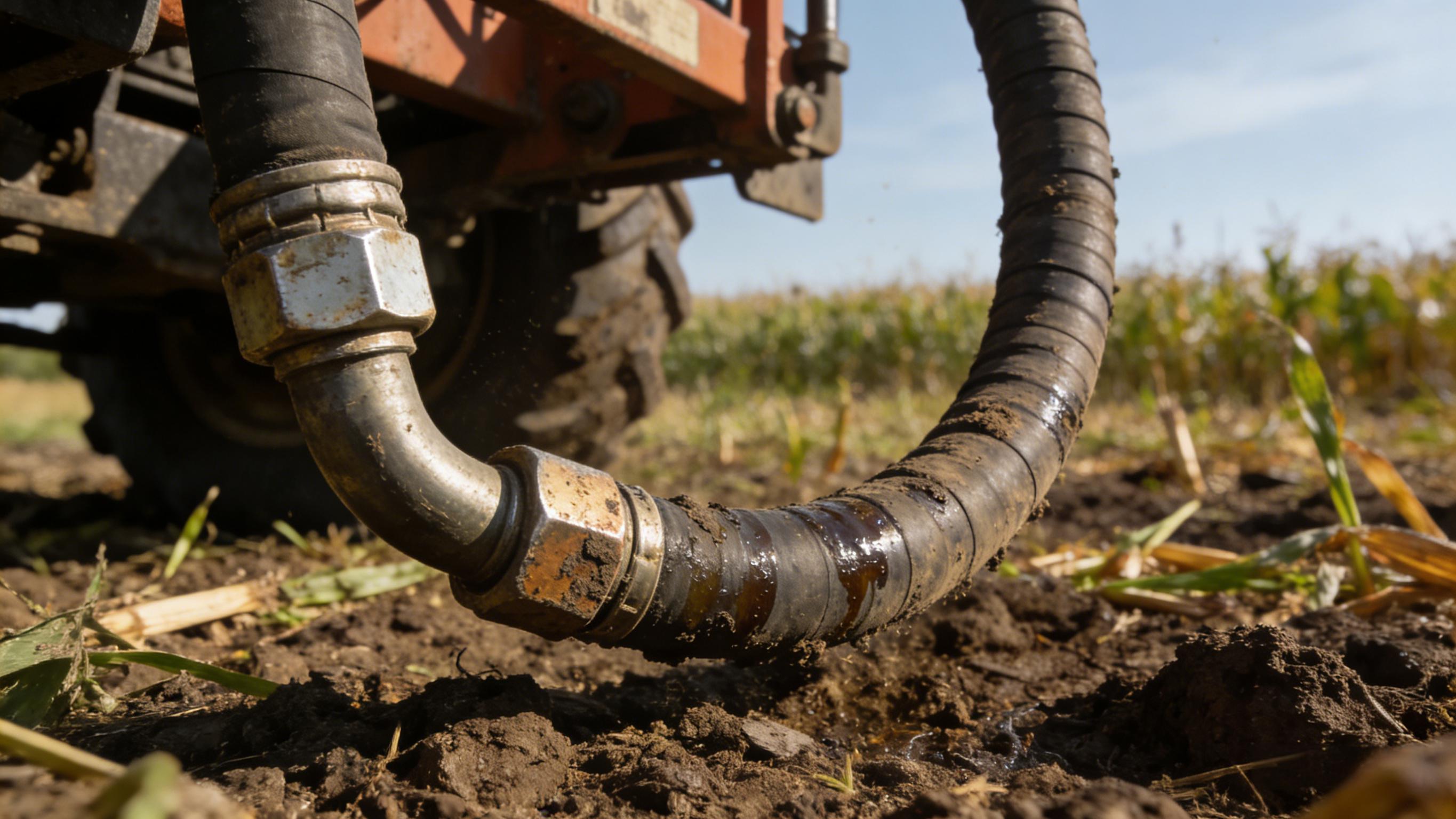
I. Special Challenges of Agricultural Hydraulic Systems
Compared with industrial environments, agricultural hydraulic systems face more complex operating conditions: extended idle periods due to seasonal use, dust contamination during field operations, chemical corrosion, and wide daily temperature fluctuations. These factors demand that agricultural hydraulic hoses possess stronger environmental adaptability.
Specifically, tractor hydraulic hitch systems emphasize pulse fatigue performance and must withstand frequent pressure fluctuations; combine harvester header lift systems require flexibility and small bend radii; and sprayer hydraulic systems demand special consideration for chemical corrosion resistance. Meanwhile, modern agricultural machinery designs are increasingly compact, with dense hydraulic line layouts that leave limited installation space for hoses. During field operations, combine harvester hoses must not only withstand high-pressure fluid impulse shocks but also endure sun exposure, rain, straw abrasion, and seasonal temperature variations.
II. EN857 SC Ultra-Flexible Braided Hoses — The Ideal Choice for Agricultural Hydraulic Upgrades
Addressing the pain points of agricultural machinery, EN857 SC series steel wire braided hydraulic hoses are increasingly becoming the preferred choice for maintenance replacement. Compared with SAE 100R1/R2 standards, EN857 standard hoses feature smaller outer diameters and significantly smaller bend radii — typically about half that of conventional standards. This means that within tight spaces such as combine steering systems or tractor rear multi-valve blocks, the hoses can easily route around obstacles without requiring excessive transition fittings, thereby reducing leakage risks.
The ultra-flexible characteristics derive from three core structures: the inner tube uses black oil-resistant synthetic rubber, compatible not only with conventional petroleum-based hydraulic oils but also with water-based hydraulic fluids and biodegradable hydraulic oils; the reinforcement layer employs high-strength ultra-fine steel wire braiding — the EN857 SC series is available in 1SC (single braid) and 2SC (double braid), with the double-braid high-strength ultra-flexible steel wire layer delivering superior impulse performance for large combine harvesters that endure high-pressure impacts; the outer cover uses black oil-resistant, weather-resistant, and abrasion-resistant synthetic rubber, effectively resisting UV aging and abrasive wear.
III. Four Key Selection Parameters
Correct selection is the first step to successful hydraulic upgrades. The following four parameters require particular attention:
Working pressure and safety factor are the primary considerations. Agricultural machinery hydraulic systems typically operate at working pressures between 10-35MPa, with some implements experiencing instantaneous pressures up to 40MPa. The minimum burst pressure of high-pressure hoses should be at least 4 times the working pressure (safety factor 4:1). Hose markings provide quick identification — for example, “2SN-10-35MPa” indicates 2-layer steel wire braid, 10mm inner diameter, and 35MPa working pressure.
Inner diameter and flow velocity matching are equally critical. An undersized inner diameter leads to excessive flow velocity (recommended ≤6m/s for hydraulic systems), causing temperature rise and pressure loss; an oversized diameter increases cost and occupies space. Media compatibility requires consideration of fluid types — mineral oil, water glycol, or rapeseed oil-based biodegradable hydraulic oils — as different media have varying swelling effects on the inner tube material. Environmental adaptability covers temperature range and weather resistance — quality agricultural hydraulic hoses typically operate across a wide temperature range of -40°C to +100°C, with outer covers incorporating UV-resistant additives or specialized compounds such as EPDM.
IV. Installation and Maintenance Practical Guide
Installation essentials: The minimum bend radius of high-pressure hoses should typically be 8-10 times the outer diameter — insufficient bending can damage the steel wire layer. Avoid twisting during routing, and ensure thread alignment and proper crimping during fitting assembly. Routine maintenance: before seasonal use, inspect hoses for cracking, hardening, and other signs of aging; regularly clean accumulated dirt and plant residue from hose surfaces; for long-term storage, remove hoses and store them in a cool, dry place; use dedicated agricultural hydraulic oil to reduce erosion of the inner tube.
From selection to maintenance, precise control at every stage is the foundation for ensuring hose assemblies operate reliably and stably in tractors, combine harvesters, and other agricultural machinery. A well-designed hydraulic upgrade solution not only reduces downtime during peak farming seasons but also effectively extends the overall service life of the entire hydraulic system.
