
In actual hydraulic system operation, high temperature and high pressure are two of the leading causes of hose failure. Traditional rubber hoses often suffer from inner tube aging, reinforcement degradation, or even bursting when exposed to temperatures exceeding 100°C or corrosive media, severely affecting continuous equipment operation and safety. PTFE (Polytetrafluoroethylene) high pressure hoses, leveraging their unique material properties, are becoming an ideal choice for upgrading hydraulic systems in high-temperature and high-pressure conditions, helping users overcome the performance limitations of traditional hoses.
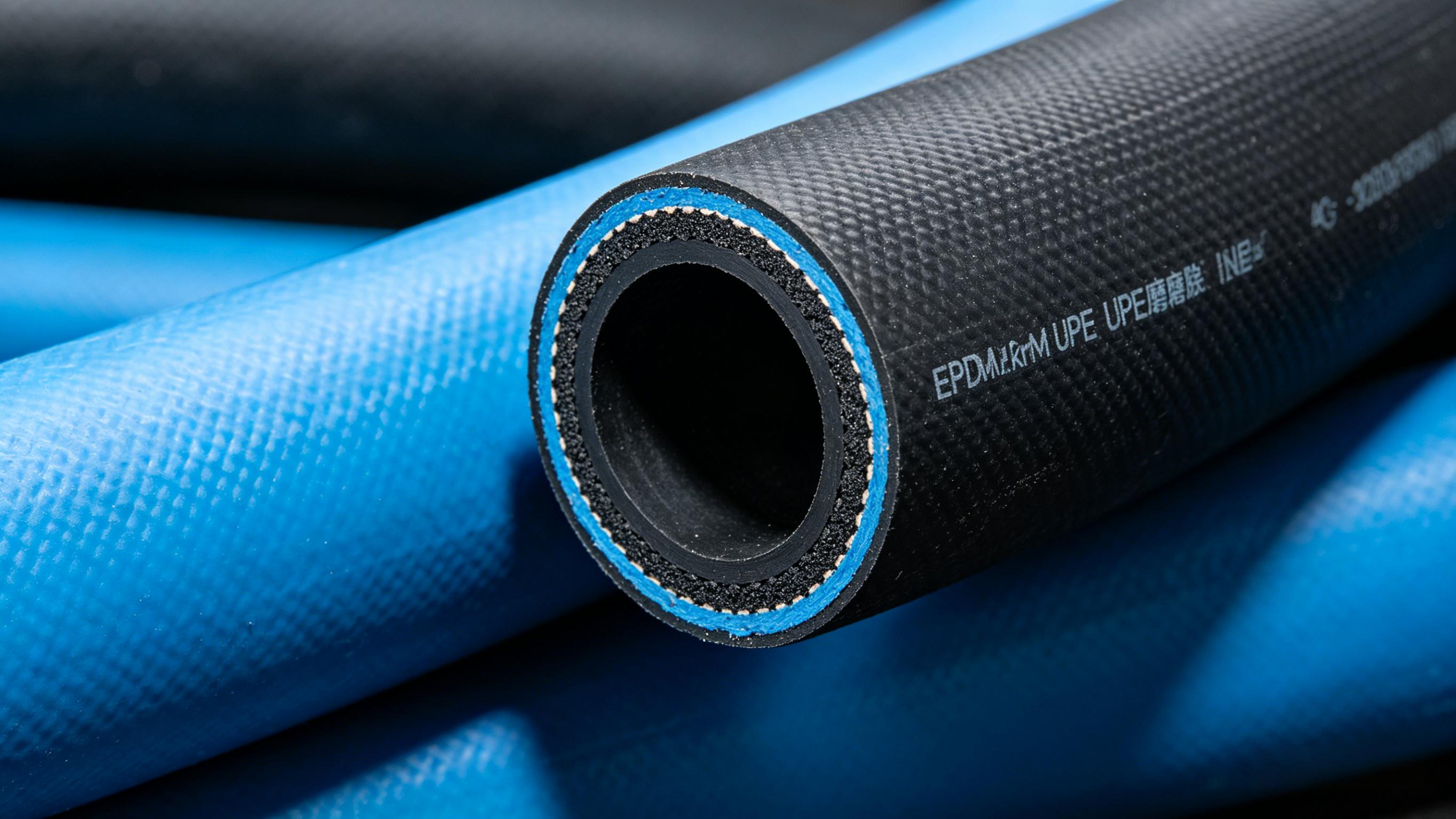
The core advantage of PTFE high pressure hoses lies first in their extreme temperature adaptability. PTFE material operates over an exceptionally wide temperature range, from -70°C to +260°C for long-term service. In actual hydraulic applications, many equipment continuously operate with oil temperatures reaching 120°C to 180°C under high load conditions. Traditional NBR rubber hoses typically have an upper temperature limit of around 100°C, beyond which the rubber inner tube accelerates aging and hardening, leading to reduced sealing performance and even cracking and leakage. PTFE hoses, in contrast, maintain stable mechanical properties and chemical inertness even at 200°C, with minimal decomposition and no thermal aging concerns. This makes PTFE hoses particularly suitable for high-temperature applications such as hot oil lines in injection molding machines, hydraulic systems in presses, steel and metallurgy equipment, and aerospace hydraulic systems.
Beyond high temperature resistance, PTFE hoses also offer exceptional chemical compatibility. PTFE is known as the "king of plastics," resisting attack from almost all chemical media, including strong acids, strong bases, organic solvents, and various oxidizing agents. In hydraulic systems, this means PTFE hoses can safely convey petroleum-based hydraulic oils, water-based hydraulic fluids, biodegradable hydraulic oils, and various synthetic hydraulic media without concern for inner tube corrosion or swelling. According to relevant test data, under harsh alternating acid and alkali conditions, PTFE hoses achieve a service life three to five times longer than ordinary rubber hoses. This property is particularly critical for hydraulic equipment in chemical plants, hydraulic control systems on offshore platforms, and high-cleanliness hydraulic systems in the food and pharmaceutical industries.
From a construction perspective, PTFE high pressure hoses typically consist of a PTFE inner tube and a stainless steel wire braid reinforcement layer. The inner tube is manufactured using a seamless extrusion process, resulting in an extremely smooth inner wall with a friction coefficient as low as 0.04, far lower than rubber materials, thus minimizing pressure loss and delivering higher transfer efficiency. The reinforcement layer uses braided 304 or 316L stainless steel wire, providing adequate pressure resistance with typical working pressures ranging from 21MPa to 38MPa or even higher. Some premium products incorporate a Kevlar intermediate layer combined with an outer stainless steel braid, giving the hose both extremely high pressure capacity and good flexibility. Additionally, PTFE hoses feature low permeability, flame retardancy, and excellent weather aging resistance, maintaining performance without degradation even after long-term exposure to outdoor conditions, oil spills, and UV radiation.
In practical applications, PTFE high pressure hoses have been widely adopted across numerous high-temperature and high-pressure hydraulic scenarios. For example, in injection molding machine hydraulic systems that require long-term transport of high-temperature thermal oils, switching to PTFE hoses can dramatically reduce hose replacement frequency, extending equipment maintenance intervals from 500 hours to 2,000 hours. In construction machinery and robotics hydraulic systems, the flexibility and impulse resistance of PTFE hoses meet the demands of high-frequency motion and tight-space routing. Aerospace hydraulic systems impose even stricter requirements on hoses; PTFE hose assemblies operate reliably at temperatures from -55°C to +204°C while withstanding pressures up to 28MPa, making them the standard configuration for aircraft hydraulic and pneumatic systems.
Regarding selection and installation, PTFE high pressure hoses have specific requirements. Users must select the appropriate hose model and fitting type based on system working pressure, temperature range, and media chemical properties. Fittings typically use crimp, ferrule, or threaded connections; for high-pressure and high-temperature environments, stainless steel ferrule-type fittings are recommended, with precise dimensional matching between fitting and hose. During installation, sharp bends should be avoided, with a minimum bend radius generally recommended to be no less than five times the hose outer diameter to prevent stress cracking of the inner tube. For routine maintenance, regularly inspect the stainless steel braid for damage or corrosion and check fittings for leaks.
In summary, with their exceptionally wide operating temperature range, outstanding chemical inertness, and reliable high-pressure capacity, PTFE high pressure hoses provide an ideal solution for upgrading hydraulic systems operating under high-temperature and high-pressure conditions. For hydraulic equipment pursuing higher reliability, longer service life, and lower maintenance costs, upgrading from traditional rubber hoses to PTFE hoses represents a performance leap well worth the investment.
