
In chemical production processes, conveying high-temperature, corrosive media has always been a challenge for piping systems. Traditional rubber hoses or ordinary plastic pipes often age rapidly, swell, or even burst when exposed to strong acids, strong alkalis, organic solvents, and high-temperature steam, leading not only to material leakage and environmental pollution but also to potential serious safety accidents. The armored Teflon reinforced hose is a specialized product designed to solve this problem. It combines the chemical inertness of PTFE (polytetrafluoroethylene, commonly known as Teflon) with the mechanical protection of metal armor, making it an ideal choice for conveying high-temperature corrosive media in the chemical industry.
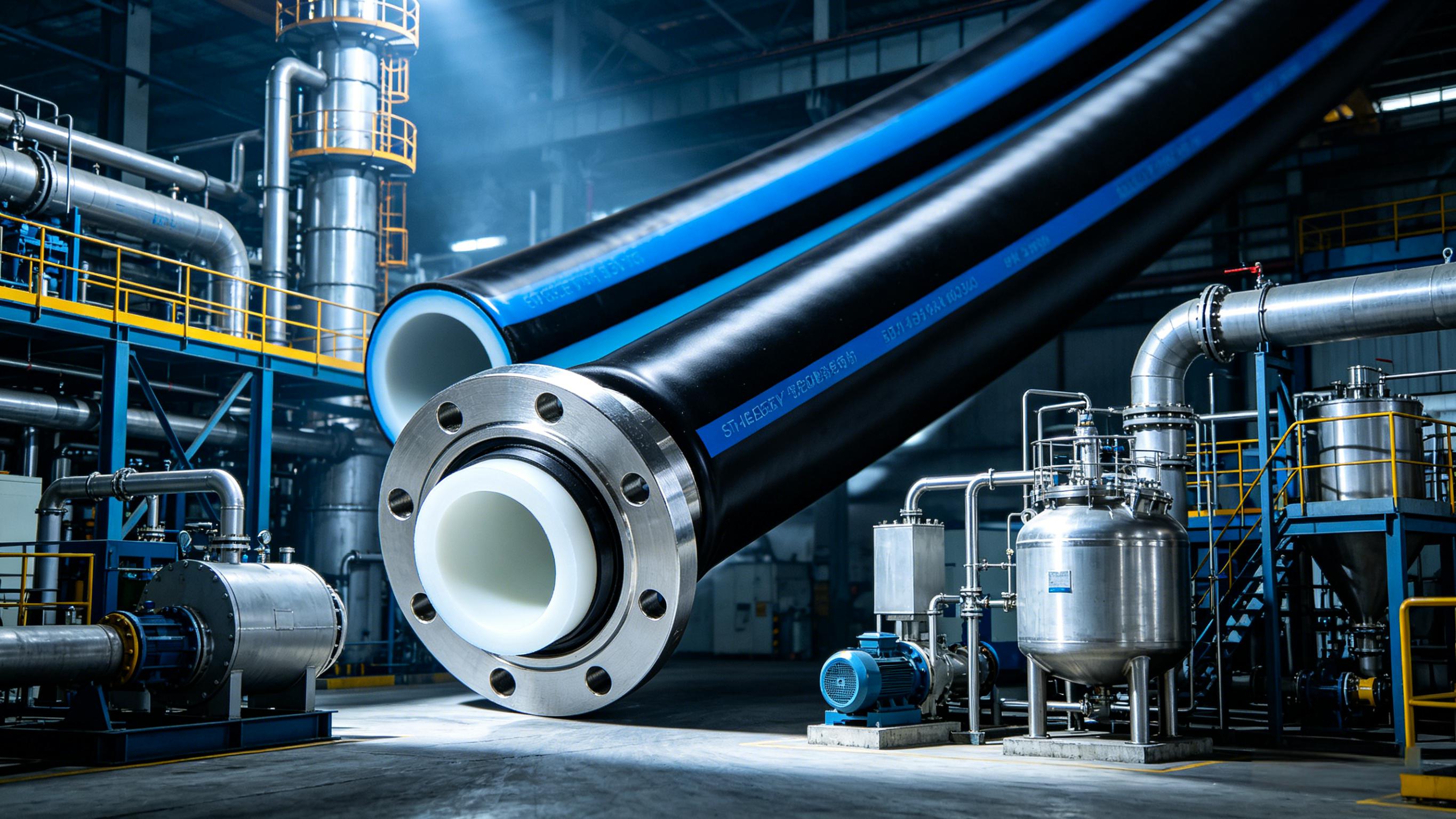
Teflon material itself possesses extremely high chemical stability. Almost all strong acids, strong alkalis, organic solvents, and oxidizing agents cannot corrode it. Its operating temperature range covers -70°C to +260°C, and it maintains its original physical properties and chemical inertness even after long-term use at 200°C. This means that an armored Teflon reinforced hose can safely convey the vast majority of hazardous chemicals, including concentrated sulfuric acid, concentrated nitric acid, hydrofluoric acid, sodium hydroxide solution, benzenes, ketones, esters, and more. Compared to stainless steel metal hoses, the Teflon inner tube not only offers more comprehensive corrosion resistance but also features an extremely smooth inner wall (friction coefficient as low as 0.04), which resists fouling, reduces flow resistance, and is easy to clean – especially suitable for high-purity or easily contaminated chemical media.
“Armored reinforcement” is another core feature of this product. Chemical plant environments often involve external mechanical impacts, vibration, tension, and high-temperature radiant heat. While a plain Teflon hose is corrosion-resistant and high-temperature-resistant, its mechanical damage resistance is relatively limited. The armored Teflon reinforced hose adds one or more layers of stainless steel wire braid or spiral steel strip armor over the Teflon inner tube. This metal armor not only significantly increases the hose’s pressure rating, allowing it to withstand relatively high working pressures (typically 10MPa to 30MPa), but also effectively resists external scratching, crushing, and impact. Additionally, the armored structure provides protection against rodent bites and UV aging, further extending the hose’s service life. Some premium products also incorporate a thermal insulation or fire-resistant layer between the inner tube and armor to cope with extreme heat or fire risks.
In practical chemical applications, armored Teflon reinforced hoses are widely used in multiple scenarios. For example, in fine chemical workshop material transfer lines, where high-temperature acidic reaction liquids from reactors need to be transferred to storage tanks, an armored Teflon reinforced hose can be connected directly between the reactor bottom outlet and the pump inlet, absorbing equipment vibration through its flexibility while withstanding the high-temperature corrosion of the media. In tank truck loading and unloading operations, using an armored Teflon reinforced hose as the transfer hose satisfies the requirements of frequent bending and movement while providing an extra safety margin in case of accidental crushing or pulling. In pharmaceutical and food industries, FDA-compliant Teflon inner tubes combined with sanitary armored fittings can be used to convey high-temperature pure water, steam, or organic solvents, and are easy to clean and sterilize.
When selecting an armored Teflon reinforced hose, several key parameters must be considered. First, the chemical nature of the medium – confirm that Teflon is fully compatible (generally no concern, but avoid molten alkali metals and fluorine gas). Second, temperature and pressure – choose the appropriate number of armor layers based on the actual maximum operating temperature and system pressure. Single stainless steel braid is suitable for medium-low pressure, while double braid or spiral armor is recommended for high pressure and frequent bending applications. Third, bend radius – armored hoses typically have a larger minimum bend radius than non-armored hoses, so sufficient space should be left during installation. Additionally, fitting materials should be 316L stainless steel or Hastelloy, using crimped or ferrule-type connections to ensure a reliable pull-resistant structure between the fitting and the armor layer.
Regarding installation and maintenance, armored Teflon reinforced hoses should avoid sharp bends and must not be subjected to twisting or excessive tension. Routine inspection should focus on the stainless steel armor for broken wires, loosening, or severe rust, and on fittings for leaks. Due to Teflon’s cold flow characteristics, crimped fittings may require retorquing within 24 hours after initial use. Under normal operating conditions, the service life of an armored Teflon reinforced hose can exceed five years, far superior to ordinary rubber hoses.
In summary, for applications requiring the conveyance of high-temperature corrosive media in the chemical, pharmaceutical, and food industries, the armored Teflon reinforced hose, with its Teflon inner tube’s extreme chemical inertness and stainless steel armor’s mechanical protection, provides a safe, durable, and reliable solution. Proper selection and standardized installation effectively reduce leakage risks, extend pipe replacement cycles, and ensure production safety.
