
Pressure washers are widely used in industrial equipment cleaning, building surface descaling, vehicle washing, and municipal sanitation. As the key component connecting the high-pressure pump to the spray gun, the quality and selection of the pressure washer hose directly affect cleaning efficiency, operational safety, and equipment lifespan. Faced with a variety of hoses on the market, many users are unsure how to choose correctly. This article provides a comprehensive analysis of the key selection parameters from three core dimensions: working pressure, inner diameter, and fitting types.
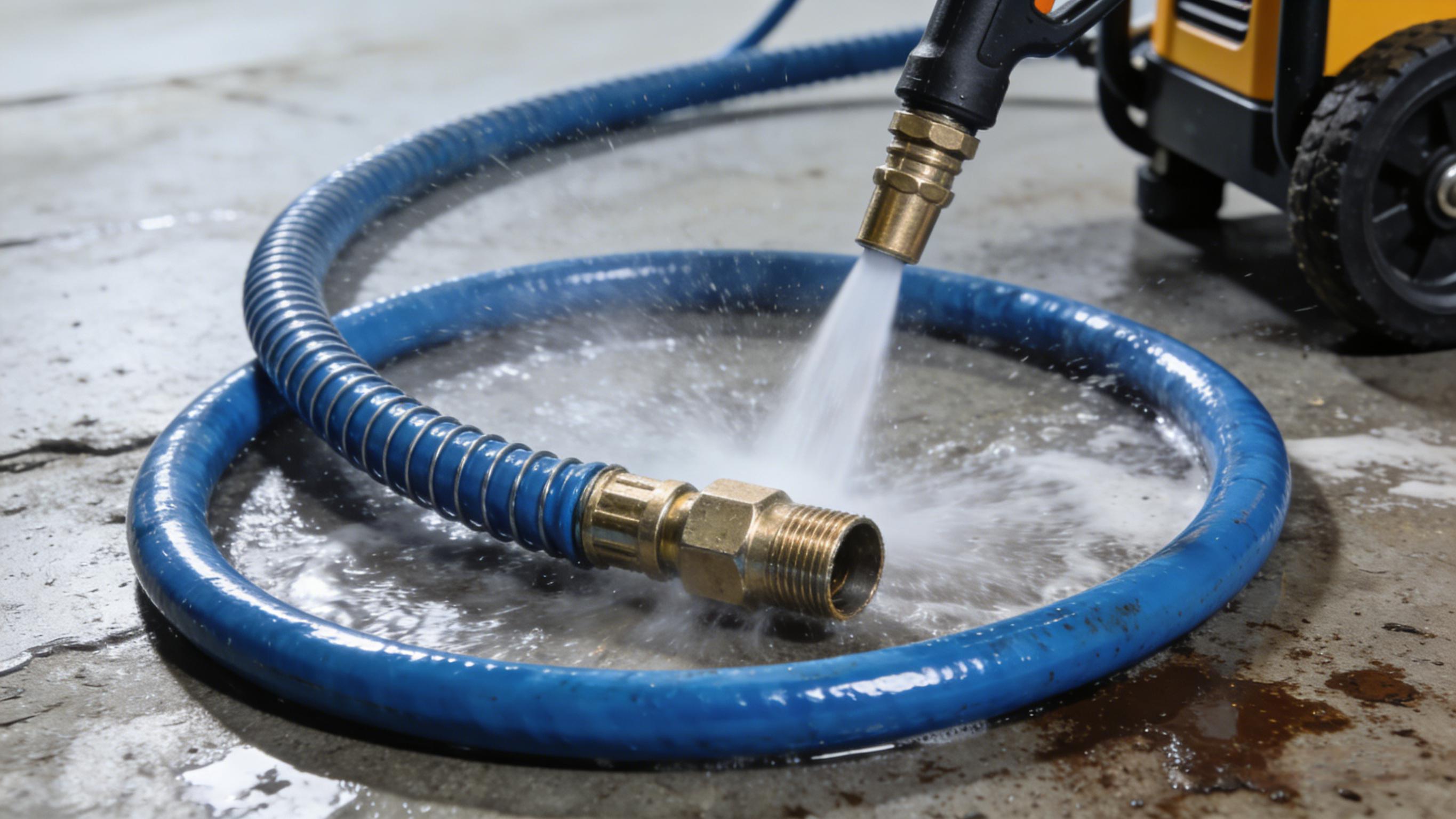
Working Pressure: The Top Priority Parameter
Working pressure is the most important indicator when selecting a pressure washer hose. The basic principle is that the hose’s rated working pressure must be higher than the pressure washer’s maximum output pressure, with a recommended safety margin of at least 20% to 30%. For example, if your pressure washer outputs a maximum of 200 bar, the hose should have a rated working pressure of no less than 250 bar. Additionally, pay attention to the hose’s burst pressure, which should generally be at least three times the working pressure. Many quality hoses also specify impulse life or pressure cycle counts, reflecting their durability under frequent start-stop conditions. Never compromise on pressure rating to save costs – using an under-rated hose can lead to burst accidents and serious personal injury.
Inner Diameter: Balancing Flow and Impact Force
Inner diameter determines the flow rate through the hose, directly affecting cleaning efficiency and impact force. Common inner diameters for pressure washer hoses include 1/4 inch (approximately 6.4mm), 3/8 inch (approximately 9.5mm), and 1/2 inch (approximately 12.7mm). Generally, a larger inner diameter provides higher flow and stronger impact force for the same nozzle, but the hose becomes heavier and less flexible. For residential or light commercial pressure washers (100 to 150 bar, 6 to 8 L/min flow), a 1/4-inch hose is sufficient. For professional industrial pressure washers (200 to 500 bar, 15 to 30 L/min flow), a 3/8-inch or 1/2-inch hose is recommended to ensure adequate flow and cleaning efficiency. Additionally, the inner diameter must match the pressure washer’s port size and the spray gun/nozzle specifications to avoid pressure loss from adapter restrictions.
Fitting Types: The Key to Compatibility and Sealing
The fitting type on the pressure washer hose must match the pump outlet and spray gun connections – otherwise, they cannot be connected. Common fitting standards include quick-connect couplers, threaded connections (such as M22, G1/4, G3/8, 1/4 NPT, etc.), and flanged connections. Among these, M22 thread is a common European standard for pressure washers, available in M22×1.5 male/female and M22×1.5 with a relief groove. Quick-connect couplers are widely used in residential and light commercial models, allowing fast connection by pushing or twisting, but they generally have lower pressure ratings. When selecting, first identify the fitting type on your original hose or measure the thread specification and sealing face style (ball seal, flat seal, or cone seal). Fitting materials include brass, stainless steel, or zinc-plated carbon steel, with stainless steel offering the best corrosion resistance for wet or chemical environments.
Other Selection Considerations
Beyond pressure, inner diameter, and fittings, the hose’s cover material also matters. Polyurethane covers offer excellent abrasion resistance for frequent dragging on the ground, while rubber covers are softer and perform better at low temperatures. For pressure washers that are frequently moved, the hose should have good flexibility and a small bend radius to reduce operator fatigue and tangling. Some premium hoses include an anti-burst layer or Kevlar reinforcement, providing an extra safety margin even if the outer cover is damaged. Operating temperature range is another factor, especially when using outdoors in winter or conveying hot water – choose a hose rated for low or high temperatures accordingly.
Summary
When selecting a pressure washer hose, first confirm the working pressure, ensuring the hose’s rated pressure exceeds the machine’s output with a safety margin. Second, choose the appropriate inner diameter to balance flow and handling convenience. Finally, verify the fitting type and specification to ensure perfect compatibility with the pressure washer and spray gun. Also consider cover material, flexibility, and temperature suitability. Following these guidelines will help you select a safe and efficient pressure washer hose, making your cleaning tasks more effective and effortless.
