
In bulk cement transportation and storage systems, the cement tanker conveyor hose is a key component connecting the tanker to storage facilities for conveying cement powder. Depending on the application scenario, cement tanker conveyor hoses can be divided into two main categories: vehicle-mounted and stationary. There are significant differences between the two in terms of operating frequency, environmental conditions, service life requirements, and structural design. Choosing the wrong hose type leads to frequent damage, increased maintenance costs, and potential leakage accidents and environmental pollution. This article provides a complete guide to selecting cement tanker conveyor hoses, starting from the core differences between vehicle-mounted and stationary applications.
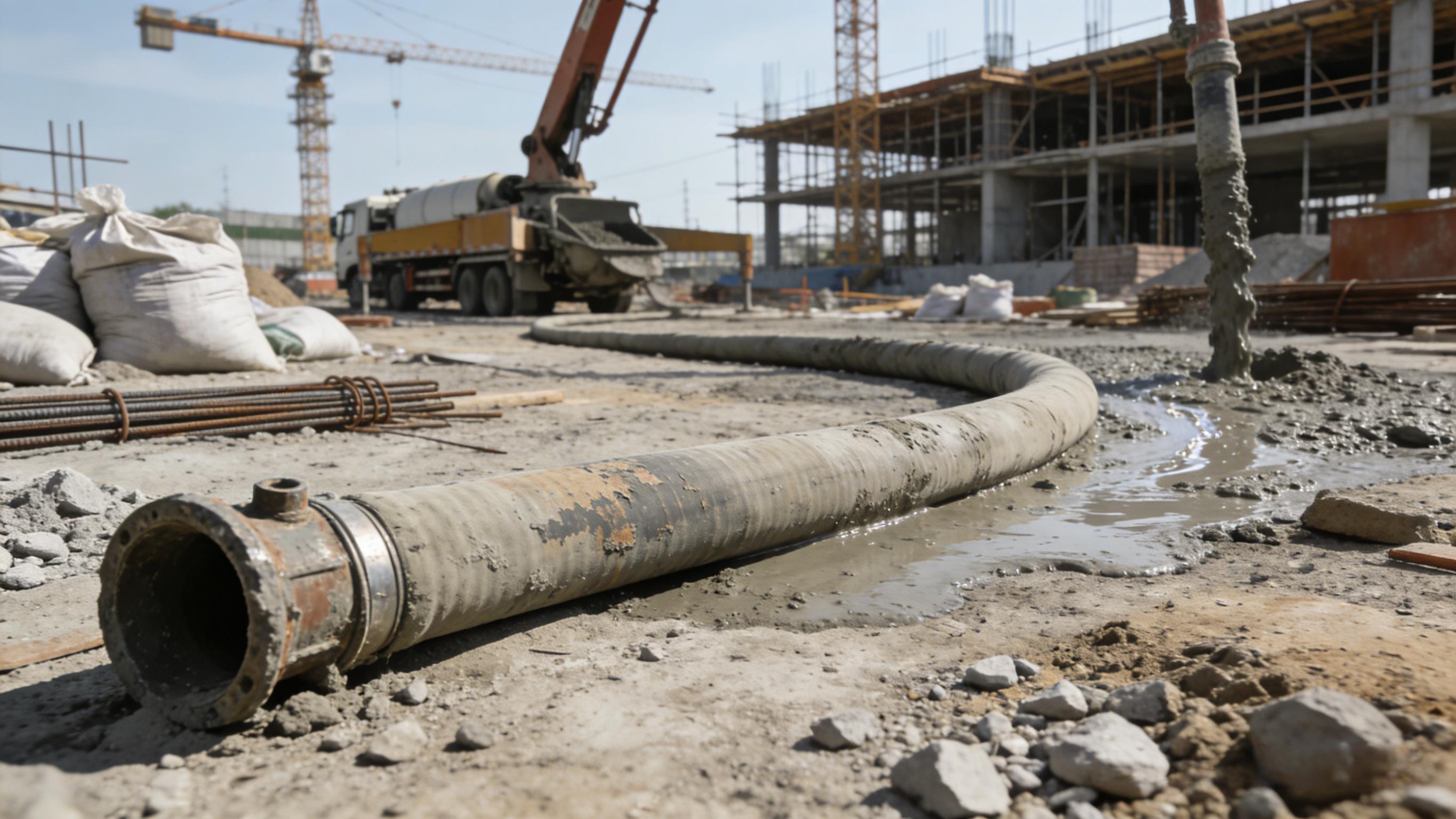
Vehicle-mounted cement conveyor hoses are installed on bulk cement tankers and travel with the vehicle between different job sites and stations. These hoses require frequent loading, unloading, folding, and storage, so they demand excellent flexibility and fatigue resistance. Vehicle-mounted hoses typically need to withstand continuous vibration from vehicle operation, road bumps, and repeated bending. During each unloading operation, the hose is taken from the vehicle side box, connected at one end to the tanker discharge port and at the other end to stationary facilities, and then refolded and stored after the operation. This usage pattern requires vehicle-mounted hoses to have excellent bend recovery capability, kink resistance, and an abrasion-resistant cover. Additionally, vehicle-mounted hoses are exposed outdoors for extended periods, requiring good weather resistance, ozone resistance, and UV resistance. In terms of construction, vehicle-mounted cement conveyor hoses typically use an abrasion-resistant natural rubber (NR) or styrene-butadiene rubber (SBR) compound for the inner tube to resist high-velocity cement particle erosion. The reinforcement layer uses high-strength polyester textile braid or wire braid to maintain flexibility while providing adequate pressure capacity. The cover is typically an abrasion-resistant, weather-resistant synthetic rubber, with some premium products featuring cover ribs to reduce dragging wear.
Stationary cement conveyor hoses are fixed at cement transfer stations, batch plants, or powder storage depots. Once installed, these hoses are generally not moved, or are only removed during equipment maintenance. Therefore, stationary hoses have lower flexibility requirements but higher demands for pressure strength, wear life, and long-term aging resistance. Stationary hoses must withstand continuous, high-intensity conveying operations, potentially running for several hours per day or even 24/7. Since they are not subject to frequent bending and folding, stationary hoses can use thicker inner tubes and higher-strength reinforcement constructions, such as multi-layer wire spiral or built-in spiral wire cores. This design provides higher pressure ratings (typically working pressures up to 2.0MPa or more) and longer service lives. Additionally, the cover of stationary hoses has higher requirements for abrasion and oil resistance, as depot environments may involve mechanical friction, oil spills, and chemical media. Some stationary hoses also feature flame-resistant or antistatic designs to meet safety codes in specific industrial locations.
Vehicle-mounted and stationary hoses also differ significantly in fitting types. Vehicle-mounted hoses are typically equipped with quick couplings or clamp fittings for fast connection and disconnection, with fittings made of cast steel or aluminum alloy for strength and light weight. Stationary hoses more commonly use flanged connections or heavy-duty threaded fittings, with higher sealing integrity for long-term fixed installation, and fitting materials primarily carbon steel or stainless steel.
When selecting, users should decide based on their actual application scenario. If the hose needs to move with the vehicle, undergo frequent loading/unloading, and be folded and stored, the vehicle-mounted type should be prioritized – flexible construction, small bend radius, abrasion-resistant and weather-resistant cover, and quick fittings. If the hose is fixed at a station and operates continuously under high load, the stationary type should be chosen – higher pressure rating, more wear-resistant inner tube, stronger reinforcement, and flange or heavy-duty threaded fittings. In terms of size, the mainstream inner diameters for both vehicle-mounted and stationary hoses are 75mm (3 inches), 100mm (4 inches), and 125mm (5 inches), selected based on tanker discharge port size and conveying capacity. For working pressure, vehicle-mounted hoses typically range from 0.6 to 1.2MPa, while stationary hoses can reach 1.5 to 2.5MPa. The temperature range for both is -30°C to +80°C.
For routine maintenance, vehicle-mounted hoses should be inspected for cracks at fold points and severe cover wear. Stationary hoses should be checked for fitting seal integrity and inner tube wear. Vehicle-mounted hoses typically have a service life of 1 to 2 years, while stationary hoses can last 3 to 5 years or longer.
In summary, the selection of cement tanker conveyor hoses must distinguish between vehicle-mounted and stationary use. Vehicle-mounted hoses prioritize flexibility, light weight, and folding resistance; stationary hoses prioritize strength, wear resistance, and continuous operation capability. Correctly distinguishing and selecting the appropriate product effectively reduces failure rates and improves the operational efficiency of bulk cement transportation and storage systems.
