
The hydraulic system is the core of an excavator‘s power transmission, and hydraulic lines are the system’s “blood vessels.” During long-term high-load operation, hydraulic lines inevitably experience various failures. Burst hoses, oil leaks, and fitting pull-offs are the three most common types of failures. They not only cause equipment downtime and oil waste but can also lead to safety incidents. This article analyzes the causes of these three failure types and provides targeted solutions.
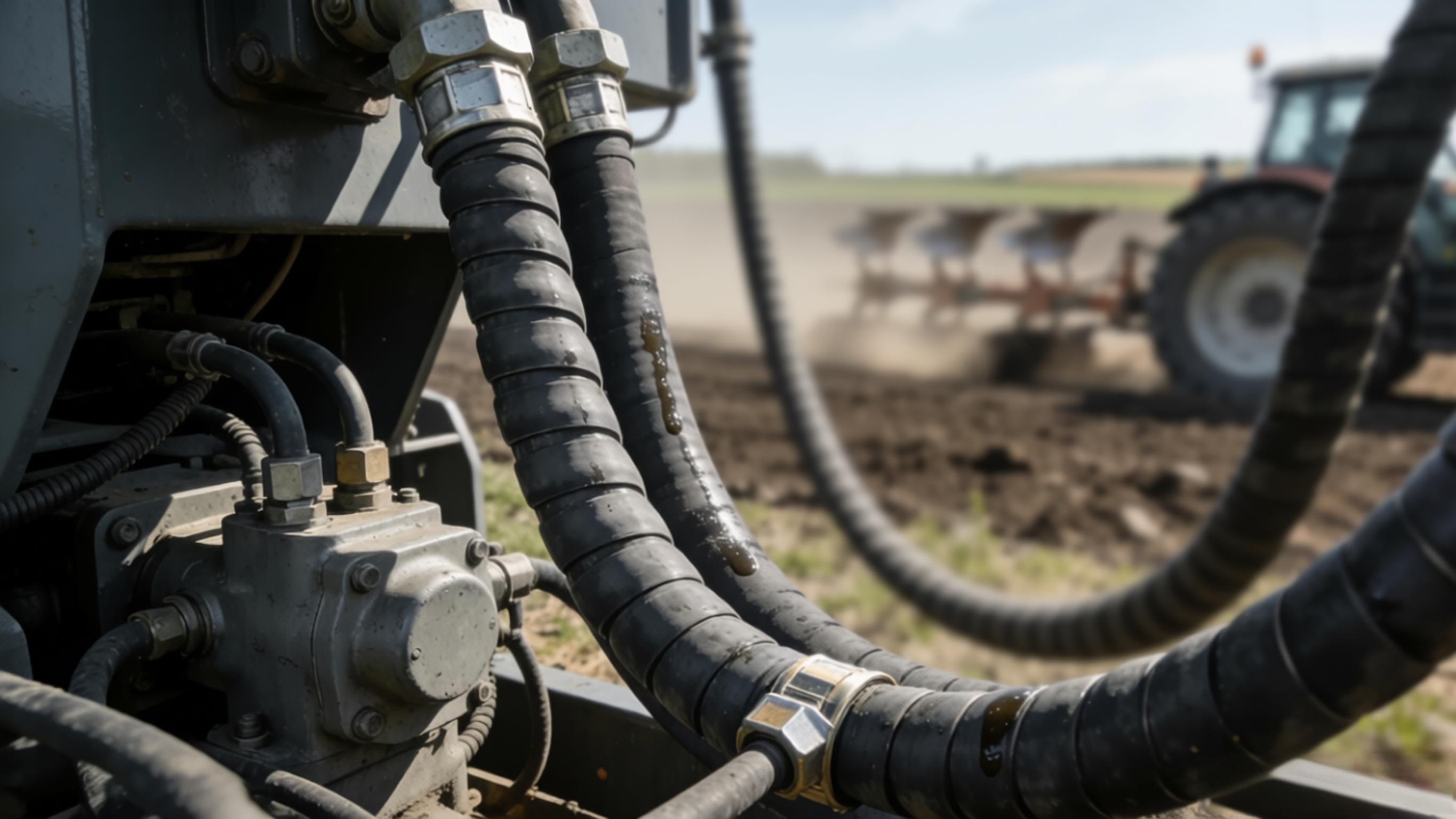
Burst Hoses: The Double Blow of Pressure and Wear
A burst hose is the most dangerous failure in hydraulic lines. When a hose suddenly bursts, a large volume of hydraulic oil sprays out, not only paralyzing the equipment but also creating a risk of fire or injury from high-pressure oil mist.
The main causes of burst hoses include the following. Pressure overload is the most common cause—the system‘s actual working pressure exceeds the hose’s rated pressure, or the hose is chronically overloaded under pressure spikes. Insufficient safety factor during selection, such as using a single-wire braid hose on a main pressure line. Wear-related rupture is also significant—the hose rubs against excavator structures, rocks, or other hoses over time, the cover wears through, the steel wire layer rusts and corrodes, strength deteriorates, and the hose bursts under pressure. Additionally, hose aging is an important factor—rubber hoses have a finite service life; beyond that, they develop cracks, hardening, and loss of elasticity, and may burst even under normal pressure. Insufficient bend radius can also cause bursting—the wires on the outside of a bend are stretched while those on the inside are compressed, and after repeated flexing, the wires fatigue and break.
Solutions for burst hoses: First, verify system pressure against the hose‘s pressure rating, ensuring the hose’s rated working pressure is at least 1.5 times the system‘s maximum pressure. Second, inspect hose routing and add spiral guards, rubber clamps, or separators at points where friction may occur. Third, establish a replacement schedule—based on equipment usage intensity, replace critical hoses every two years or 2,000 operating hours. Fourth, strictly adhere to minimum bend radius requirements during installation—do not create sharp kinks.
Oil Leaks: The Common Hidden Danger of Chronic Fluid Loss
Oil leaks are not as sudden or violent as burst hoses, but continuous leakage leads to low oil levels, unstable system pressure, and environmental pollution. If ignored for too long, leaks can develop into burst hoses.
The main causes of oil leaks include loose fittings—vibration gradually loosens crimp fitting nuts or threaded connections. Aged or damaged seals—O-rings, combination gaskets, and other seals harden, crack, or extrude after long-term use. Poor crimping quality—the crimping reduction is too little or too great during hose assembly manufacturing, resulting in poor sealing between the fitting and hose. Mismatched hose and fitting types—for example, using a braided hose fitting on a spiral hose.
Steps to resolve oil leaks: First, tighten fittings using a torque wrench to the specified torque. If leakage persists after tightening, replace the seals, using the same specification of fluorocarbon or nitrile rubber seals. For crimping quality issues, recrimp or replace the assembly, preferably sourcing from qualified manufacturers. Additionally, during each maintenance interval, visually inspect all hydraulic lines; when oil stains are found, identify the source and address it promptly.
Fitting Pull-Offs: The Safety Threat of the Hose “Breaking Free”
Fitting pull-off refers to the separation of the fitting from the hose, or the fitting detaching from the equipment port. This can cause high-pressure oil to spray directly toward personnel or heat sources, with extremely serious consequences.
The main causes of fitting pull-offs include improper crimping process—insufficient crimping reduction results in a bonding force between fitting and hose that is less than the pull-off force generated by system pressure. Mismatched fitting and hose types—for example, using an R1 braid fitting on an R2 braid hose, or using a braid fitting on a spiral hose. Twisted hose during installation—the hose is under torque at the fitting, and as the equipment moves, torque accumulates, loosening the fitting. Severe equipment vibration or abnormal hose tension.
Measures to prevent fitting pull-offs: Crimp strictly according to the hose manufacturer‘s recommended crimping parameters, and perform pull-off tests on the first piece of each batch. Use dedicated fittings that match the hose type—braid fittings for braid hoses, spiral fittings for spiral hoses. Ensure natural bending during installation without twisting; both ends of the hose should lie in the same natural plane. Use lock washers or thread-locking compound in high-vibration locations. When replacing hoses, inspect the fitting port threads for damage and repair or replace as needed.
Daily Maintenance and Preventive Recommendations
Establish a hydraulic line inspection routine—walk around the machine before each shift, focusing on the hose cover for blisters, cuts, and wear, and on fittings for oil leaks. Keep hoses clean—remove oil sludge and debris from hose surfaces to facilitate early detection of damage. Use original or reputable brand hose assemblies—inferior hoses have material and process defects, and their failure rates are much higher than those of quality products. Maintain replacement records—keep a hose replacement log and follow the principle of “replace when due, replace when damaged.”
In summary, the strategy for addressing excavator hydraulic line failures can be summarized as: burst hoses depend on selection, oil leaks depend on inspection, and pull-offs depend on workmanship. Choose the correct hose grade and type, perform daily inspections, and follow proper crimping and installation procedures—most hydraulic line failures can be prevented or detected early, ensuring efficient and safe excavator operation.
