
In hydraulic systems, hose assemblies serve as the “blood vessels” connecting pumps, valves, cylinders, and other components. Standard-length hose assemblies often cannot perfectly match the actual layout of equipment—too long leads to coiling, friction, and increased pressure drop; too short creates tensile stress, accelerates fitting fatigue, and may even cause pull-off. Therefore, custom-length hose assemblies have become a necessity for many hydraulic equipment users. However, customization is not as simple as “just give me a length.” If critical data is incomplete or inaccurate, the customized assembly may be impossible to install or fail prematurely in service. This article outlines the five critical data points you must provide when customizing hose assemblies.
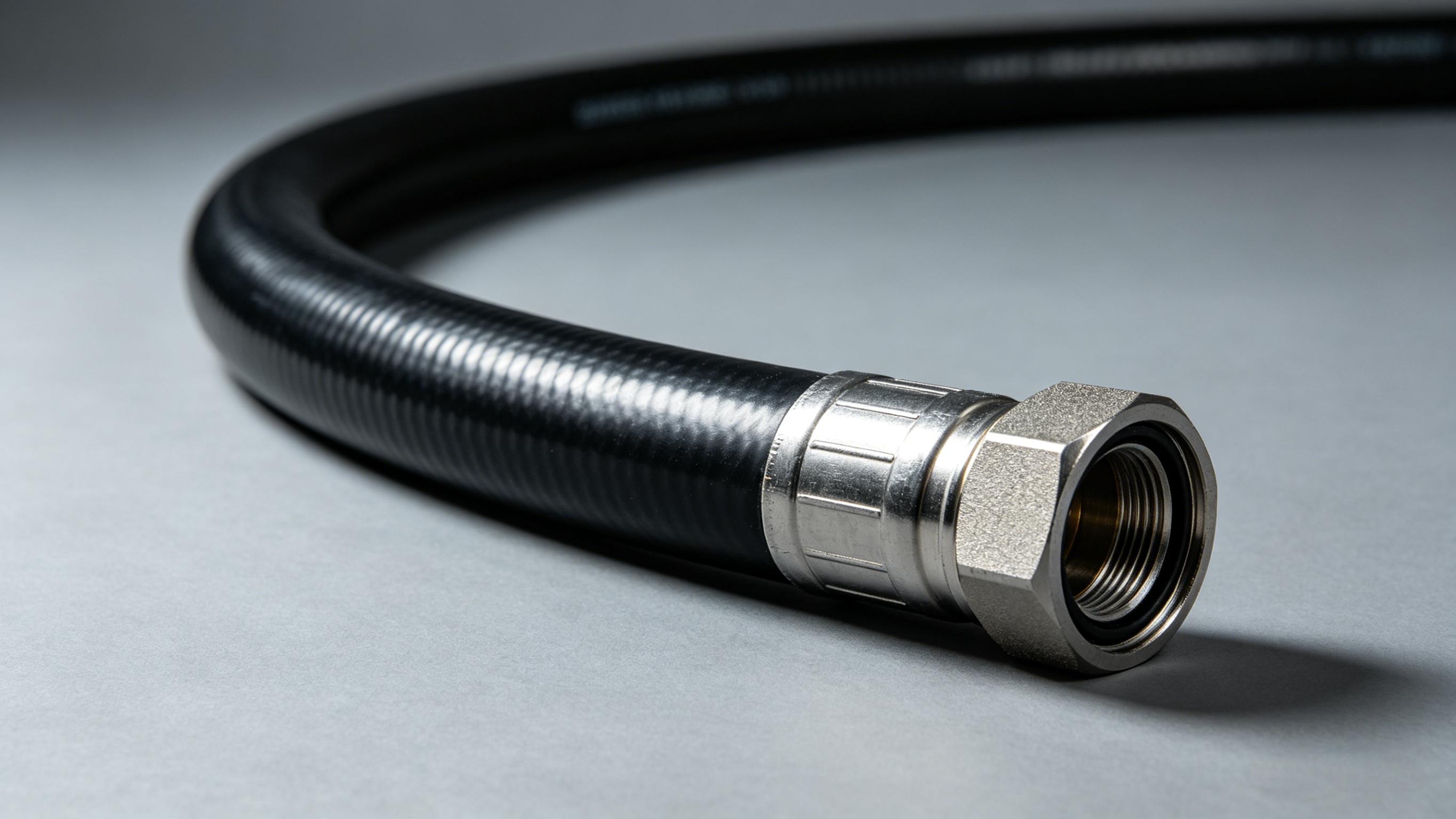
First Critical Data Point: Hose Inner Diameter
Hose inner diameter directly determines flow rate and velocity. An undersized ID significantly increases fluid resistance, causing excessive pressure loss and frictional heat. An oversized ID makes the hose heavy and increases cost. When customizing, users must clearly specify the required ID, typically in inches or millimeters. Common sizes include 6.3mm (1/4 inch), 9.5mm (3/8 inch), 12.7mm (1/2 inch), 19mm (3/4 inch), and 25.4mm (1 inch). If unsure, users can provide system flow data, allowing the manufacturer to calculate the recommended ID. Note that ID is different from outer diameter—do not confuse them.
Second Critical Data Point: Hose Length
Length is the most core parameter for customization, but also the most frequently misreported. Users need to provide the total length of the hose assembly—the actual distance from the sealing face of one fitting to the sealing face of the other, measured along the hose centerline. Use a soft tape measure or a piece of string to simulate the intended routing, rather than simply measuring the straight-line distance between ports. Because hoses require some slack for bending during installation, an overly tight installation creates excessive stress at the fittings. It is recommended to add a 2% to 5% margin to the measured value as a safety allowance. Also specify whether you are providing “hose length” (excluding fittings) or “assembly length” (including fittings).
Third Critical Data Point: Fitting Type and Specification
Fittings are the interfaces connecting the hose assembly to equipment. Different equipment, brands, and countries use different fitting standards. Common fitting types include cone seal fittings, flat face seal fittings, flange fittings, and quick couplers. Each type has various specifications, such as imperial threads, metric threads, and NPT threads. When customizing, users must provide the specific fitting model. A sample or detailed dimensional drawing is ideal. At minimum, the following information must be specified: fitting type (e.g., JIC 37-degree flare, ORFS flat face seal, NPT tapered thread), thread specification (e.g., 3/4-16 UNF, M22×1.5), and seal type (e.g., O-ring, metal-to-metal). If possible, provide photos of the original fitting markings or nameplates—this significantly reduces communication errors.
Fourth Critical Data Point: Working Pressure
Working pressure determines the number of reinforcement layers and the hose construction. Users must provide the system‘s maximum working pressure (including pressure spikes), not the average pressure. For example, a hydraulic system that normally operates at 20MPa may experience instantaneous spikes of 28MPa under impact conditions. The hose pressure rating should be selected based on 28MPa. A general requirement is that the hose’s rated working pressure should be at least 1.5 times the system‘s maximum pressure. When providing pressure data, it is best to also specify the media type and temperature range, as these factors also affect the hose’s pressure capacity and service life.
Fifth Critical Data Point: Minimum Bend Radius
Minimum bend radius refers to the smallest radius a hose can bend without suffering damage. This data directly affects the feasibility of hose routing within the equipment. Users need to provide the maximum bend angle and space constraints allowed at the installation location. If the equipment layout is very compact and the hose must turn in a very small space, a hose model with a smaller bend radius must be selected. When customizing, users can provide sketches or photos of the installation space, indicating the locations and angles where bends are required, so the manufacturer can recommend the appropriate hose construction and fitting orientation.
Customization Process Summary
In summary, when customizing hose assemblies, be sure to prepare the following five critical data points: inner diameter size, assembly length, fitting type and specification, working pressure (including spikes), and minimum bend radius requirements. Additionally, as supplementary information, media type, temperature range, and operating environment (e.g., outdoor, oil contamination, chemical exposure) should also be provided. Accurately providing these data points ensures that the customized hose assembly will both fit properly and last long in service.
