
Hydraulic hose fittings are critical for leak-free, high-pressure fluid transfer in hydraulic systems. However, with metric, imperial (BSP), American (UN/NPT), and JIS standards in circulation, engineers often struggle to match threads or sealing forms. Using the wrong fitting can cause oil leaks, pressure drops, or even equipment damage. This guide explains the differences among the four main hydraulic fitting standards and provides practical identification tips.
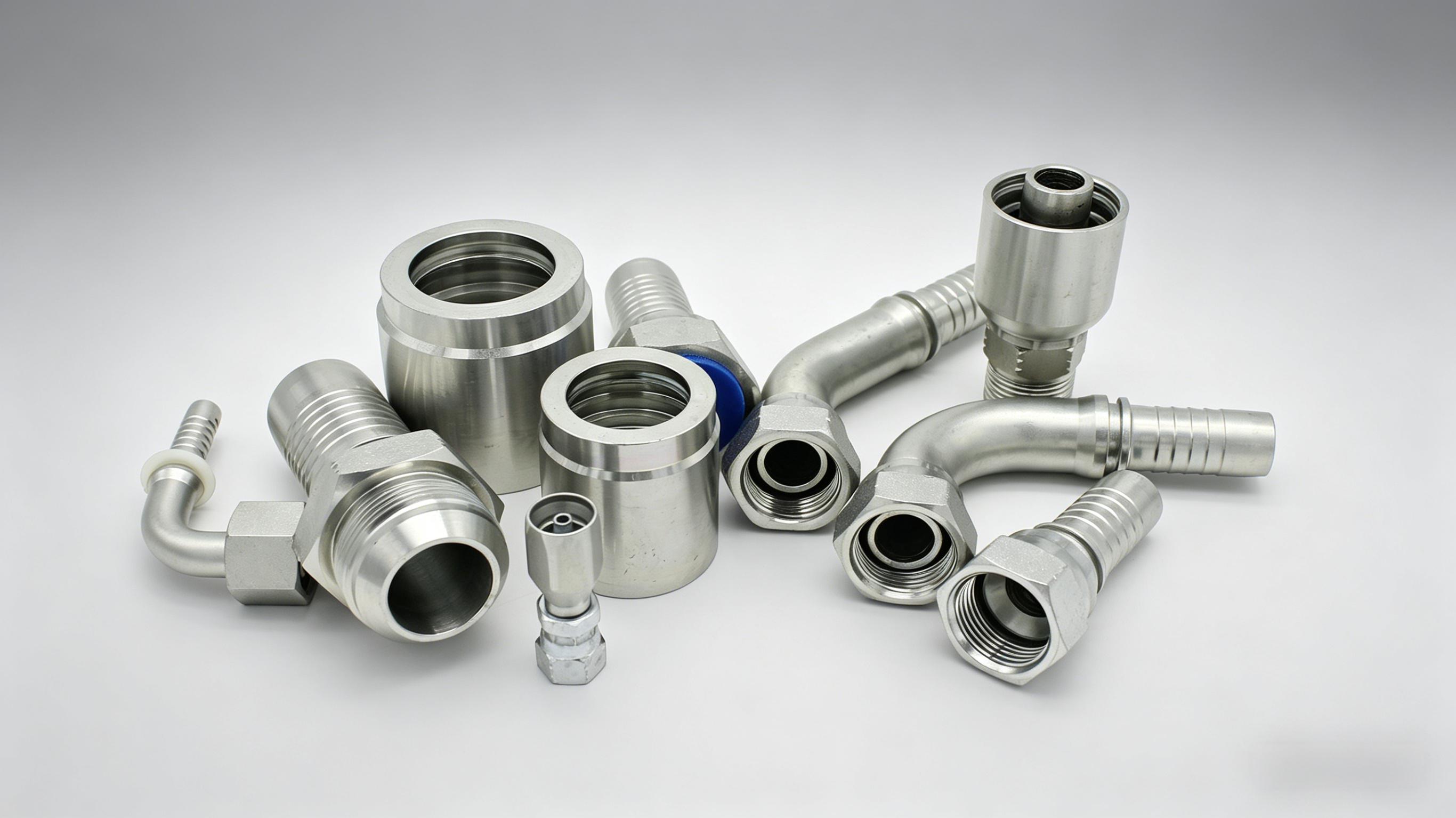
1. Metric Hydraulic Fittings
Metric fittings are predominantly used in Europe, China, and other metric-system regions. Threads follow ISO metric standards (M series) with a 60° thread angle and pitch measured in millimeters (e.g., M14×1.5, M18×1.5). Common sealing designs include 24° cone seal (DIN 2353) and soft seal with a washer. Applications: machine tools, injection molding machines, and many mobile hydraulic systems. Distinguishing feature: outer diameter and pitch are metric values – use a metric thread gauge.
2. Imperial Hydraulic Fittings (BSP)
Imperial standards are based on British Standard Pipe threads (BSP), divided into BSPP (parallel threads, G series) and BSPT (tapered threads, R series). BSP threads have a 55° angle. BSPP relies on a gasket or O-ring for sealing, while BSPT seals via thread taper. Common sizes: G1/4, G3/8, G1/2. Imperial fittings are found on older British Commonwealth equipment and some pneumatic systems. Key identification: 55° thread angle and pitch given in threads per inch (TPI).
3. American Hydraulic Fittings (UN/NPT)
American fittings offer the widest variety, based on Unified National threads (UN/UNF, 60° angle). Major types include:
JIC 37° flare fittings (UNF/UNS threads with a 37° flare sealing surface)
SAE O-ring boss (ORB) (UN/UNF threads, face seal with an O-ring)
NPT tapered pipe threads (60° angle, 1:16 taper, thread seal)
ORFS (O-ring Face Seal) (flat face with an O-ring, ideal for high pressure and leakage-free demands)
These fittings dominate North American heavy equipment, agricultural machinery, and automotive hydraulics. Identify by measuring outside diameter and TPI, then referencing UN/UNF tables. For taper threads, check the taper.
4. JIS Hydraulic Fittings (Japanese Industrial Standard)
JIS fittings have unique specifications, such as JIS B 8363 and JIS 30° or 60° cone seal designs. JIS pipe threads include PF (parallel, similar to G) and PT (tapered, similar to Rc) – however, they are not fully interchangeable with BSP threads because some pitches and crest profiles differ. Additionally, the JIS 30° flare fitting (e.g., JIS 30° cone) looks similar to American JIC 37° but should never be mixed. Always use a dedicated JIS thread gauge and check the flare angle.
5. Three Quick-Distinction Methods
Step 1: Measure thread angle – 60° indicates metric or American; 55° indicates BSP or JIS PF/PT.
Step 2: Check pitch or TPI – Use a metric pitch gauge (mm) for metric; use a TPI gauge for imperial/American. If metric pitch gauge matches and angle is 60° → metric; if TPI gauge matches and angle is 60° → American; if angle is 55° → BSP.
Step 3: Inspect sealing form – 24° cone → metric; 37° flare → American JIC; 30° cone → JIS; O-ring face seal → SAE/ORFS; tapered pipe threads → NPT or BSPT.
Final advice: Using the wrong hydraulic hose fitting leads to leakage, pressure loss, and safety hazards. Keep metric, BSP, American, and JIS thread gauges plus an angle protractor in your toolkit. When in doubt, consult a professional supplier with a sample or drawing.
