
Selecting the wrong hydraulic fitting material leads to corrosion, fatigue cracking, or even catastrophic failure. The four most common materials – carbon steel, stainless steel, brass, and alloy steel – each serve different pressure ranges, environments, and budgets. This guide helps you make the right choice based on corrosion resistance, strength, cost, and application.
1. Carbon Steel Fittings – The Economical Workhorse
Carbon steel fittings (e.g., AISI 1010/1020) are usually zinc-plated or phosphated for basic rust protection. They offer high strength, low cost, and good machinability. Operating temperature range: -40°C to +120°C. Suitable for mineral hydraulic oils, lubricants, and diesel fuel. Widely used in construction machinery, agricultural equipment, and industrial hydraulics. Limitations: Poor corrosion resistance – rusts quickly in humid, salty, or acidic environments. Not recommended for marine, chemical, or outdoor exposed applications. Choose carbon steel when budget is tight and environment is dry and non-corrosive.
2. Stainless Steel Fittings – Ultimate Corrosion Resistance
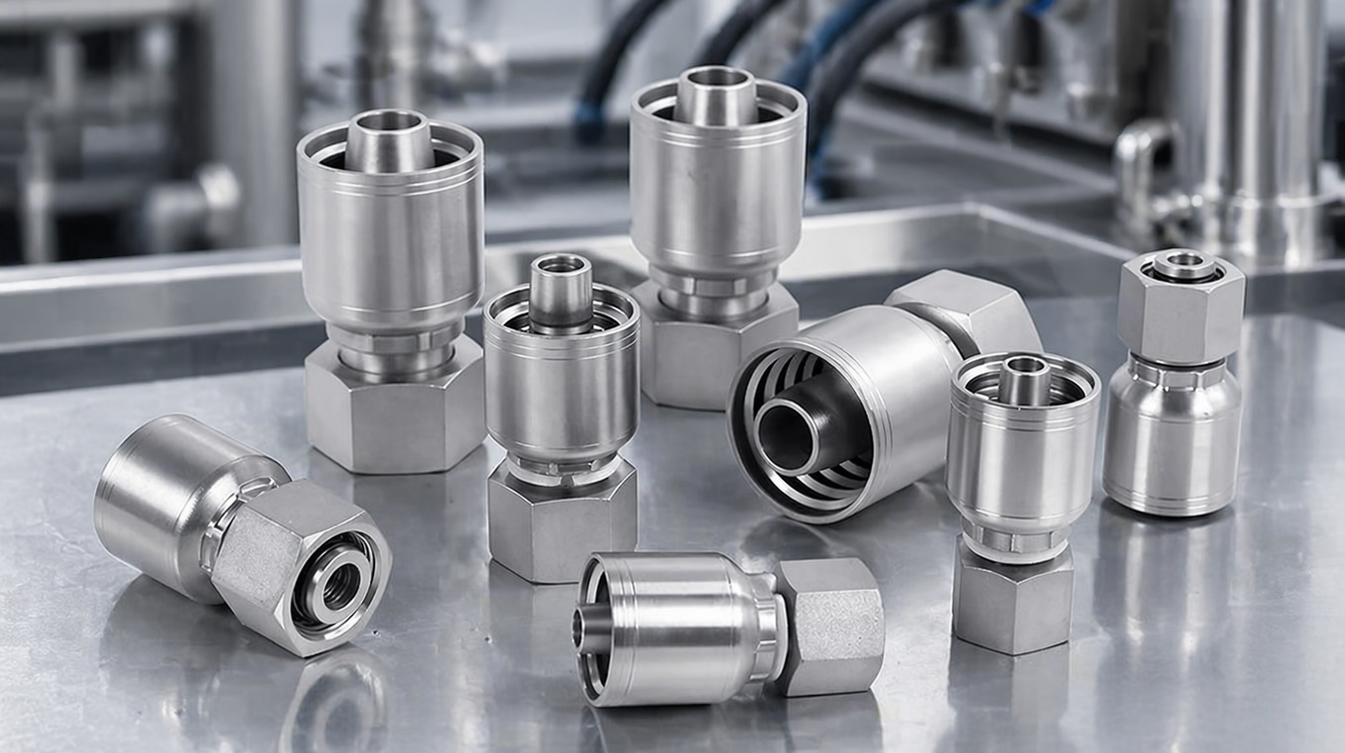
Typically made from 304, 316, or 316L stainless steel. 316L contains molybdenum for superior resistance to chlorides and pitting. Key advantages: excellent resistance to water, steam, acids, alkalis, salts, and most chemicals. Wide temperature range (-200°C to +400°C), hygienic, and no surface coating needed. Typical applications: food & pharmaceutical equipment, marine hydraulics, chemical plants, outdoor and cleanroom environments. Disadvantages: High cost (3–5x carbon steel), prone to thread galling – always use anti-seize lubricant during assembly. Choose stainless for corrosive media, marine/offshore, high-purity, or outdoor applications.
3. Brass Fittings – Low Pressure & Instrumentation Use
Brass (copper-zinc alloy, e.g., H59/H62) offers good corrosion resistance to fresh water, fuel, and air. It is non-sparking, thermally conductive, and easy to machine. However, tensile strength and pressure rating are far below steel grades. Only for low pressure (<5 MPa / 725 psi) systems such as pneumatic lines, water cooling circuits, pressure gauge connections, and hydraulic test points. Brass is also susceptible to stress corrosion cracking in ammonia environments. Never use brass in high-pressure hydraulic systems or under impact loads.
4. Alloy Steel Fittings – High Pressure & Heavy Duty
Alloy steel fittings (e.g., 40Cr, 42CrMo, AISI 4140) contain chromium, molybdenum, or nickel. They undergo heat treatment (quenching and tempering) to achieve very high tensile strength and fatigue life. Designed for extreme pressures (≥35 MPa / 5000 psi), high impulse cycles, and severe vibrations. Typical applications: mining machinery, forging presses, ultra-high-pressure hydraulic tools. Limitations: Moderate corrosion resistance (still requires surface coating), sensitive to hydrogen embrittlement after plating. Choose alloy steel for high-pressure, heavy-load, or high-impact systems. For corrosion resistance in these systems, consider stainless steel or apply heavy-duty plating.
5. Quick Selection Guide (Material Comparison)
Pressure capacity: Brass (low) < Carbon steel (medium-high) = Stainless steel (medium-high) < Alloy steel (very high)
Corrosion resistance: Carbon steel (poor) < Alloy steel (poor-medium) < Brass (fair – fresh water/air) < Stainless steel (excellent)
Relative cost (low to high): Carbon steel → Brass → Alloy steel → Stainless steel
Typical applications:
Carbon steel: Standard hydraulic oil, dry indoors
Stainless steel: Corrosive fluids, marine, food/chemical
Brass: Pneumatics, water gauges, low pressure instruments
Alloy steel: High-pressure heavy machinery, impulse service
Four-step selection process:
① Determine working pressure → Low pressure (<5MPa) can use brass or carbon steel; high pressure must use alloy steel or thick-wall stainless.
② Evaluate fluid and environment → Water, seawater, acids, outdoors → stainless steel; standard hydraulic oil → carbon/alloy steel.
③ Consider temperature and shock → High/low temperature or strong vibration → stainless or alloy steel.
④ Balance budget – critical circuits deserve stainless/alloy; non-critical points may use carbon steel.
Real-world mistakes: A fishing vessel used carbon steel fittings – severe rusting and leakage after three months. A high-pressure test bench used brass fittings – the fitting burst and caused injury. Always match material to actual operating conditions.
