
As conventional oil and gas resources decline, unconventional plays like shale gas and tight oil have become hotspots. These reservoirs have extremely low permeability, requiring massive hydraulic fracturing and acid fracturing to achieve commercial production. Fracturing fluids – often containing high-concentration acids, proppants, and sand – cause severe chemical corrosion and abrasive wear. Ultra-wear-resistant acidizing fracturing hoses have emerged as critical equipment for safe and continuous operations.
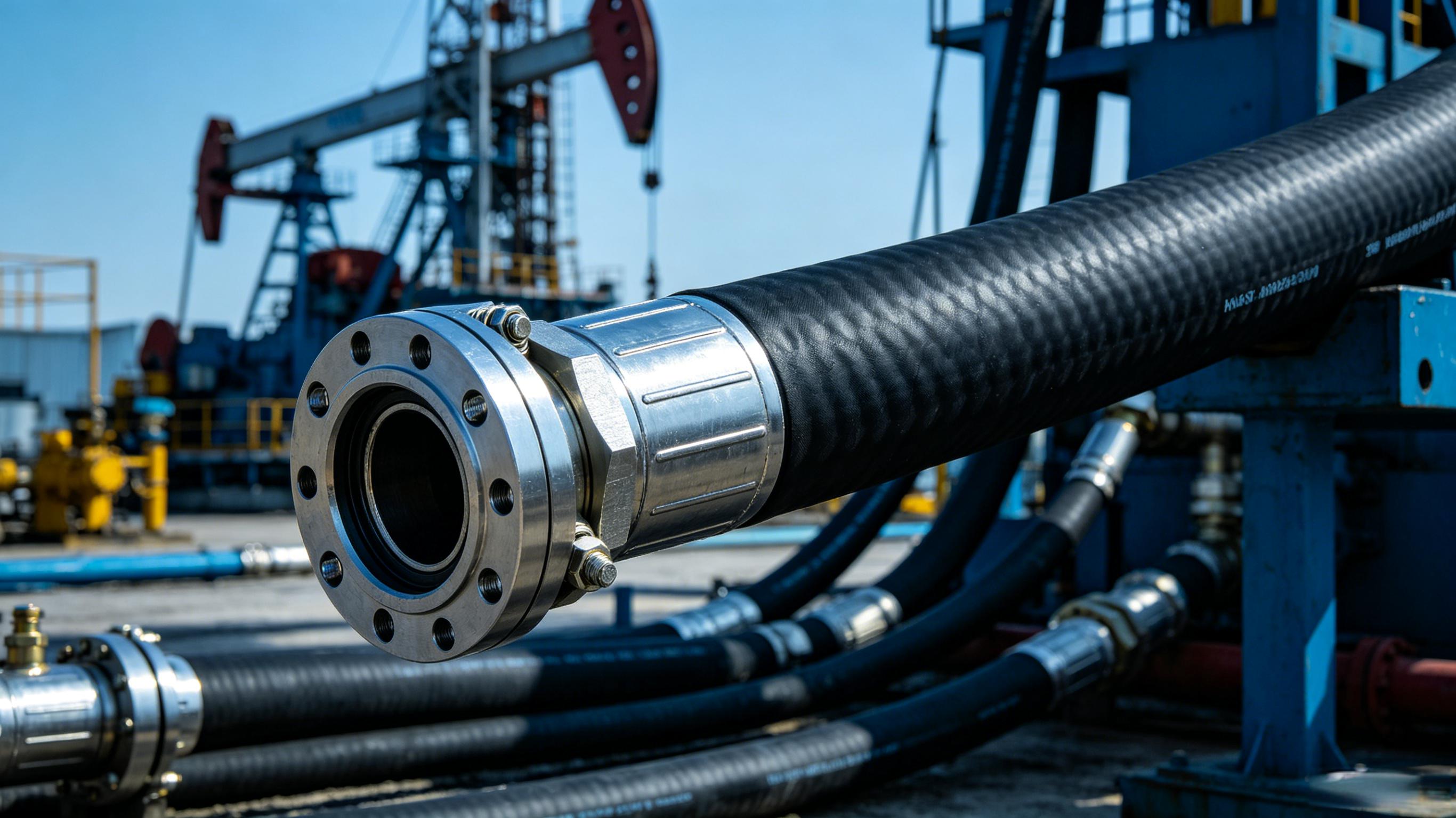
What is Acid Fracturing and Why Are Ultra-Wear-Resistant Hoses Needed?
Acid fracturing involves adding hydrochloric acid, hydrofluoric acid, or other acids to fracturing fluid to dissolve plugging materials in rock pores, while high-pressure sand-laden fluid creates fracture networks. The conveyed medium has three challenges:
High corrosivity – Acid concentrations of 15-28% rapidly attack ordinary steel and rubber.
Severe abrasion – Proppants (quartz sand, ceramic) flow at tens of meters per second, wearing through standard tube liners in hours.
High pressure & pulsation – Operating pressures reach 70-140 MPa (10,000-20,000 psi), with frequent start/stop pressure spikes.
Standard hydraulic hoses or steel pipes cannot resist acid corrosion + abrasive wear + high-pressure pulses simultaneously. Ultra-wear-resistant acidizing hoses use specialty acid-resistant synthetic rubber, multiple high-tensile steel wire spiral layers, and an ultra-wear-resistant inner liner (e.g., UHMWPE or specialty polyurethane), enabling hundreds of hours of continuous safe service.
Key Technologies of Ultra-Wear-Resistant Acidizing Hoses
Inner liner – Made of ultra-high molecular weight polyethylene (UHMWPE) or fluororubber (FKM/FPM). Extremely low friction coefficient (≤0.1), wear resistance 5-10 times better than natural rubber. Resists concentrated hydrochloric acid, hydrofluoric acid, organic acids, and fracturing additives.
Reinforcement – Multiple (typically 4-6) layers of high-tensile steel wire spirals. Pressure rating up to 15,000 psi (103 MPa) and excellent impulse fatigue life.
Cover – Ozone-resistant, UV-resistant, oil-resistant synthetic rubber, suitable for harsh field environments (-40°C to +100°C).
Couplings – Integral crimped or segmented flange type, preventing pull-out or leakage under high pressure.
Critical Applications in Shale Gas & Tight Oil
Flexible connections between fracturing manifold skids and wellhead – Absorbs vibration and compensates misalignment.
Long-distance conveying during multi-stage fracturing – Single stage may inject tens of thousands of cubic meters; these hoses can operate 200+ hours continuously.
Suction and discharge lines from acid tankers to blender/pump – Resist high acid concentrations while allowing quick assembly and relocation.
Flowback fluid transfer – Flowback contains residual acid, sand, and hydrocarbons – again requiring corrosion and abrasion resistance.
Selection & Usage Guidelines
Pressure rating – Match to pump discharge pressure; keep 20% safety margin.
Inner diameter – Typically 3-inch, 4-inch, or 5-inch to ensure high flow rates (2-4 m³/min).
Regular inspection – After each job, check cover for blisters, cuts; evaluate inner liner wear via X-ray or pressure test.
Never mix with standard hoses – Do not use ordinary high-pressure hoses for acidizing – they may burst within minutes.
Market Outlook
With large-scale development of shale gas/tight oil in China’s Sichuan-Chongqing and Xinjiang regions, and the US Permian Basin, demand for ultra-wear-resistant acidizing hoses continues to grow. Domestic Chinese hoses now offer competitive wear life and pricing, increasingly replacing imported products.
