
In oil and gas drilling and fracturing operations, hose standards directly impact safety and efficiency. The API (American Petroleum Institute) standards 7K, 16C, and 17K are the industry‘s most authoritative specifications. Understanding their differences is essential for accurate selection.
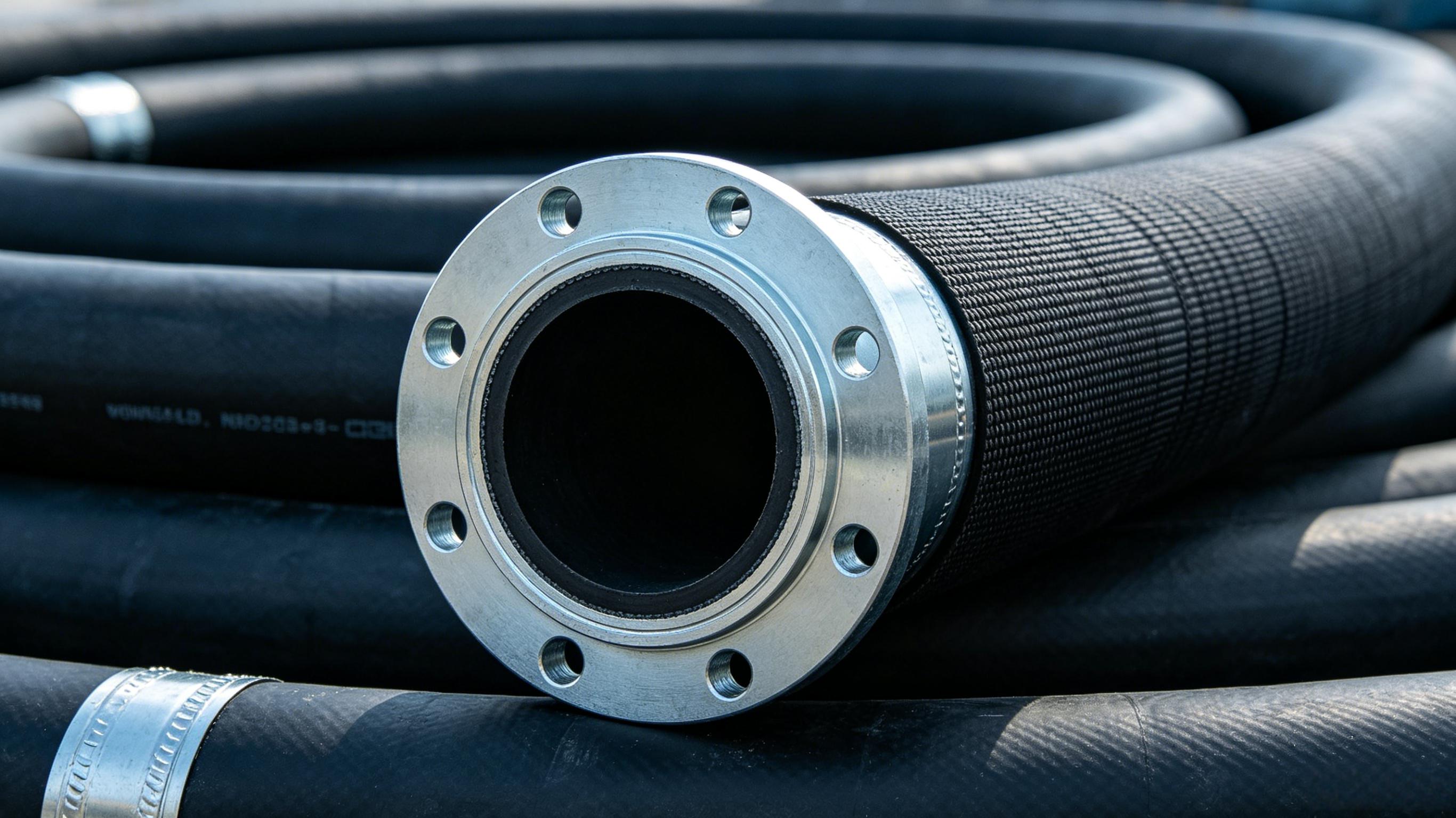
1. API 7K Standard – Mainstream for Drilling and Fracturing
API 7K is a technical specification for high-pressure fluid transfer hoses used in drilling equipment, covering rotary drilling and vibrator hoses, high-pressure mud hoses, cementing hoses, and acidizing/fracturing hoses. Typical applications include flexible connections between the top drive and standpipe, mud pumps to standpipes for high-pressure mud transfer, and acidizing/proppant fracturing in completion operations.
API 7K hoses feature inner liners made of HNBR, FKM, or UPE, with reinforcement consisting of 2–6 layers of high-strength spiraled steel wire. Working pressure ranges from 3,500 psi to 20,000 psi, with a temperature range of -40°C to +150°C. The standard requires burst pressure to reach four times the working pressure, along with rigorous impulse cycle testing.
API 7K hoses are the preferred choice for high-intensity applications such as shale gas fracturing, acidizing operations, and drilling fluid circulation.
2. API 16C Standard – The Lifeline of Well Control Safety
API 16C is designed for flexible choke and kill hoses, serving as critical safety equipment to prevent blowouts in well control operations. Its core function is flow and pressure control at the wellhead, providing flexible connections for choke manifolds, kill manifolds, and blowout preventer (BOP) systems.
The construction of API 16C hoses differs significantly: the inner liner uses H₂S-resistant HNBR or proprietary Tauroflon™; reinforcement consists of multiple layers of high-strength spiraled steel wire; and the cover offers fire resistance—withstanding 704℃ open flame for 30 minutes—with stainless steel armor on select specifications. Working pressure reaches 5,000–15,000 psi, with maximum inner diameter of 4 inches. API 16C places special emphasis on sulfide stress cracking (SSC) resistance and stringent sealing requirements for connection points.
These hoses are primarily used in choke and kill manifolds, wellhead pressure control, and H₂S-bearing hazardous media transport—serving as the “last line of defense” in drilling safety.
3. API 17K Standard – Deep-Sea Oil & Gas Transport
API 17K defines technical requirements for bonded flexible pipes, primarily used in subsea oil and gas transportation. The standard applies to both static and dynamic flexible pipes used as flowlines, risers, jumpers, and offshore loading/discharge hoses.
API 17K hoses feature high pressure capacity, lightweight design, and long service life, with corrosion resistance superior to traditional steel pipes, making them suitable replacements for deep-sea transport. The inner liner uses UPE or PTFE (4.0mm thick), reinforcement consists of synthetic rubber, polyester fiber braiding, and high-strength copper-plated steel wire, and the outer cover is wear/weather-resistant synthetic rubber with stainless steel armor. Maximum inner diameter reaches 14 inches, with working pressure up to 7,500 psi.
Typical applications include natural gas transport from FPSO (Floating Production Storage and Offloading) units to terminals or subsea manifolds, flexible jumpers on deep-sea drilling facilities, and fluid transfer between offshore platforms and subsea wells.
4. Key Comparison of the Three Standards
| Standard | Primary Application | Typical Media | Working Pressure | Special Requirements |
| API 7K | Drilling/Fracturing/Cementing | Mud, fracturing fluid, acid | 3,500-20,000 psi | Wear/acid resistance, 4:1 burst ratio |
| API 16C | Well control/Choke & Kill | H₂S-bearing oil/gas, kill fluid | 5,000-15,000 psi | H₂S resistance, 30-min fire rating |
| API 17K | Deep-sea oil & gas transport | Crude oil, natural gas | ≤7,500 psi | Seawater corrosion resistance, long life |
5. Selection Summary
When selecting the right hose, first identify the operating scenario: onshore drilling and fracturing → API 7K; well control and safety-critical operations → API 16C (must be used); offshore platforms and deep-sea transport → API 17K. In recent years, several domestic manufacturers have obtained triple API 7K, 16C, and 17K certification, offering full product lines for diverse applications.
