
In industries such as chemical processing, pharmaceuticals, electroplating, semiconductor manufacturing, and environmental treatment, safely and efficiently conveying corrosive media like strong acids, strong alkalis, and organic solvents is a constant challenge. Choosing the wrong hose can lead to leaks, environmental contamination, and even serious personal injury. Among the various hose materials available, UPE (ultra-high molecular weight polyethylene) chemical hose is increasingly becoming the preferred choice for engineers and procurement professionals. This preference is not accidental but is rooted in UPE’s unique molecular structure and comprehensive performance characteristics.
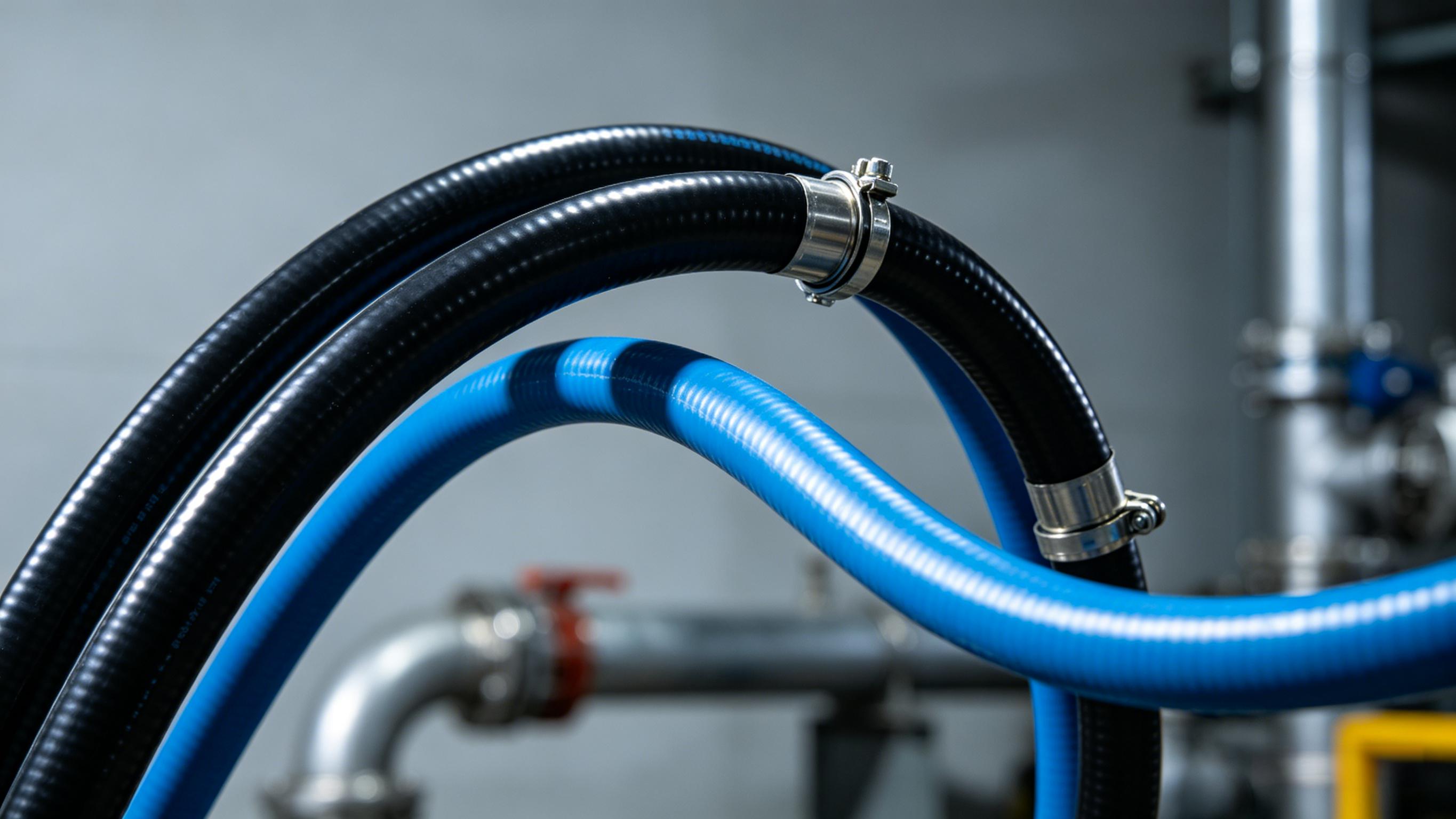
The reason why UPE chemical hose excels at handling strong acids, strong alkalis, and organic solvents lies first in its extremely high molecular weight and non-polar structure. UPE typically has a molecular weight of over three million, with a very dense linear arrangement that leaves almost no microscopic voids for chemical reagents to penetrate. This structure gives UPE outstanding resistance to most acids. Whether it is dilute sulfuric acid, hydrochloric acid, or medium-concentration nitric and phosphoric acids, UPE hoses can work long-term without degradation or swelling. For strong alkalis such as sodium hydroxide and potassium hydroxide solutions, UPE also performs excellently, showing no saponification or embrittlement, which is far superior to many ordinary plastics and rubber materials.
Secondly, UPE’s resistance to organic solvents is remarkably strong. Many organic solvents, including alcohols like methanol and ethanol, esters like ethyl acetate, ketones like acetone and butanone, and aromatic hydrocarbons like benzene, toluene, and xylene, tend to swell or dissolve ordinary polymer materials. However, due to its strong intermolecular forces and high crystallinity, UPE is almost insoluble in any common organic solvent at room temperature. This means UPE chemical hoses can be used directly to transport mixed waste liquids containing organic solvents, paints, inks, or cleaning agents, without worrying about hose deformation or inner wall dissolution contaminating the media. For applications requiring high product purity, such as pharmaceutical or electronic-grade chemical transfer, UPE’s low leachability provides an additional safety margin.
Beyond exceptional chemical resistance, UPE chemical hoses possess mechanical properties that other hoses find hard to match. UPE is one of the most wear-resistant thermoplastics known, with abrasion resistance approximately four to seven times that of ordinary carbon steel. When conveying strong acid or strong alkali slurries containing abrasive particles, ordinary PTFE hoses are prone to inner wall damage from particle friction, whereas UPE remains smooth and intact over long periods. Additionally, UPE has a very low coefficient of friction, close to that of PTFE, resulting in low flow resistance and reduced fouling or deposition on the inner wall, which lowers cleaning frequency and pumping energy consumption.
In practical applications, the operating temperature range of UPE chemical hoses is typically between -40°C and 80°C. Although this is not as high as PTFE’s limit, it covers the majority of ambient and moderate-temperature chemical processes. Moreover, UPE hoses are more economical than PTFE and easier to process and mold, allowing for large-diameter, long-length continuous hoses that adapt to complex on-site routing requirements. Of course, UPE is not a universal solution. It has limited resistance to strong oxidizing acids such as concentrated nitric acid and fuming sulfuric acid, as well as certain halogenated hydrocarbons like dichloromethane and chloroform. For these media, PTFE or other specialty materials should be selected. However, for routine strong acid, strong alkali, and most organic solvent transfer applications, UPE chemical hose stands out as the preferred choice due to its balanced corrosion resistance, high abrasion resistance, low friction, and cost-effectiveness. Therefore, when designing chemical transfer systems or procuring hoses, considering UPE as a standard option can both ensure safety and optimize long-term operating costs.
