
In ultra-high pressure water jetting, hydraulic tools, and pressure testing, thermoplastic hoses are popular for their light weight, flexibility, and high pressure ratings. Many users believe that “higher pressure rating equals safer operation” and blindly pursue the highest pressure grade. This is not true. Three common selection myths can lead to wasted cost, over-specification, or even safety hazards. This article debunks them one by one.
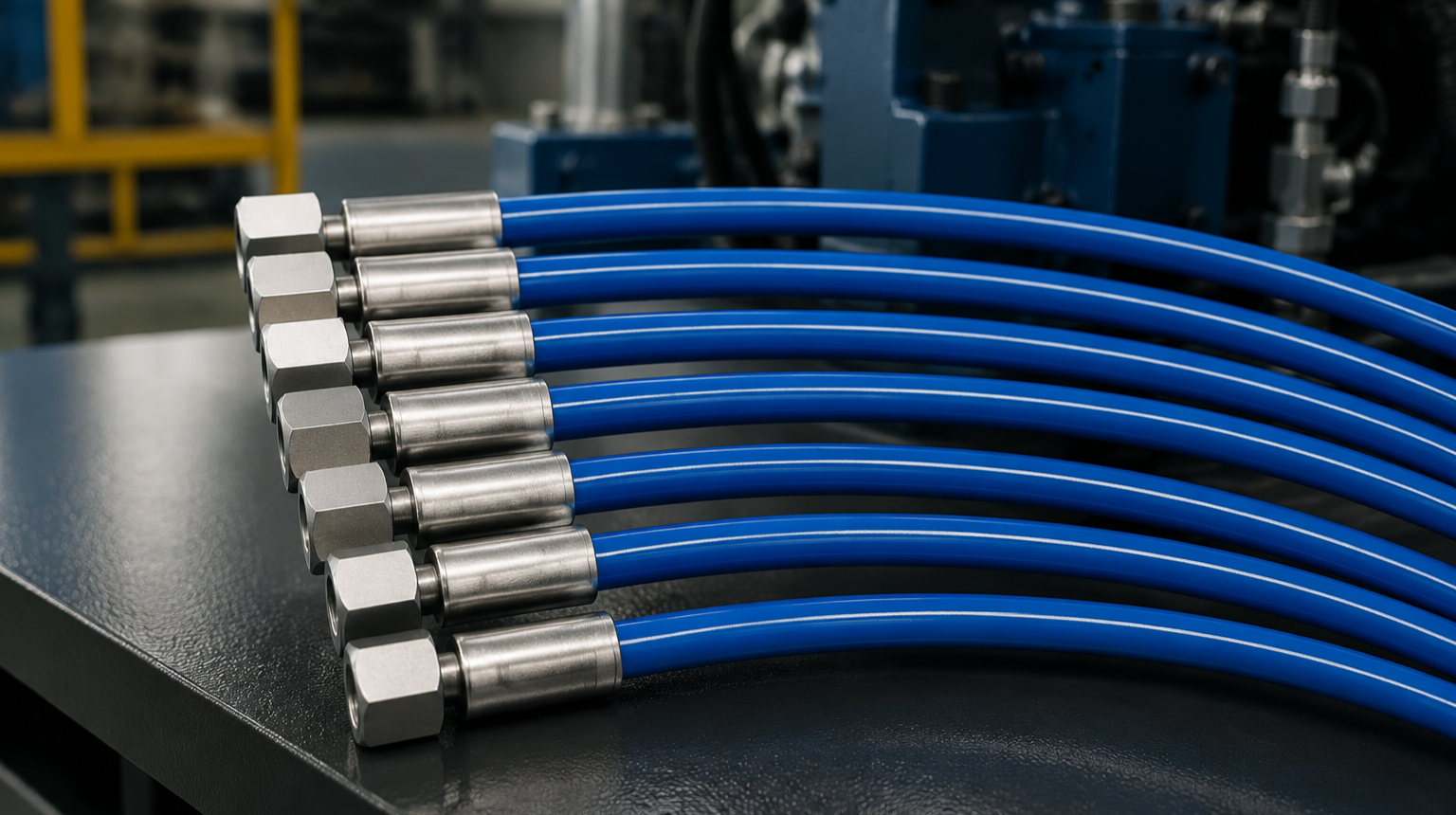
Myth 1: Higher Pressure Rating Means Greater Safety
Many engineers think that choosing a hose rated far above system pressure (e.g., a 300 MPa hose for a 200 MPa system) provides extra safety. However, ultra-high pressure thermoplastic hoses are designed with trade-offs. A higher pressure rating typically requires thicker reinforcement and stiffer inner/outer layers, resulting in larger bend radius, increased weight, and reduced flexibility. In dynamic bending or tight-space routing, an overly stiff hose cannot absorb vibration, causing stress concentration at fittings and premature failure. Additionally, higher pressure grades cost significantly more. The correct approach is: rated working pressure should be slightly above the system’s maximum peak pressure (recommended 20-30% margin), not blindly “higher”.
Myth 2: Only Look at Burst Pressure, Ignoring Impulse Life
Some users focus only on the published burst pressure, believing “as long as it doesn’t burst, it’s fine.” In reality, the most common failure mode for ultra-high pressure thermoplastic hoses is not a single overpressure burst, but long-term impulse fatigue – repeated pressure cycles from zero to working pressure gradually wear the reinforcement, causing micro-cracks in the liner and eventual leakage or rupture. Two hoses with identical burst pressure can have vastly different impulse lives. During selection, demand pulse cycle test data (e.g., million-cycle level per ISO 6803 or SAE J343), not just static burst values.
Myth 3: Ignoring Media Compatibility and Temperature Effects
The liner material of thermoplastic hoses is not universal. Common liners include polyamide (PA, nylon), polyoxymethylene (POM), and thermoplastic polyurethane (TPU/TPE). Certain “general-purpose” hoses have strict limitations: PA hydrolyzes or swells in strong acids, alkalis, or high-concentration alcohols; POM is not resistant to strong acids and oxidizers; TPU degrades in high-temperature steam or polar solvents. Furthermore, temperature significantly derates pressure ratings. When ambient temperature exceeds the hose’s design temperature (e.g., 50°C or 70°C), the working pressure must be reduced according to the supplier’s derating curve. Ignoring these factors can cause liner rupture even at nominal pressure.
Comparison Summary
Pressure rating myth: Higher = safer → Correct: Rated pressure 20-30% above system peak.
Burst pressure myth: No burst = safe → Correct: Check impulse fatigue life (million-cycle data).
Compatibility myth: Any hose works → Correct: Verify liner material against media & temperature.
Correct Selection in 4 Steps
Determine actual pressure profile: Record normal working pressure, peak pressures (including cold start spikes), and pulse frequency.
Select pressure grade: Hose rated working pressure ≥ system peak pressure × 1.2 (safety margin). Do not over-specify excessively.
Verify impulse life: Request third-party pulse test reports to confirm expected cycles under similar duty.
Check media & temperature: Provide full media name, concentration, and temperature range to supplier. Confirm liner compatibility and apply temperature derating if needed.
Real-World Case Study
A waterjet cutting manufacturer long purchased thermoplastic hoses rated double the design pressure, believing it safer. The stiffer hoses cracked frequently at the gantry’s bending points, with average life only 200 hours. Switching to a pressure-matched, more flexible hose increased life to 1500 hours and reduced cost by 30%. In another case, a chemical plant used a PA-lined hose to transport formic acid (without checking compatibility); the liner softened and burst within two weeks, causing production loss and chemical spill.
Summary
Selecting ultra-high pressure thermoplastic hoses is not about “higher pressure being better”. Properly matching pressure rating, prioritizing impulse life, and strictly verifying media/temperature compatibility are the keys to safe, economical, and long-lasting performance. Develop a selection checklist and work with qualified suppliers for technical review.
