
In industries such as chemical processing, pharmaceuticals, electroplating, semiconductor manufacturing, and environmental treatment, chemical resistant hoses are critical components for transferring corrosive media like acids, alkalis, and solvents. Choosing the wrong hose material can lead to leaks, production shutdowns, or even serious safety incidents. The three most common inner lining materials for chemical hoses on the market today are UPE (ultra-high molecular weight polyethylene), PTFE (polytetrafluoroethylene), and various synthetic rubbers such as EPDM, nitrile rubber (NBR), and fluorocarbon rubber (FKM). Many engineers and procurement professionals ask: which of these three materials offers the best corrosion resistance? This article provides a detailed comparison from four dimensions: chemical compatibility, temperature range, mechanical properties, and cost, to help you make the right selection.
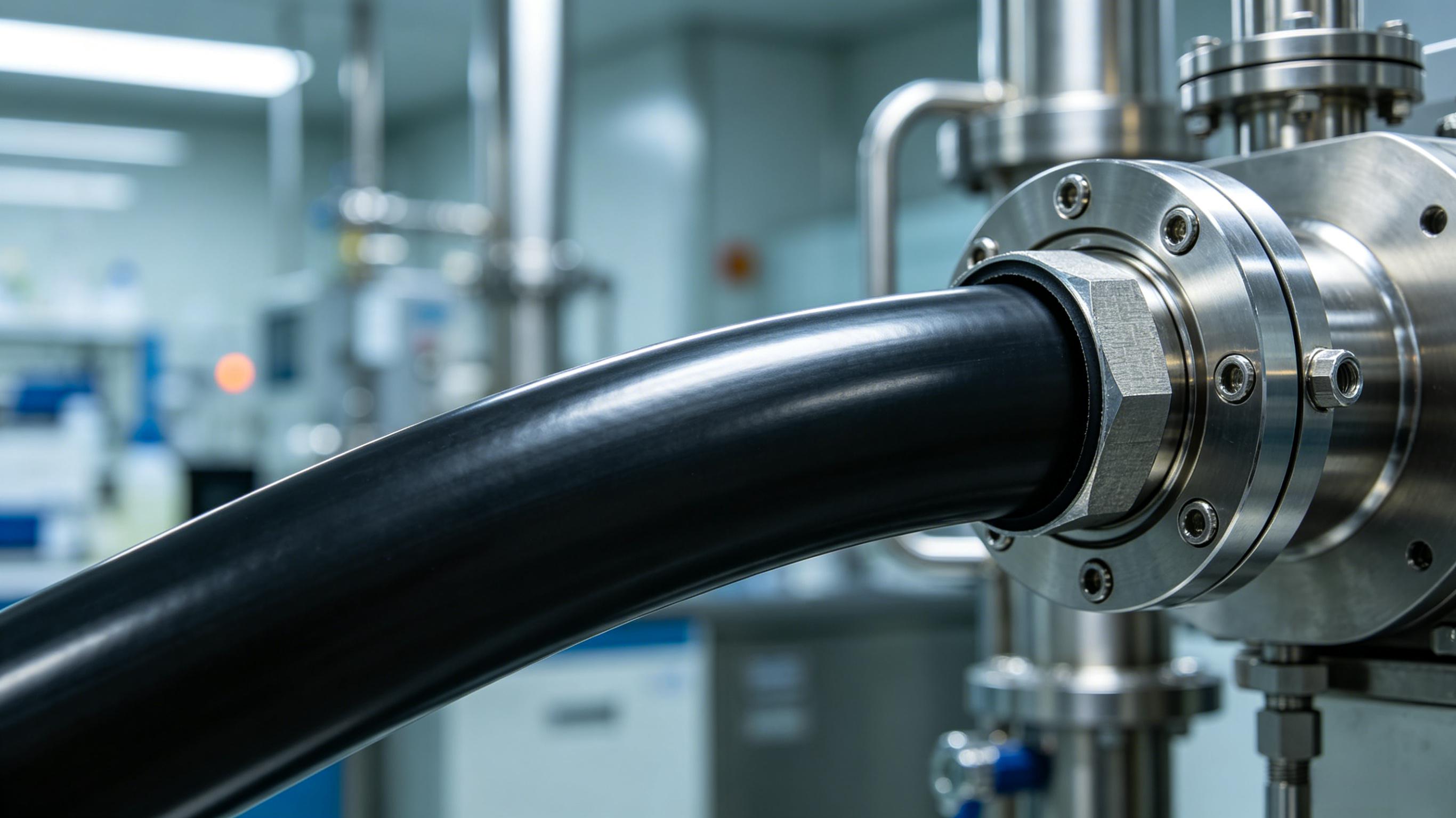
Starting with chemical compatibility, PTFE is widely known as the "king of plastics" due to its extremely stable carbon-fluorine bond structure. Apart from molten alkali metals, elemental fluorine, and chlorine trifluoride at very high temperatures, PTFE can resist almost all strong acids (including concentrated nitric acid, hydrofluoric acid, and fuming sulfuric acid), strong alkalis, organic solvents, and strong oxidizing agents. Therefore, in terms of broad-spectrum chemical compatibility, PTFE ranks first without question. UPE also performs excellently, resisting most acids (dilute sulfuric acid, hydrochloric acid, phosphoric acid, etc.), alkalis (sodium hydroxide, potassium hydroxide), salt solutions, and common organic solvents such as alcohols, esters, and ketones. However, UPE has poor resistance to strong oxidizing acids (like concentrated nitric acid and fuming sulfuric acid) and certain halogenated hydrocarbons (such as dichloromethane and chloroform), where swelling or degradation can occur. Rubber materials vary significantly: EPDM offers good resistance to dilute acids, dilute alkalis, and alcohols, but swells severely when exposed to oils and hydrocarbon solvents; NBR has excellent oil resistance but is not suitable for strong acids or strong alkalis; FKM has chemical resistance close to PTFE but is expensive and has poor resistance to low temperatures and certain polar solvents. Overall, ordinary rubber hoses fall far behind UPE and PTFE in broad-spectrum corrosion resistance.
Next, consider temperature resistance. PTFE offers an extremely wide operating temperature range from -70°C to 260°C, making it stable in both cryogenic environments and high-temperature steam transfer. UPE is typically limited to -40°C to 80°C; above 80°C, its mechanical strength decreases significantly, so it is not suitable for high-temperature applications. Rubber temperature resistance varies by type: EPDM typically ranges from -40°C to 120°C, NBR from -30°C to 100°C, and FKM from -20°C to 200°C. However, rubber tends to age, harden, or soften more quickly at elevated temperatures, so its long-term heat resistance is generally inferior to PTFE. If your process involves high-temperature corrosive media, PTFE is almost the only choice.
Regarding mechanical properties, UPE boasts extremely high wear resistance and impact strength. Its abrasion resistance is approximately four to seven times that of ordinary carbon steel, making it ideal for transferring slurries or waste liquids containing abrasive particles. UPE also has a very low coefficient of friction, resists fouling, and offers good flexibility for on-site routing. PTFE has poor abrasion resistance and weak creep resistance, tending to deform under pressure due to cold flow. Pure PTFE hoses also have larger bend radii and are less flexible than UPE. However, PTFE can be reinforced with braiding to improve pressure capacity. Rubber hoses offer the best flexibility and fatigue resistance, making them suitable for applications requiring frequent movement or vibration, but their wear resistance is average, and they are prone to aging and cracking.
Finally, consider cost and value. UPE hoses are moderately priced, between ordinary rubber and PTFE. For ambient-temperature acid, alkali, and solvent transfer, UPE offers excellent value. PTFE hoses are the most expensive, especially high-purity, multi-braid models, but given their unparalleled chemical compatibility and wide temperature range, they are a worthwhile investment for demanding applications. Rubber hoses have the lowest upfront cost but often require more frequent replacement, so their long-term cost may not be the lowest.
In summary, no single material is the "most corrosion resistant" in every scenario. If your media include strong oxidizing acids, concentrated nitric acid, hydrofluoric acid, or high-temperature solvents, PTFE is the safest choice. For ambient-temperature applications with ordinary acids, alkalis, most organic solvents, and abrasive particles, UPE offers the best value. Rubber hoses are more suitable for non-severe corrosive conditions, oily or water-based media, and applications where high flexibility and temporary connections are needed. Always consult a detailed chemical compatibility chart or provide complete process parameters to a professional hose supplier to ensure you select the best chemical resistant hose for your specific application.
