
The underground coal mine environment is uniquely hazardous, with methane gas and coal dust constantly at risk of reaching explosive concentrations. Once a 4SP high-pressure hose used in hydraulic supports ignites or generates a static spark, the consequences can be catastrophic. Flame retardancy and anti-static conductivity are non-negotiable requirements for obtaining the China Mining Safety Certification (MA mark). Both must be met simultaneously before a hose can be approved for underground use. This article provides a systematic interpretation of the certification requirements and test methods based on the MT/T 98-2006 standard.
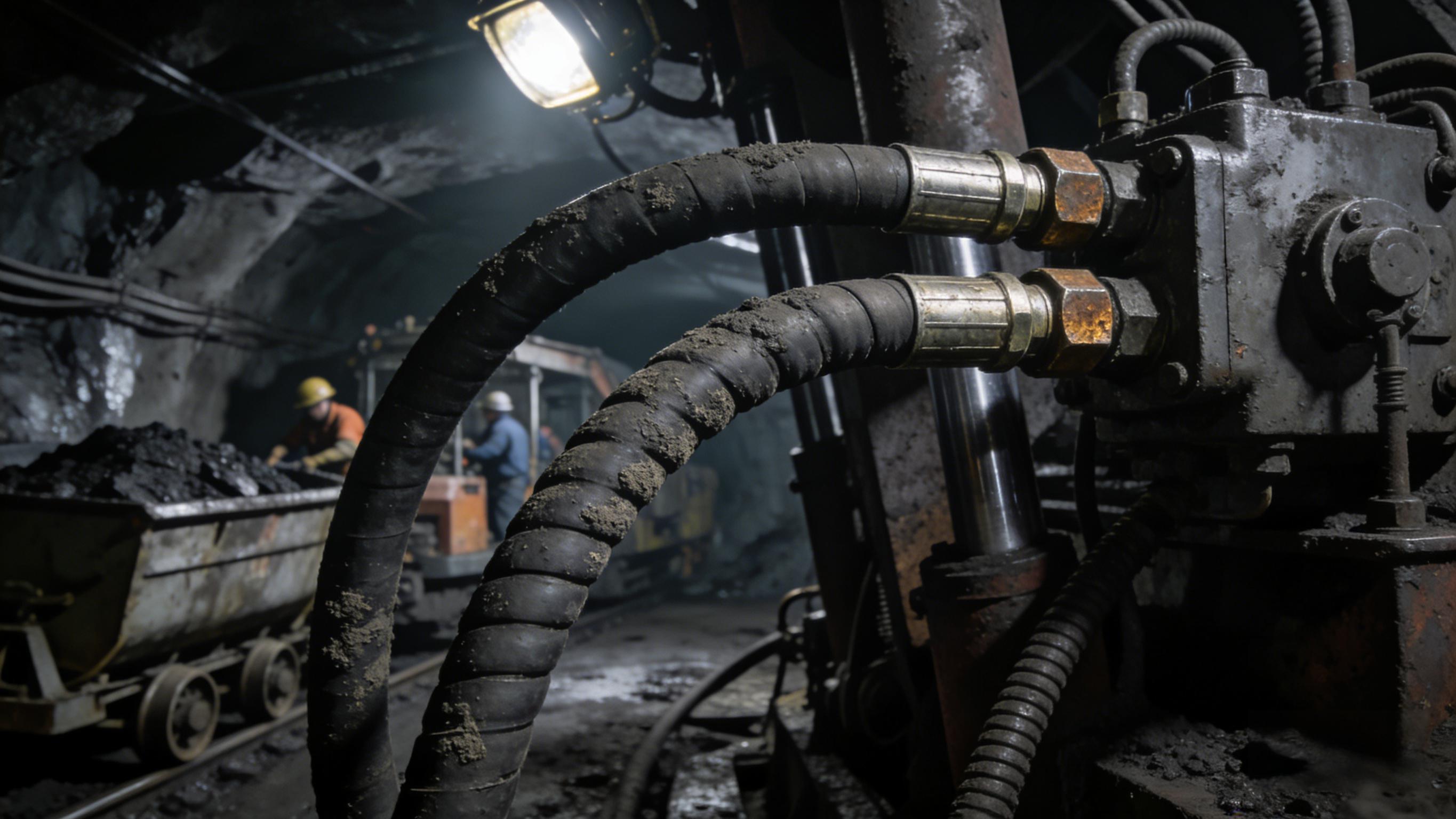
1. Flame Retardancy Test: Alcohol Burner Tests Self-Extinguishing Performance
The flame retardancy test simulates open flame conditions from electrical sparks and blasting in underground mines, verifying whether the hose can self-extinguish quickly after exposure to fire—preventing the hose itself from becoming a fuel source.
Test Method: The standard specifies the alcohol burner flame test. Flame height is controlled at 150mm ±10mm, with flame temperature no lower than 900°C. Three hoses from the same batch are selected, with three specimens (300mm long) cut from each. Specimens are conditioned for 24 hours at 23°C ±2°C and 50% ±5% relative humidity before testing. Each specimen is vertically fixed, and the burner flame is applied to the lower end center for exactly 12 seconds, then removed immediately.
Pass Criteria: Four indicators must be met simultaneously: ① After-flame time (flaming combustion) ≤10 seconds; ② After-glow time (smoldering combustion) ≤30 seconds; ③ Damaged length ≤100mm; ④ During combustion, any molten drips must not ignite absorbent cotton placed 300mm below the specimen. If any single indicator fails, double the quantity of specimens must be retested. Failure in the retest results in the entire batch being rejected.
2. Anti-Static Test: Surface Resistivity and Volume Resistivity Dual Control
During high-pressure emulsion fluid transmission, friction between the rubber layers, fluid, and steel wire reinforcement generates static charge accumulation. If resistivity is too high, static charge cannot be dissipated quickly, and a discharge spark can ignite methane gas.
Test Method: Parallel electrodes are applied to the outer cover surface, with 500V DC applied to measure surface resistance; cylindrical electrodes are used for volume resistance measurement; additionally, a 12V DC continuity tester checks electrical conductivity between the fitting and the steel wire reinforcement. Three readings are taken at each test point and averaged.
Pass Criteria:
Surface resistance (outer cover): ≤1×10⁹Ω
Volume resistance (overall rubber layer): ≤1×10⁸Ω·cm
Continuity resistance (fitting to steel wire): ≤1Ω
3. 4SP Hose Construction and Materials
To meet the above requirements, 4SP hoses are designed with specific materials: Nitrile rubber (NBR) inner liner for oil and emulsion resistance; four layers of high-tensile steel wire in alternating spiral directions; and a flame-retardant chloroprene rubber (CR) cover with anti-static surface treatment. Working pressure rating: 35-42MPa; ID range: Φ6-16mm. Primary application is in high-pressure circuits such as hydraulic support leg control lines.
4. MA Certification and Compliance Requirements
In Chinese coal mines, 4SP hoses must carry the MA mark (Mining Product Safety Certificate). Mainstream products meet EN 856 4SP or ISO 3862-1 4SP standards while also complying with MT/T 98-2006 inspection specifications, and some also pass MSHA type certification.
When purchasing, suppliers must provide flame retardancy and anti-static test reports issued by third-party laboratories, along with factory certificates and the Mining Product Safety Certificate. Both flame retardancy and anti-static tests are mandatory gatekeeping items—both must pass before the hose can be used underground.
Summary
The core basis for 4SP high-pressure hose flame retardant and anti-static certification in underground coal mines is the MT/T 98-2006 standard. The flame retardancy test uses an alcohol burner to verify self-extinguishing performance, while the anti-static test strictly controls surface and volume resistivity. During selection, always confirm that the product holds a valid MA certificate and request complete third-party test reports from the supplier—these are the only guarantees of safe underground operation.
